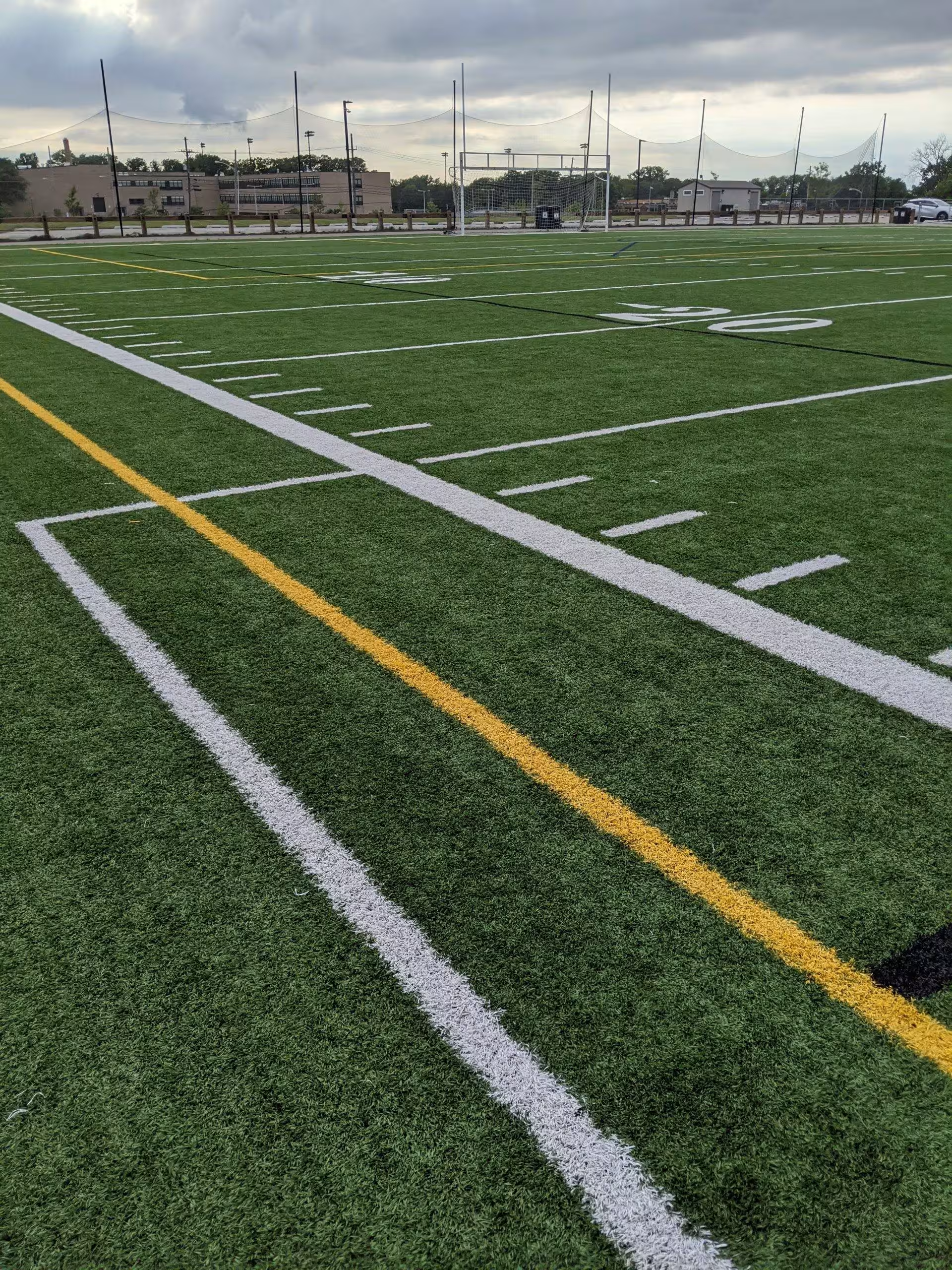
When you flip on a football game today, the geometry of the field is a given. You expect to see the crisp white yard lines, the bold numbers every ten yards, and the directional arrows pointing toward the nearest goal. It’s a masterpiece of clarity that allows fans, officials, and players to track every inch of progress.
However, as football historian Timothy Brown recently shared on the Pigskin Past podcast with Darin Hayes, the gridiron was once a place of navigational chaos. Before standardization took hold, being on a football field was often a confusing experience for everyone involved.
The Era of the “Barren” Field
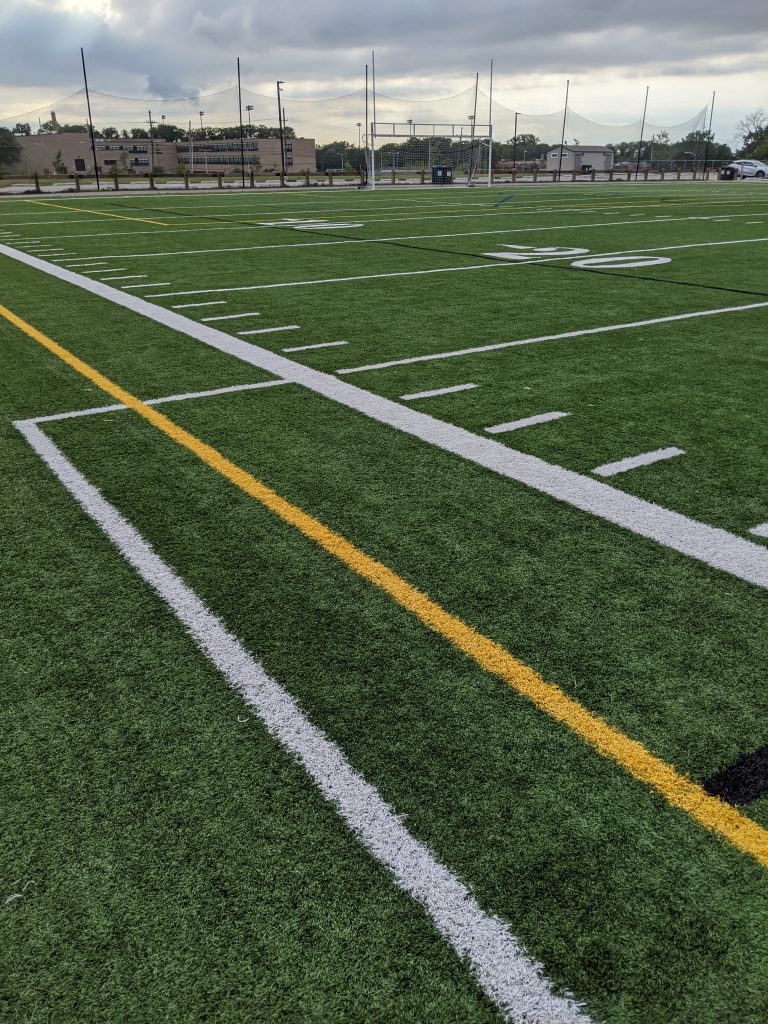
In the early days of the sport, the field looked nothing like the data-rich landscape we know today. Brown notes that early photographs often reveal a “barren” field. Aside from the sidelines and goal lines, there were no hash marks, no logos, and—most surprisingly—no numbers.
Officiating a 25-yard penalty in 1900 wasn’t as simple as counting five stripes. Without clear indicators, officials and players were often “literally lost.” To help, some groundskeepers experimented with hanging signs on grandstand walls or placing small wooden posts five yards off the sidelines. The problem? If players stood in front of them, the markers vanished from sight.
The Great Goal Post Shift of 1927
One of the biggest catalysts for change occurred in 1927 when the goal posts were moved from the goal line to the end line. This sparked a “flurry of activity” because people feared total confusion. For decades, the goal posts were the indicator of the scoring zone.
To solve this, schools began experimenting with visual cues. Some used dummies or sticks with paper along the lines; others began painting diagonal stripes or checkerboard patterns in the end zones. This era of experimentation actually gave birth to the decorated end zones we see in modern stadiums.
Coaches, TV, and the Push for Standards
As the game grew, the “organic” development of field markings began to clash with the needs of the modern era. Two major forces drove the push for standardization: Television and Coaching.
- Television: Networks wanted a consistent look for viewers. They needed to know that a “5” at Lambeau Field looked like a “5” in Dallas. In 1978, the NFL added directional arrows next to field numbers specifically to help the TV audience identify which direction a team was heading.
- The Coaching Point: Wide receivers began using field numbers as landmarks for their routes. If one stadium’s numbers were 7 yards from the sideline and another’s were 12, a coach’s instructions became useless.
In 1972, the NFL standardized the size and location of field numbers. The NCAA followed suit in 1982, ensuring that no matter where a game was played, the geometry remained the same.
More Than Just Decoration
Today, these markings serve vital roles beyond just measuring yardage. In high school football, for instance, the “nine-yard marks” (the tops of the numbers) are used to enforce substitution rules, preventing the “lonesome polecat” play where a player might hide near the sideline to sneak downfield for a pass.
While Darin Hayes joked that veteran officials might have started their careers when fields used Roman numerals, the reality isn’t far off—early football was a wild frontier of experimentation. The next time you see a receiver catch a ball “just inside the numbers,” remember that those numbers weren’t always there; they are the result of over a century of trial, error, and a need for order on the gridiron.
For more deep dives into the history of the game, visit FootballArchaeology.com and subscribe to Timothy Brown’s daily “tidbits.”