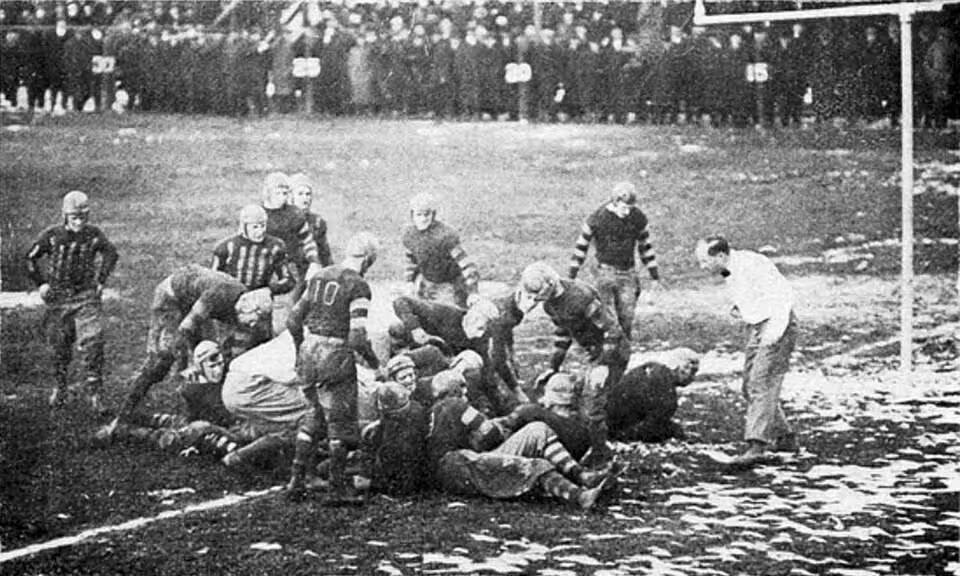
The 1916 American football season was a landmark year that bridged the gap between the sport’s brutal origins and the organized spectacle it would eventually become. It was a season defined by legendary coaching, the dominance of “independent” professional teams, and perhaps the most lopsided score in the history of the game.
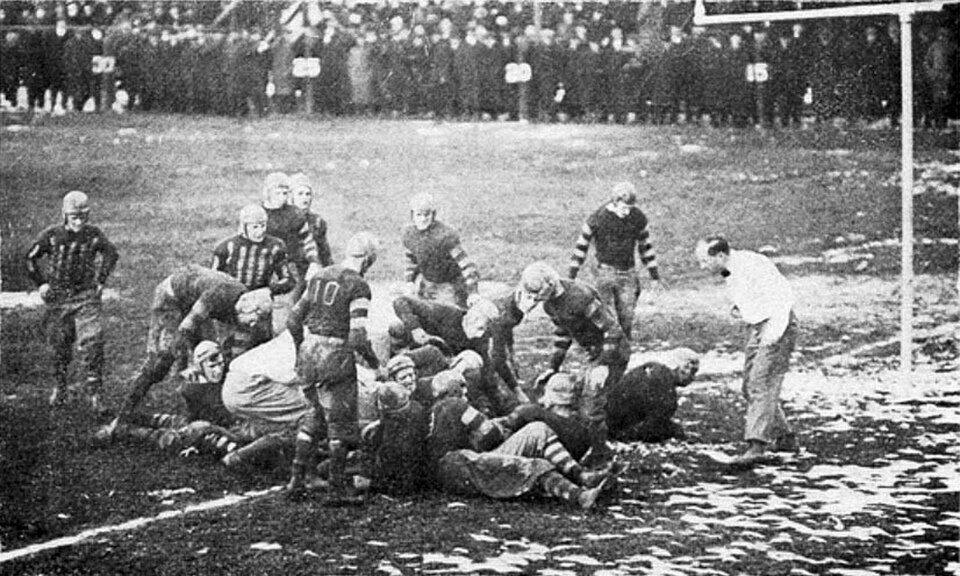
Collegiate Dominance and the “Game of the Century”
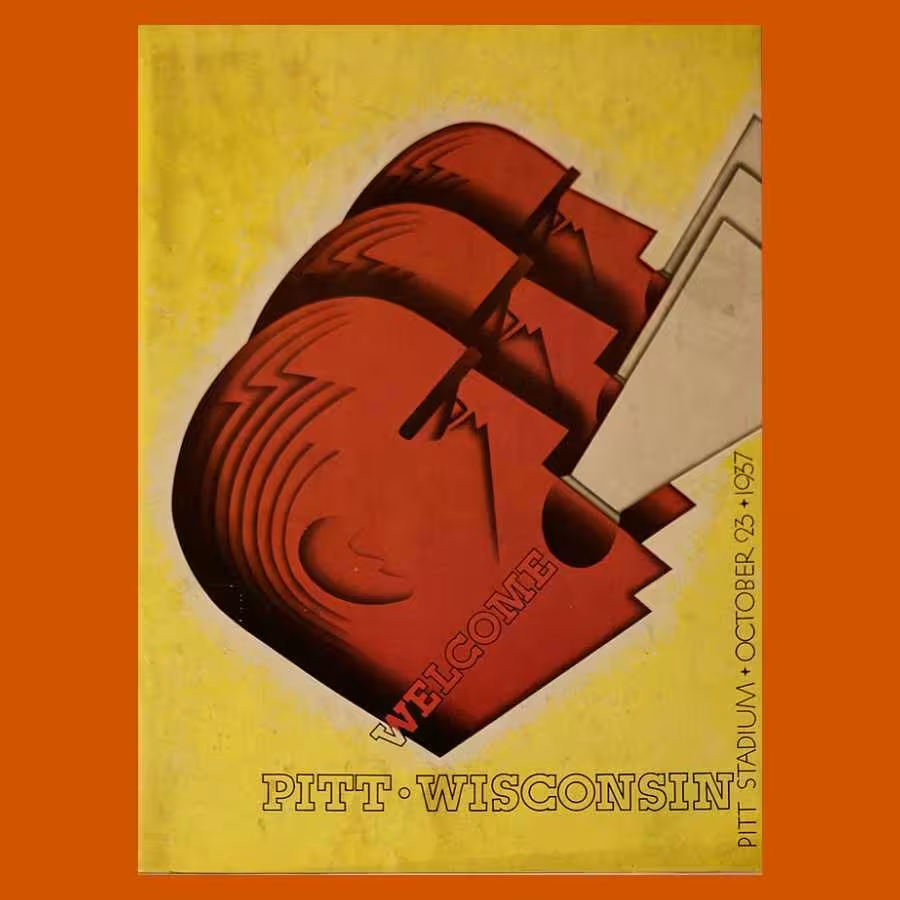
In the college ranks, Pitt, led by the legendary Pop Warner, and Army were the dominant forces, both finishing undefeated. Pitt was widely recognized as the national champion, boasting a defense that allowed only 22 points all season.
However, the year is most famous for the Georgia Tech vs. Cumberland game. On October 7, 1916, John Heisman’s Georgia Tech team defeated Cumberland University 222–0. Heisman reportedly sought revenge for a baseball loss earlier that year and wanted to prove that “scoring a lot of points” was a better tiebreaker metric than subjective polls.
The Rise of Professional “Independent” Football
Before the NFL was founded in 1920, the professional landscape consisted of “independent” circuits, primarily the Ohio League. In 1916, the Canton Bulldogs, led by the iconic Jim Thorpe, emerged as the premier team. Their rivalry with the Massillon Tigers drew thousands of spectators, proving there was a significant commercial appetite for professional play beyond the campus gates.
A Deep Dive into 1916 Football History and Highlights
- January 1, 1916 – The Tournament of Roses football game returned after a long absence. In a game now considered the 2nd Rose Bowl game, Washington State College defeated Brown University.
- October 7, 1916 – The most lopsided game in American football history. John Heisman’s Georgia Tech team defeated Cumberland University by a staggering 222–0 score.