From the skeptical beginnings of a coaching legend to the birth of a “Student Body Right” powerhouse, May 9 holds a unique place in the football chronicles. Imagine a university president questioning the hire of Fielding “Hurry-Up” Yost—the man who would eventually invent the modern bowl game and lead the “Point-a-Minute” squads to gridiron immortality. Pair that with the arrival of Brad Budde, a Lombardi Trophy winner who redefined the offensive guard position at USC. With this combination, you have a date that celebrates both the game’s strategic architects and its physical titans.
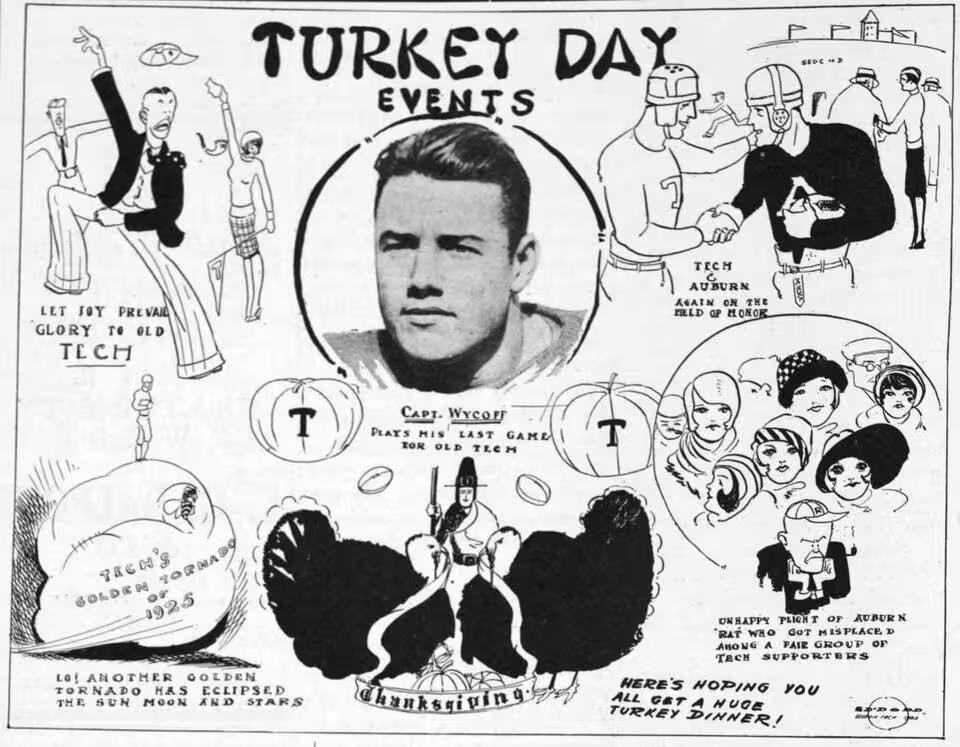
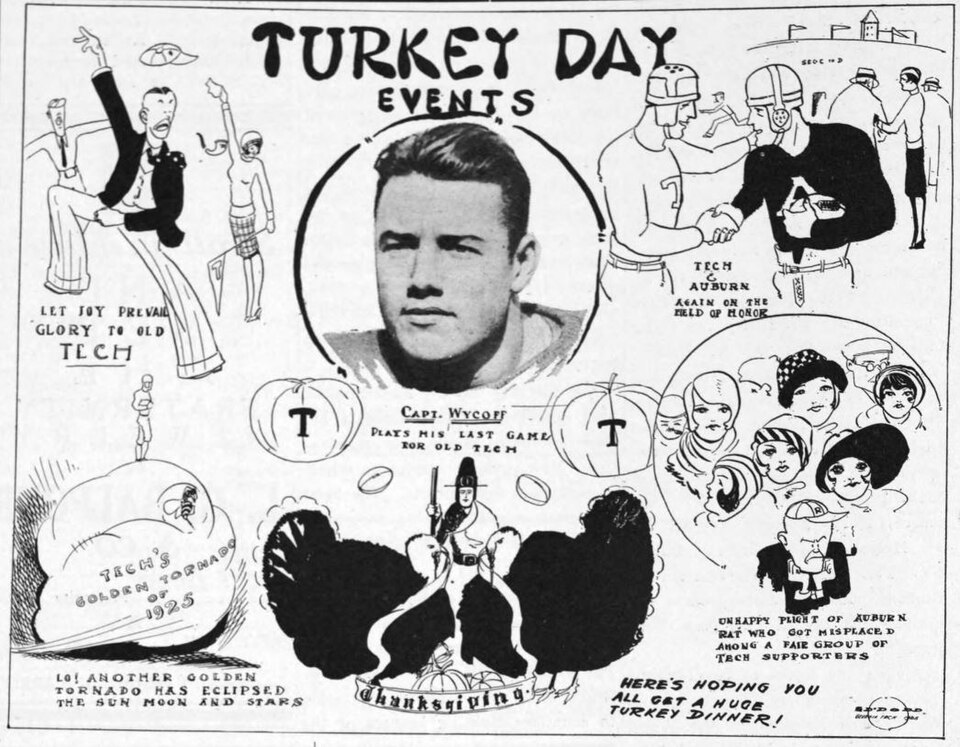
Before we get to these stories, let us take a moment to appreciate how the news of yesteryear expressed its love of football in some newspaper artwork.
May 9 American Football History Timeline
- May 9, 1900. “President Jordan of Leland Stanford Gives his Opinion of the Coach.” The Newspapers.com article from the Lawrence Daily Journal explains that the first person to publicly offer an opinion on the hiring of Coach Yost was none other than Stanford’s President of the day, Dr. Jordan. Jordan explained that the hiring was a bit of a surprise to him as well as the Cardinal fans. This was because Yost came from what the article described as a secondary school of Kansas University. Please remember that it is a full year before Yost was hired as the Michigan Wolverines head coach. It was at Michigan that he really made his mark in American Football History. Yost compiled a college football career record of 198–35–12. During his 25 seasons as the head football coach at Ann Arbor, Yost’s Michigan Wolverines won six national championships. The teams also captured ten Big Ten Conference titles and amassed a record of 165–29–10. From 1901 to 1905, his “Point-a-Minute” squads had a record of 55–1–1. Meanwhile, these teams outscored opponents 2,821-42. The 1901 team beat Stanford, 49–0, in the 1902 Rose Bowl. That game was the first college football bowl game.
May 9 Football Hall of Fame Birthdays
Happy Birthday to these gridiron legends! Since today is May 9, we celebrate several titans of the trenches and masters of the sideline. Here is the list of birthdays in order of birth:
- Lane Fenner [1945] A standout receiver at Florida State, Fenner is immortalized in college football lore for his “catch that wasn’t” in the 1966 rivalry game against Florida. Though the officials ruled him out of bounds, preventing a Seminole victory, photographic evidence later suggested he made one of the most famous, controversial grabs in the history of the “Sunshine Showdown.”
- Brad Budde [1958] The powerhouse guard at USC was the lead engine for the “Student Body Right” formation, consistently paving the way for Heisman winner Charles White. A 1998 College Football Hall of Fame inductee and Lombardi Trophy winner, Budde followed in his father Ed’s footsteps to play for the Kansas City Chiefs. Later, he famously repaid his collegiate scholarship to the university as a gesture of gratitude.
- Art Still [1955] Born in Camden, New Jersey, Still was a ferocious defensive end for the University of Kentucky before becoming a cornerstone of the Kansas City Chiefs’ defense. A member of the College Football Hall of Fame, he finished his pro career with 73 sacks. He also twice earned All-Pro honors and remained one of the most feared pass rushers of the late 1970s and 80s.
- Lane Kiffin [1975] A prominent figure in modern football strategy, Kiffin transitioned from a Fresno State quarterback to one of the game’s most talked-about head coaches. Known for his offensive brilliance at USC, Tennessee, Ole Miss, and now LSU, he has consistently been a lightning rod for the sport. Additionally, he has produced high-octane scoring units across the collegiate landscape.
- Jake Long [2008] A cornerstone of the Michigan Wolverines in the mid-2000s, Long was a two-time All-American and the 2008 NFL Draft’s #1 overall pick. The massive offensive tackle earned four Pro Bowl selections with the Miami Dolphins. In doing so, he proved to be one of the most technically sound pass protectors of his generation.
Conclusion
The legacy of May 9 serves as a powerful reminder that greatness often starts with a seed of doubt. Fielding Yost transformed a “surprising” appointment into a Hall of Fame career that birthed the Rose Bowl and changed the scoreboard forever. Similarly, Brad Budde carried on a family dynasty, proving that with precision blocking and character off the field, an interior lineman can become the heartbeat of a championship program. Whether in the early 1900s or the modern era, these May 9th milestones continue to influence the DNA of American football.