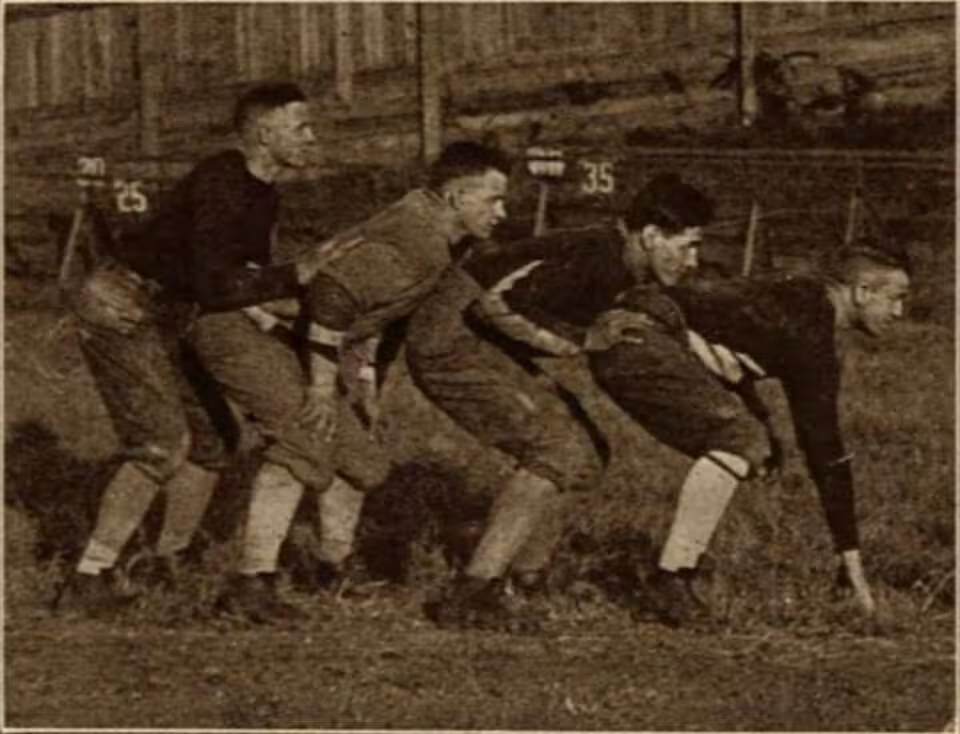
The 1917 American football season was defined by the looming shadow of World War I. As the United States entered the conflict in April 1917, the landscape of both college and professional football shifted dramatically. Many players and coaches traded their jerseys for military uniforms, leading several programs to suspend play entirely.
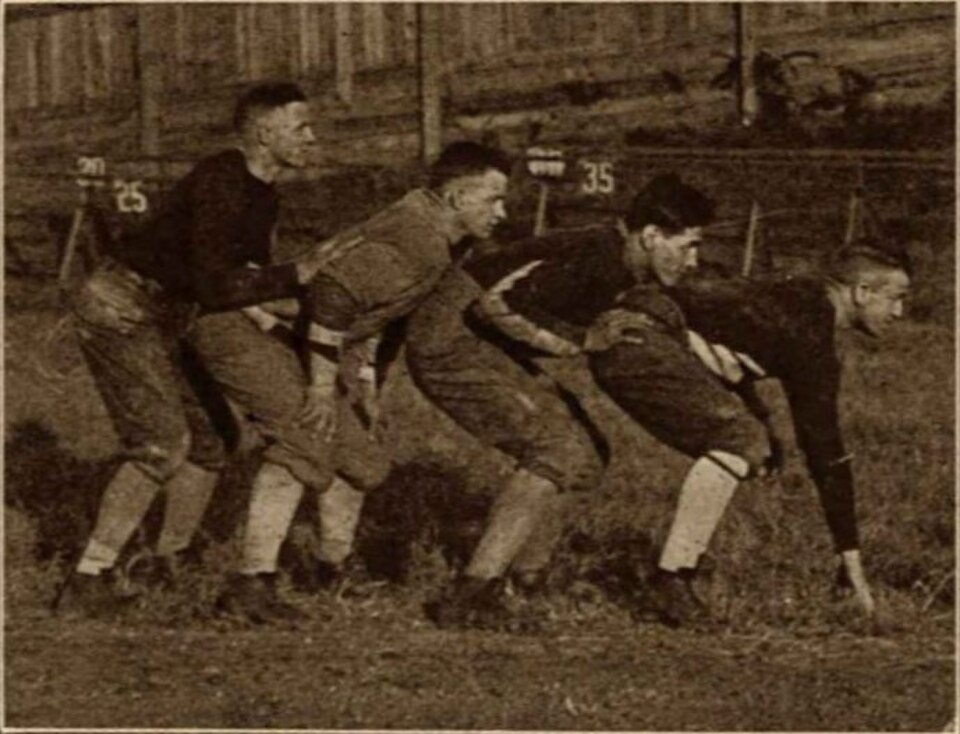
College Football Highlights
Despite the war, the college game remained the focal point of American football. The season was characterized by a dominance from “The Big Three” and rising powerhouses in the South and Midwest.
- National Champions: The Georgia Tech Golden Tornado (now the Yellow Jackets), coached by the legendary John Heisman, finished with a perfect 9–0 record. They outscored their opponents 491 to 17, asserting Southern football’s legitimacy on the national stage.
- The “Point-a-Minute” Legacy: Georgia Tech’s offense was revolutionary, utilizing the Heisman-engineered “jump shift” to overwhelm defenses.
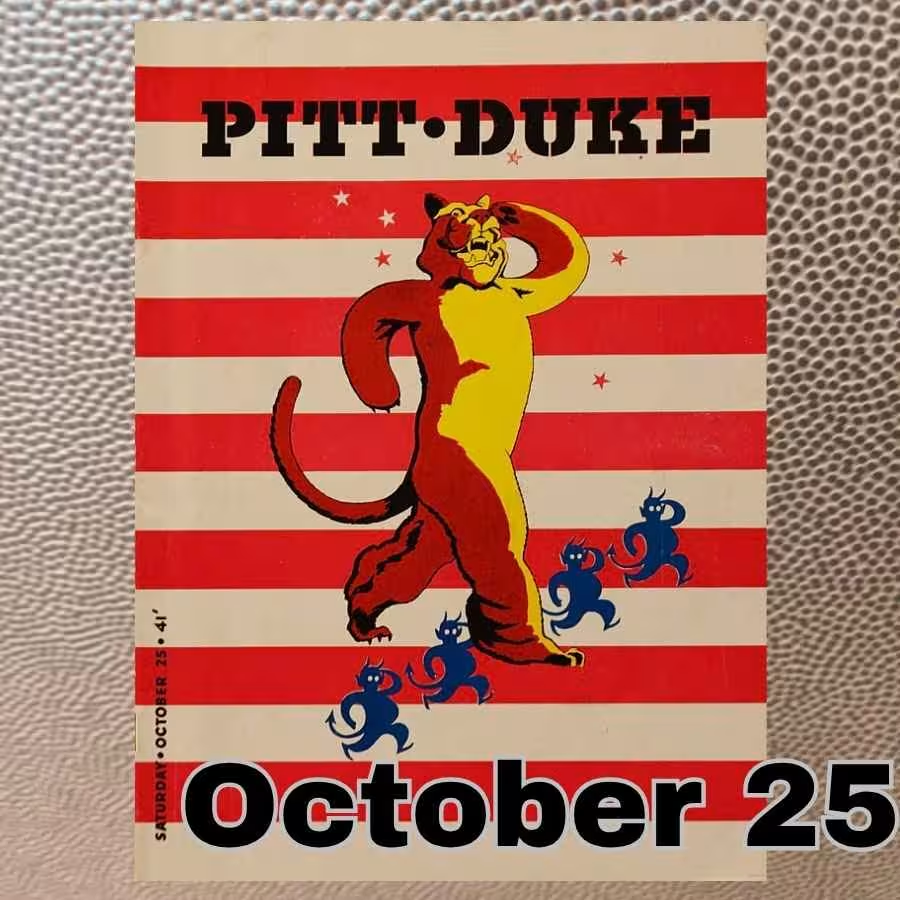
- Other Contenders: The University of Pittsburgh, coached by Pop Warner, also claimed a national championship share with a 10–0 record, featuring a defense that allowed only 31 points all season.
Professional and Military Football
While the NFL did not yet exist (forming in 1920), the “Ohio League” served as the premier professional circuit. However, the most unique aspect of 1917 was Military Football.
- Canton Bulldogs: Led by the iconic Jim Thorpe, the Bulldogs went 9–1, further cementing Thorpe’s status as the greatest athlete of the era.
- Service Teams: Bases like Mare Island Marines and Camp Lewis formed formidable teams composed of drafted stars, often competing against—and defeating—major university programs.
Key American Football Rules Revisions of 1917
The 1917 football season introduced several pivotal rule changes designed to improve sportsmanship and clarify gameplay. Here is a summary of the most significant updates:
Communication & Substitutions
- The “Silent” Substitute: To prevent coaches from sending in plays via players, incoming substitutes are forbidden from communicating with their team until after their first play.
- Quarterback Exception: If a substitute replaces the quarterback, they are permitted to call the signal immediately.
Kicking & Kick-offs
- Place-Kick Definition: A place-kick must be made from the ball’s natural position on the ground. While players can scrape up dirt to create a natural spot, the use of artificial tees is strictly prohibited.
- Player Motion: During kick-offs and free-kicks (non-scrimmage plays), players are now allowed to be in motion in any direction, provided they remain behind the ball (on-side) at the moment of the kick.
Fouls & Penalties
- Pass Interference: The penalty for interfering with a player attempting to catch a forward pass is now the loss of the ball to the offended team at the spot of the foul.
- Roughing the Kicker: Penalties for running into or roughing the kicker are now measured from the previous spot (where the ball was put in play) rather than the spot of the foul.
- Incomplete Passes: The rules now clarify that an incomplete forward pass is a play result and does not constitute a foul.
A Deep Dive into 1917 Football History and Highlights
- January 1, 1917 – In what we now call the 3rd Rose Bowl, then the Tournament East-West Football Game, the Oregon Webfoots defeated the Penn Quakers 14-0. It was the first time the bowl occurred in consecutive years.
- November 10, 1917 – Upset of the season? A freshman Buck Flowers at Davidson helped in the upset bid over Auburn 21–7.