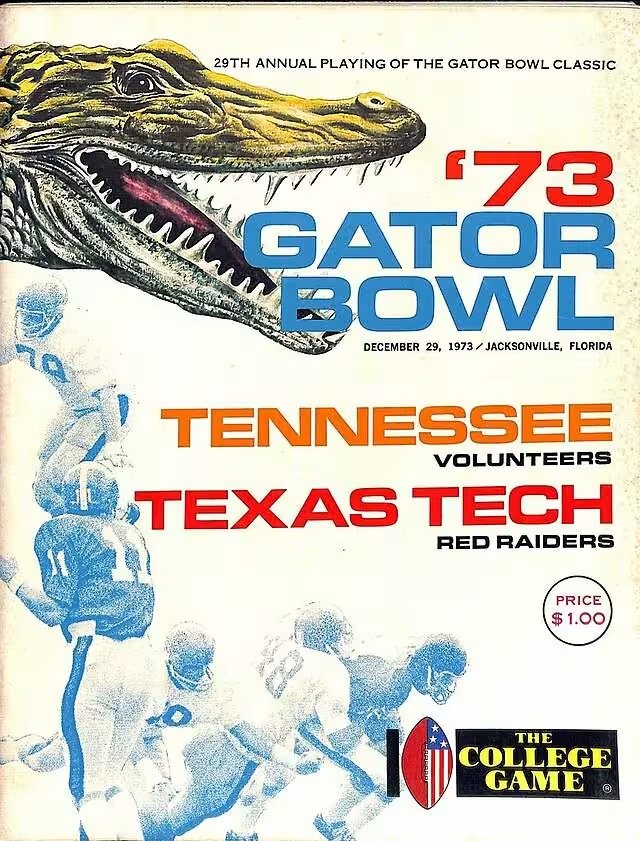
Imagine a time when a coach couldn’t talk to his players from the sideline, or a punter could hold a powerhouse opponent to zero points by pinning them inside the ten-yard line fourteen times in a single game. On April 20, pivotal changes occurred: in 1944, the rule legalizing coaching from the bench was adopted; in 1945, the Cleveland Browns franchise was born, setting up future dominance. Through events spanning decades—from the arrival of “The Golden Greek” Harry Agganis and versatile “Jaguar” Jon Arnett to the Heisman legacy of Steve Spurrier—April 20 has marked many turning points in football history, often driven as much by what happened off the field as on it.
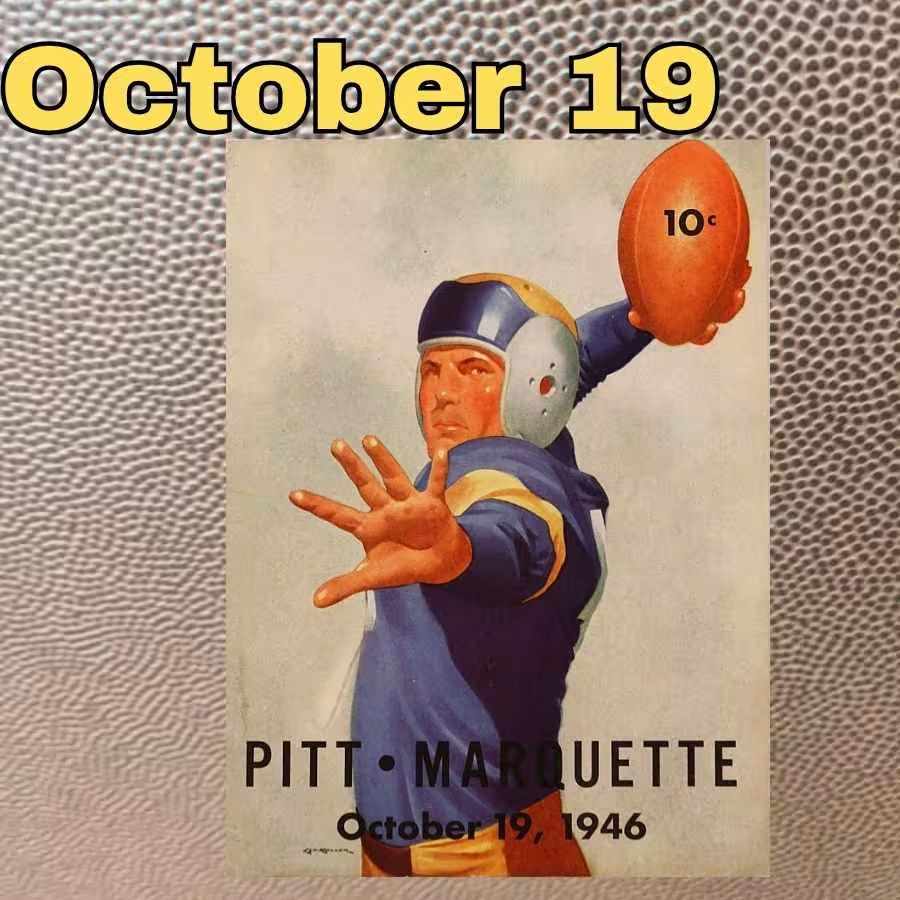
First, some Football Art appreciation….
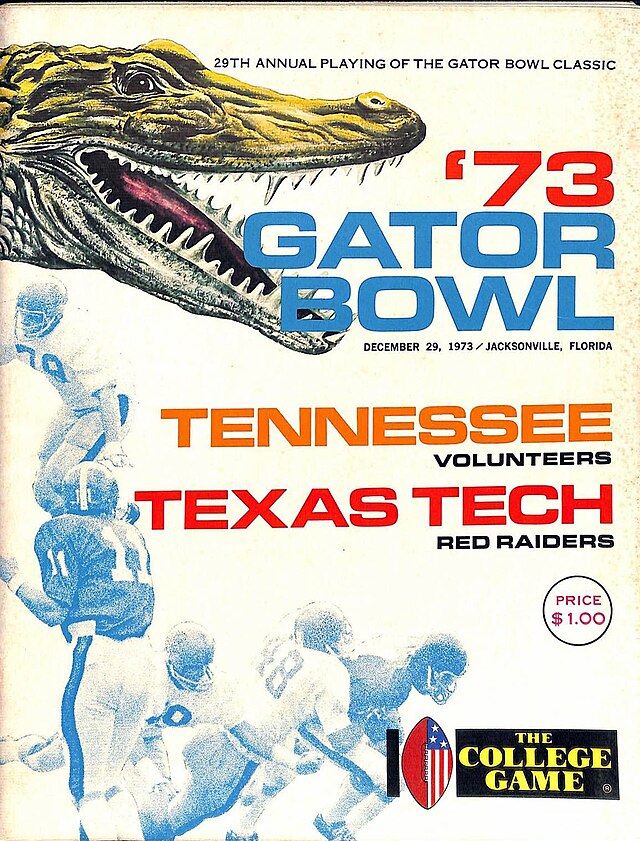
April 20 American Football History Timeline
- April 20, 1888 – The first football game in Notre Dame history kicks off at a baseball venue called Green Stocking Ballpark in South Bend, as the Michigan Wolverines visited and defeated the Irish 26-6. Check out a look at the only known game program from this moment at RockneAndMore.com.
- On April 20, 1944, the NFL legalized coaching from the bench. According to an article in the Mason City, Iowa’s Globe-Gazette on that day by the United Press, NFL Commissioner Elmer Layden announced that the League would adopt a rule similar to professional ice hockey, allowing players to enter the game freely without reporting to an official during periods when play was suspended. Also, kickoffs that went out of bounds were called a foul, and the offending team would receive a five-yard penalty. The coaching rule allowed coaches to move freely within 10 yards of the center of the bench on either side, and it also allowed players to come to the bench to talk to the coach during timeouts for instruction.
- April 20, 1945 – The Cleveland Browns organization was formed by Arthur “Mickey” McBride. Mickey acquired the franchise in the new All-America Football Conference that would begin play in the 1946 season, according to the Pro Football Hall of Fame. McBride’s first act after acquiring the team was to hire a coach and general manager, and he did both with the selection of one man, Paul Brown. Coach Brown had been a very successful high school, college, and service coach, and he was the right man for the job. The Browns dominated the AAFC, winning all four of its championships, and also won the NFL championship shortly after the leagues merged the Browns, Colts, and 49ers into the NFL.
- Keyshawn Johnson and the 1996 Draft [1996] Thirty years ago today, the Jets made Keyshawn Johnson the #1 overall pick, sparking a legendary draft class. This group eventually produced Hall of Famers Jonathan Ogden, Marvin Harrison, Ray Lewis, Brian Dawkins, and Terrell Owens.
- The Texans’ First Pick [2002] The NFL landscape shifted on this day in 2002 when the expansion Houston Texans used their inaugural #1 overall pick on Fresno State quarterback David Carr, ahead of future stars like Julius Peppers.
April 20 Football Hall of Fame Birthdays
Happy Birthday to these gridiron legends! Since today is April 20, 2026, we are celebrating a massive lineup of Hall of Fame talent and significant league milestones.
Here is your list of birthdays and historical events in order:
- Murray Shelton [1893] A deadly-efficient end for Cornell, Shelton anchored the 1915 “Big Red” team that went 9-0 and blanked a powerful Harvard squad. His instinctive play and All-American chemistry with quarterback Charles Barrett earned him induction into the College Football Hall of Fame in 1973.
- Eric “The Red” Tipton [1915] A Duke standout known for his masterful punting, Tipton famously pinned Pitt inside their own 10-yard line seven times during a snowy 1938 battle. He led the “Iron Dukes” to an undefeated regular season that year, where they didn’t allow a single point until the final minute of the Rose Bowl.
- Ernie Stautner [1925] Born in Bavaria, Stautner became the rugged face of the Pittsburgh Steelers’ defensive line for 14 seasons. A nine-time Pro Bowler and 1969 Pro Football Hall of Fame inductee, he was so dominant that he became the first player in Steelers history to have his number (70) officially retired.
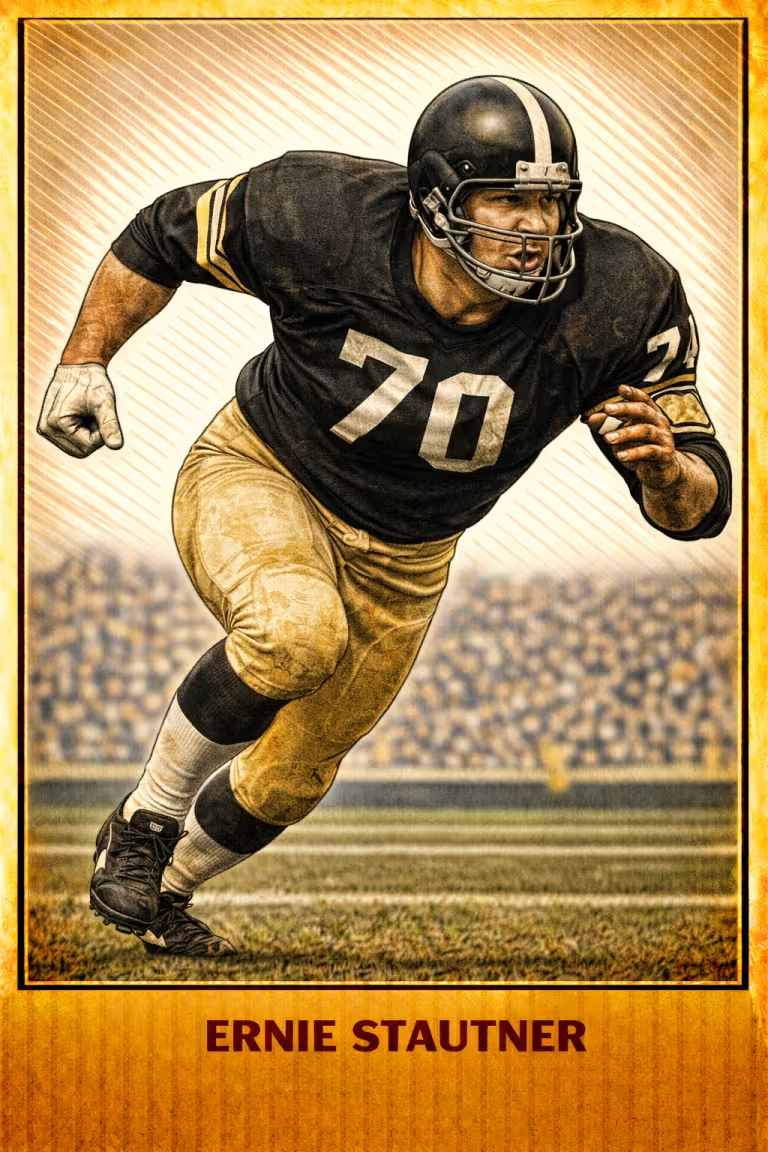
ERNIE STAUTNER
1950–1963
- Hub Bechtol [1926] A star for both Texas Tech and the University of Texas, Bechtol was the first player in Southwest Conference history to be named a three-time All-American. He was a favorite target of Bobby Layne, famously hauling in nine catches during the 1946 Cotton Bowl victory over Missouri.
- Harry Agganis [1929]. Known as the “Golden Greek,” Agganis was Boston University’s first-ever All-American and a multi-talented threat who excelled at quarterback, punting, and defense. Despite a stint in the Marine Corps, he returned to campus to set school records before a tragically shortened professional career.
- “Jaguar” Jon Arnett [1935] A versatile halfback and elite punt returner for USC, Arnett led the Trojans in rushing and scoring for multiple seasons in the mid-1950s. A 2001 College Football Hall of Fame inductee, the “Jaguar” was celebrated for his explosive playmaking and ability to impact every phase of the game.
- Steve Spurrier [1945] The “Head Ball Coach” was born on this day in Miami Beach before becoming a Heisman-winning quarterback at Florida. A rare two-time Hall of Fame inductee (as both player and coach), he led his alma mater to the 1996 National Championship and revolutionized the SEC with his “Fun ‘n’ Gun” offense.
- Luke Kuechly was born on April 20, 1991, in Cincinnati and was a star linebacker for the Carolina Panthers.
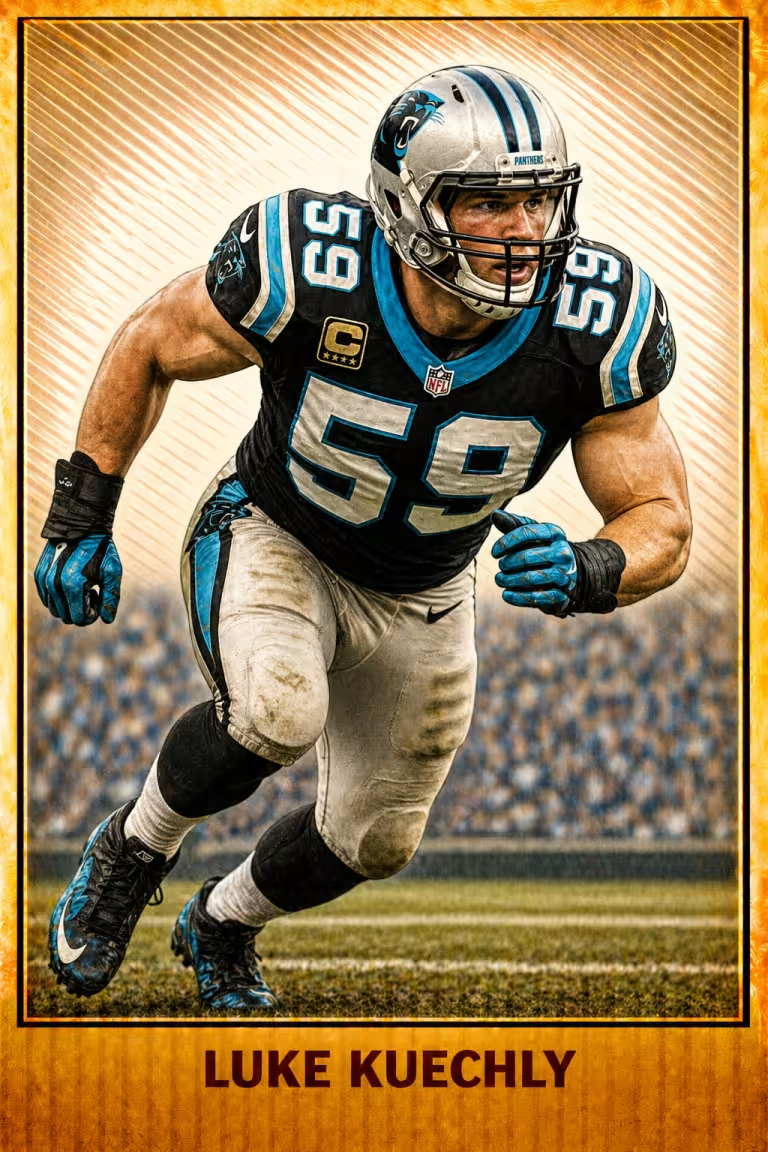
LUKE KUECHLY
2012–2019
Conclusion
The milestones of April 20th highlight the evolution of football from a restricted tactical game to the wide-open, high-scoring spectacle we love today. We see this progression in the Hall of Fame careers of defensive stalwarts like Ernie Stautner and the offensive wizardry of Hub Bechtol and Steve Spurrier. From the Browns’ birth to the star-studded 1996 NFL Draft that brought us legends like Ray Lewis and Terrell Owens, this date serves as a reminder that every rule change and every draft pick builds the foundation of football history.