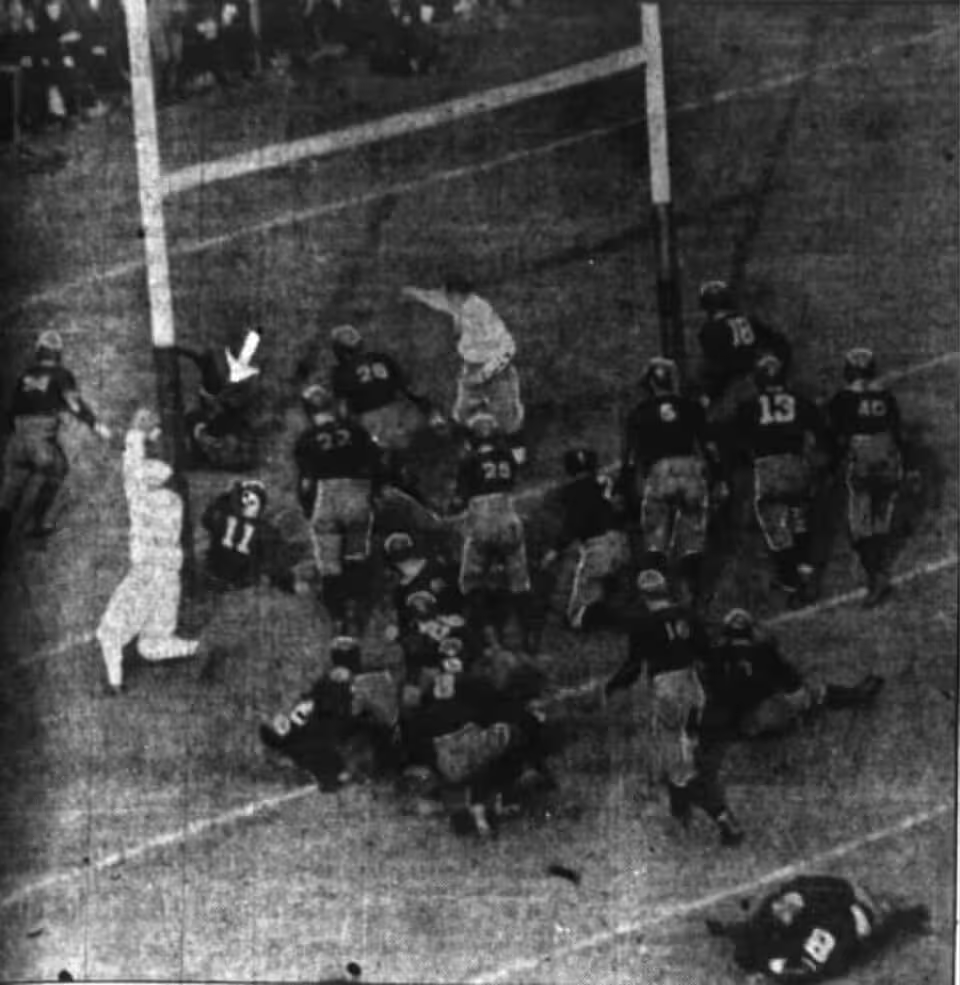
The 1922 American football season was a landmark year that fundamentally shaped the identity of the sport. It featured the official rebranding of professional football’s top League and a fiercely contested college landscape defined by legendary undefeated teams.
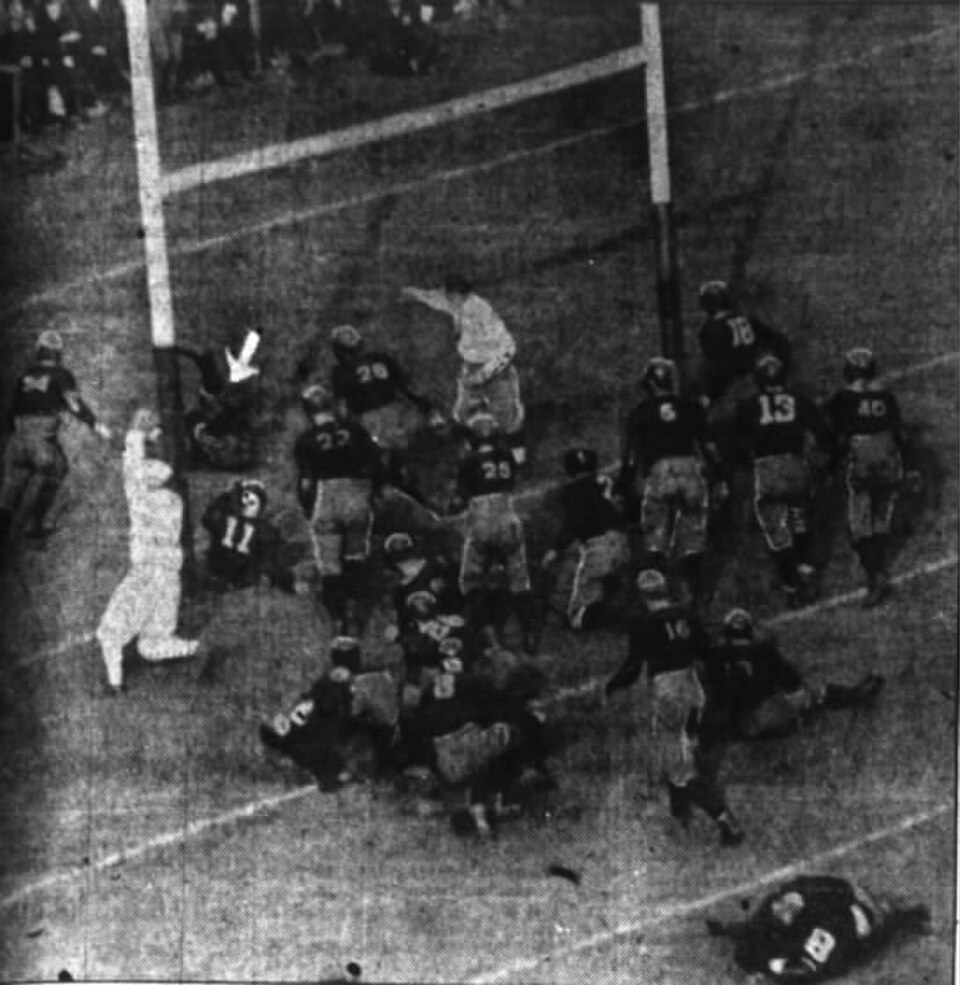
The Birth of the NFL
The most permanent milestone of 1922 occurred off the field. On June 24, 1922, the American Professional Football Association (APFA) officially changed its name to the National Football League (NFL), establishing the moniker that remains globally recognized today.
- The Canton Bulldogs Dominate: Led by player-coach Guy Chamberlin and legendary tackle Pete Henry, the Bulldogs tore through the 18-team league. They finished with an undefeated 10–0–2 record to capture the official 1922 NFL Championship.
- The Chicago Bears Rebrand: After operating as the Chicago Staleys, George Halas’s franchise officially renamed itself the Chicago Bears, finishing as league runners-up with a 9–3 record.
- The Oorang Indians: Jim Thorpe headlined a unique, highly popular all-Native American traveling team sponsored by the Oorang Airedale kennels of Marion, Ohio.
1922 College Football Highlights
College football saw immense growth in national media coverage and stadium infrastructure, though it ended with no single consensus national champion. Five teams finished unbeaten and untied, leading various retro-active selectors to split the crown:
- Princeton (8–0): Dubbed the “Team of Destiny” by legendary sportswriter Grantland Rice, the Tigers defeated Chicago 21–18 in a historic matchup—the first college football game to be broadcast nationally on the radio.
- California (9–0): Head coach Andy Smith’s “Wonder Team” extended its multi-year unbeaten streak, absolutely dismantling Pacific Coast opponents.
- Cornell (8–0): Utilizing Gil Dobie’s lethal single-wing offense, the Big Red outscored their opponents by a staggering total of 339 to 27.
- Stadium Firsts: Vanderbilt and Michigan played to a 0–0 tie to inaugurate Dudley Field, the American South’s very first permanent, dedicated college football stadium.
Key Trends & Developments
- Financial Stability: For the first time in pro football history, league president Joe F. Carr announced that every starting NFL franchise managed to survive the grueling season without folding due to financial ruin.
- Intersectional Success: Southern football began proving its mettle against established Eastern powerhouses, highlighted by the Alabama Crimson Tide securing a shocking 9–6 upset over Penn.
A Deep Dive into 1922 Football History and Highlights
- January 2, 1922 – Tournament Park, Pasadena, California – The 8th Rose Bowl featured a small college from Pennsylvania, Washington and Jefferson, against the University of California. The story is a gripping tale about the game. The Golden Bears were the top team on the West Coast, while W&J was undefeated in 1921 and the best team on the East Coast. With only 450 students, W&J was the smallest school ever to participate in a Rose Bowl, and Cal was the 14-point favorite. The story of the Presidents’ journey to Pasadena adds to the legendary East-versus-West matchup. During W&J’s undefeated season, only 11 of the 17 young men on the roster played on game days. In this era before platooning and specialists, those 11 players stayed on the field for every snap. Greasy Neale, a great player and coach on both the gridiron and the baseball diamond, coached this western PA group. Greasy would later coach the Philadelphia Eagles in the 1940s. The 1921 football budget for Washington and Jefferson was exceptionally tight; they only had funds to send 11 players to the Rose Bowl. Rumor says the athletic administrator had to mortgage his home to attend. During the cross-country trip, C.L. Spillers, one of the starting 11, contracted pneumonia and was left in Kansas City, threatening W&J’s ability to field a full squad. Author E. Lee North’s narrative claims Bucky Buchanan, a reserve, had stowed away on the train and was given Spillers’ ticket when needed. The December 28, 1921, New York Tribune, however, says the team wired home for another reserve, Al Haddon. Buchanan’s presence in Pasadena team photos lends credence to the stowaway story. The Presidents made it to Pasadena and fielded eleven players for the final game at Tournament Park. W&J’s quarterback, Charles West, added another milestone as the first signal caller of African-American descent to play in the Rose Bowl. The defensive battle held Cal to 49 rushing yards and zero completions; W&J managed 114 rushing yards but could not score. The game ended in a 0-0 tie, the only scoreless Rose Bowl. Russ Stein W&J’s captain, was named Most Outstanding Player and went on to play in the NFL, entering the Rose Bowl Hall of Fame in 1991. For more on the background of this game and its legendary coaches you may want to get a copy of our book “When Greasy Met the Wonder Coach“
- January 28, 1922 – The American Professional Football Association (APFA) officially changed its name to the National Football League (NFL).
- January 28, 1922 – Opening day of the APFA/NFL’s off-season meetings. President Joe Carr dealt with the outrage over college football’s amateur players who participated in the 1921 Taylorville-Carlinville scandal and the Green Bay Packers’ use of three Notre Dame players. The NFL proceeded to collect a $1,000 bond for each team, which that franchise would forfeit if it used amateur players as ringers. Curly Lambeau’s Green Bay Packers were ousted from the League.
- May 5, 1922 – Construction began on old Yankee Stadium. The House that Ruth Built was also a great football venue for almost 100 years.
- June 9, 1922 – Curly Lambeau formally applied to enter a new NFL Franchise called the Green Bay Blues. The press and the public never embraced the name change, and the club officially returned to its original name in 1923.
- June 28, 1922 – The NFL summer meetings commenced. The NFL accepted the Green Bay franchise, now called the Blues, back into the fold after paying nearly $1500 in application and Bond fees as a new franchise.
- August 20, 1922 – The Toledo Maroons franchise formed, and they played from the 1922 to 1923 season.
- December 7, 1922 – The Packers in Dire Trouble. With a weather-plagued season leaving Green Bay’s franchise deeply in debt, local football boosters met at the Elks Club and launched plans for a stock sale to save the franchise, per Packers.com. Local attorney John Kittell presided over the meeting and appointed a committee—consisting of Andrew B. Turnbull, Lee Joannes, Fred Hurlbut, Ray Tilkens, and George De Lair—to organize the sale. From this effort, the publicly owned Green Bay Football Corporation emerged.