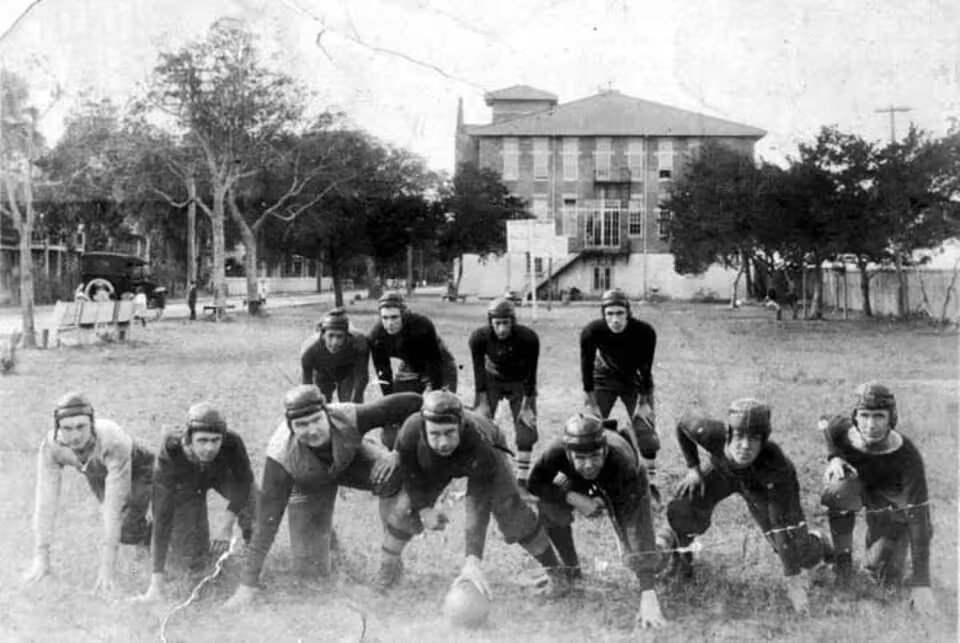
1914 American Football Season: An Overview
The 1914 American football season was a landmark year that signaled the transition of the sport from a grueling game of attrition to a more strategic, modern contest. Dominated by the “Freshman” sensations and the rise of powerhouse programs in the East and Midwest, the season was defined by the dominance of the Army Black Knights and the Illinois Fighting Illini.
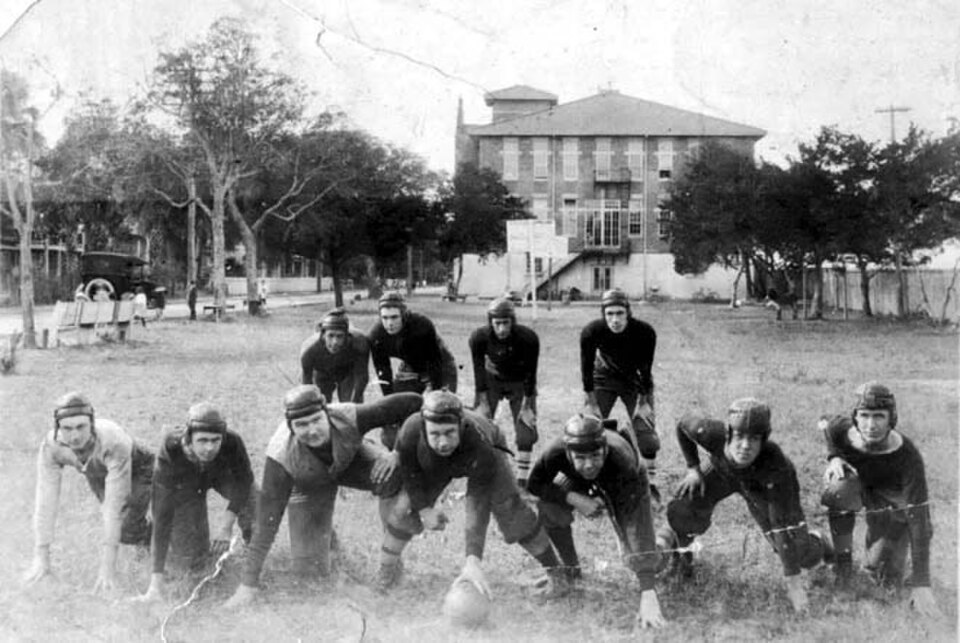
The Birth of the I-Formation
One of the most significant shifts happened in Champaign, Illinois. Coach Bob Zuppke, a certified tactical genius in only his second year at the University of Illinois, unveiled a brand-new offensive alignment: the I-Formation.
By lining three backs up directly behind the quarterback in a “north-south” line, Zuppke created a defensive nightmare. Defenders had to freeze for a split second to figure out which back had the ball—and in football, a second is an eternity. Zuppke didn’t stop there; he pioneered the “screen pass” by teaching guards to drop back rather than just charging forward, a move that was considered revolutionary at a time when “giving up ground” was seen as a weakness.
Tactical Rebirth at Notre Dame
Even the legends had to pivot. After a crushing 28-0 loss to Yale, Notre Dame coach Jesse Harper and his assistant, a young man named Knute Rockne, used the long train ride back to Indiana to overhaul their system. They began implementing backfield shifts and “spacing out” the ends from the tackles—the early DNA of the modern spread and shift offenses we see today.
The Rise of the South and the Forward Pass
1914 also signaled a power shift toward the Midwest and South.
- Texas went undefeated, racking up a staggering 358 points in just eight games.
- Oklahoma took the “aerial assault” to a new level. Despite the forward pass being relatively new, Coach Benny Owen made it his primary weapon, averaging 30 passes a game and scoring 25 touchdowns through the air.
- The Southwest Conference was born, featuring original members like Texas, Texas A&M, and Baylor, forever changing the landscape of collegiate sports.
Bigger Stages, Modern Traditions
As the game grew, so did the venues. 1914 saw the completion of the massive Yale Bowl, seating 64,000 fans, and Princeton’s Palmer Stadium.
Even the fans were becoming “modern.” The first recorded instance of fans tearing down the goalposts occurred this year at a high school game in Kansas—proving that some football traditions are as old as the game itself.
The Champions of 1914
The season ended with a three-way tie for the national collegiate title between Illinois, Texas, and Army. Meanwhile, in the professional ranks, the Akron Indians repeated as champions of the Ohio League, then the pinnacle of pro football.
From the I-Formation to the birth of major conferences, 1914 was the year football stopped being just a game of brawn and started becoming a game of chess.
Key Highlights of the Season
- National Champions: Both Army (9–0) and Illinois (7–0) finished the season undefeated. While the concept of a single “National Champion” was informal at the time, both programs are historically recognized for their perfect campaigns.
- The Rise of Red Grange’s Predecessors: Robert Zuppke’s Illinois team utilized innovative offensive schemes, capturing the Big Ten (then the Western Conference) title and outscoring opponents 224 to 22.
- The Harvard Powerhouse: Harvard, led by legendary coach Percy Haughton, continued its era of dominance, finishing 7–0–2 and featuring stars like Eddie Mahan. Their scoreless tie against Brown and a draw against Penn were the only blemishes on an otherwise stellar record.
- The Forward Pass Evolution: While the forward pass had been legalized in 1906, 1914 saw teams integrating it more fluidly into their playbooks, moving away from the “flying wedge” styles of the previous decade.
A Deep Dive into 1914 Football History and Highlights
- February 6, 1914 – The NCAA Football Rules Committee made more than a dozen rules changes. Though most were not significant, a few altered the kicking game; a FG attempt that hit the goal post and returned to the field would no longer be awarded a safety to the defense. (Football Archaeology and Newspapers.com)
- November 21, 1914 – The first football game at the Yale Bowl was played against Harvard. The Crimson spoiled the grand opening with a 36-0 drubbing of the Bulldogs in front of 68,000 fans.