
The 1888 season was a very radical year, as a couple of seemingly small rules changes from the spring conventions turned the game tacticians on their ear. Offensive formations became tighter to prevent defenders from using the new rule allowing tackles below the waist but above the knees. The wide-open game of previous years would fade away. The offensive masterminds also came up with schemes in which a blocking back would charge through the line ahead of the runner; this was a new concept. The defensive side also changed its strategy. Besides using their new low-tackling to take down ball carriers more efficiently, they also set up waves of defenders similar to what we now know as linebackers and the defensive secondary.
A Deep Dive into 1888 Football History and Highlights
- May 5, 1888 – Association’s Rules meeting. A rule was instituted that prevented the snapper-back (center) from running with the ball until it touched a third player. Also, a precursor to preventing holding was written into the rules by limiting members of the rush line’s use of extended arms.
- October 18, 1888 – The first intercollegiate game in the state of North Carolina was when Wake Forest defeated North Carolina 6–4. This was Wake Forest’s first football game ever played.
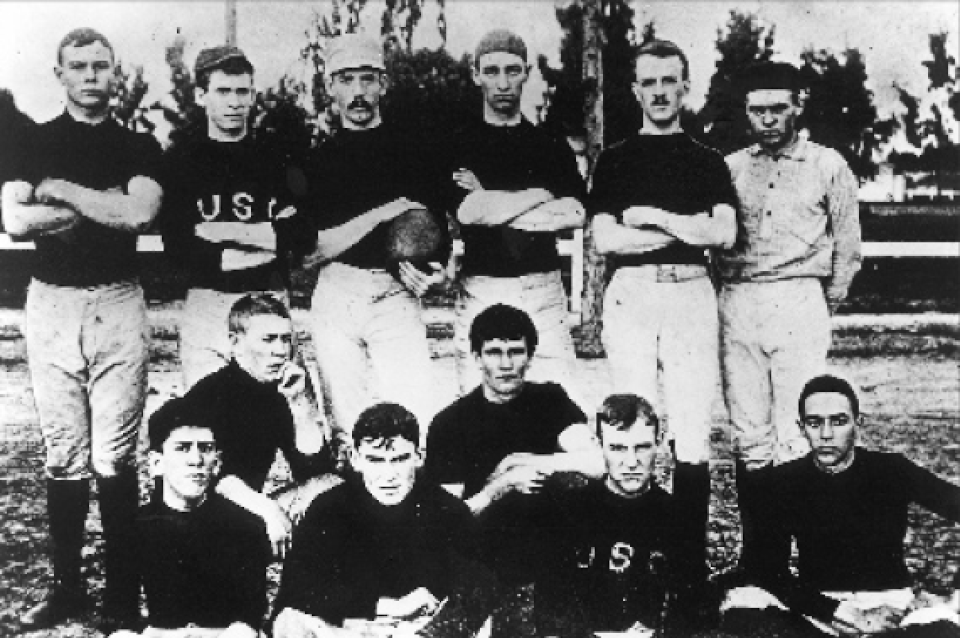
- November 14, 1888 – The University of California played its first football game. The team known as the Fighting Methodists (not Trojans yet) played the Alliance Athletic Club, and USC won the game 16-0.
- November 29, 1888 – The first “scientific game” took place on Thanksgiving, as North Carolina played Duke (then the Trinity Blue and White). Duke won 16 to 0.
A new way of presenting rule reform
These breakthroughs came from a newly established approach: presenting rules through a special committee comprised of graduates from member schools. This Graduate Advisory Committee, created at the 1887 Intercollegiate Association Convention, was tasked with developing rules and handling member appeals.
It was decided that the Committee would meet on the first Saturday in March each year and present its findings to the Secretary of the Intercollegiate Association by the first week of April of that same year. Each school would elect graduate representatives to serve for a one-year term, and additional graduates from the school would be selected during commencement week to serve for two-year terms. It is of no small importance that a man by the name of Walter Camp was one of the graduates appointed by Yale for a two-year term.
These changes set the stage for even more reform in the years ahead, as the next Intercollegiate Association convention later confirmed.
5 May 1888: Convention makes changes too!
The Fifth Avenue Hotel in New York City was once again the meeting place for the Association’s members. This meeting was the first convention after the Graduate Advisory Committee’s very first meeting.
The first thing the convention attendees did was flex their muscles and veto the suggestion of the Advisory Committee to amend the rule, which said the snapper-back could not run with the ball until it touched a third player. What this did was make it legal for the snapper to snap the ball to an awaiting hand of a back, then bring it back to himself and plunge ahead. This must have been a popular play at the time for short-yardage situations or as a surprise tactic. It would definitely keep a defensive line honest!
The Convention also decided to accept the suggested rule change to block on the “rush-line” after a slight modification. The Advisory Committee’s proposal of “prohibiting players in the rush-line from blocking with extended arms” was modified by the Association to read, “No player shall lay his hands upon or interfere by the use of his hands or arms with an opponent unless he has the ball.” This sure sounds like a precursor to our current holding foul. All of the other suggestions from the May 1888 Committee were accepted by the Association.