From the crack of the bat at the opening of a legendary multi-sport stadium to the “Beefy” defensive stands of the 1890s, May 12th is a cornerstone date in the American football timeline. Imagine a time when coaching from the sidelines could get you banished “behind the ropes.” Picture a defensive guard so dominant he ended a 37-game winning streak for the mighty Yale Bulldogs. Whether it’s the professional transition of St. Louis’s Busch Stadium or the birth of dual-threat pioneers like Randall Cunningham and Don McCauley, today’s “Football Fix” celebrates the innovators and icons who shaped the game from the trenches to the end zone.
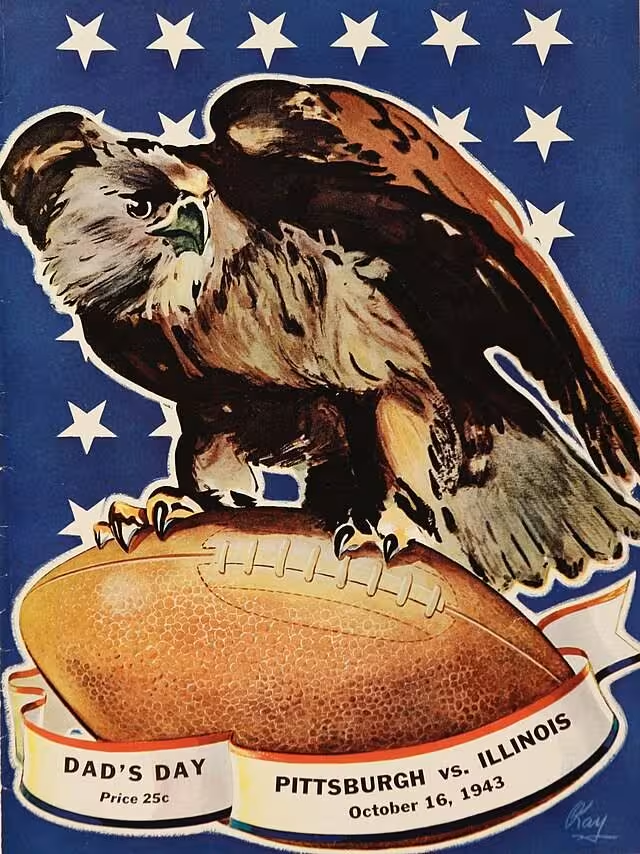
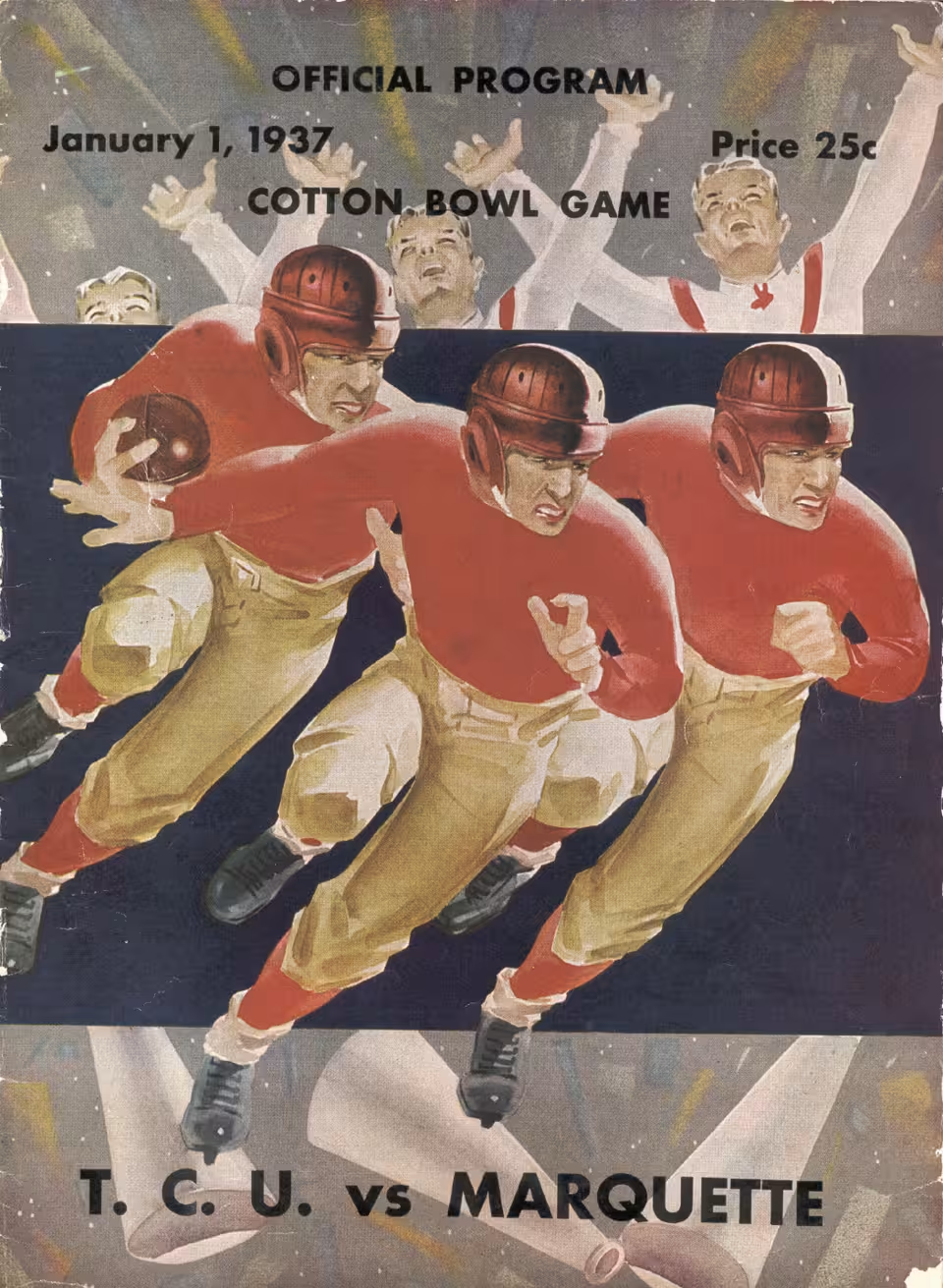
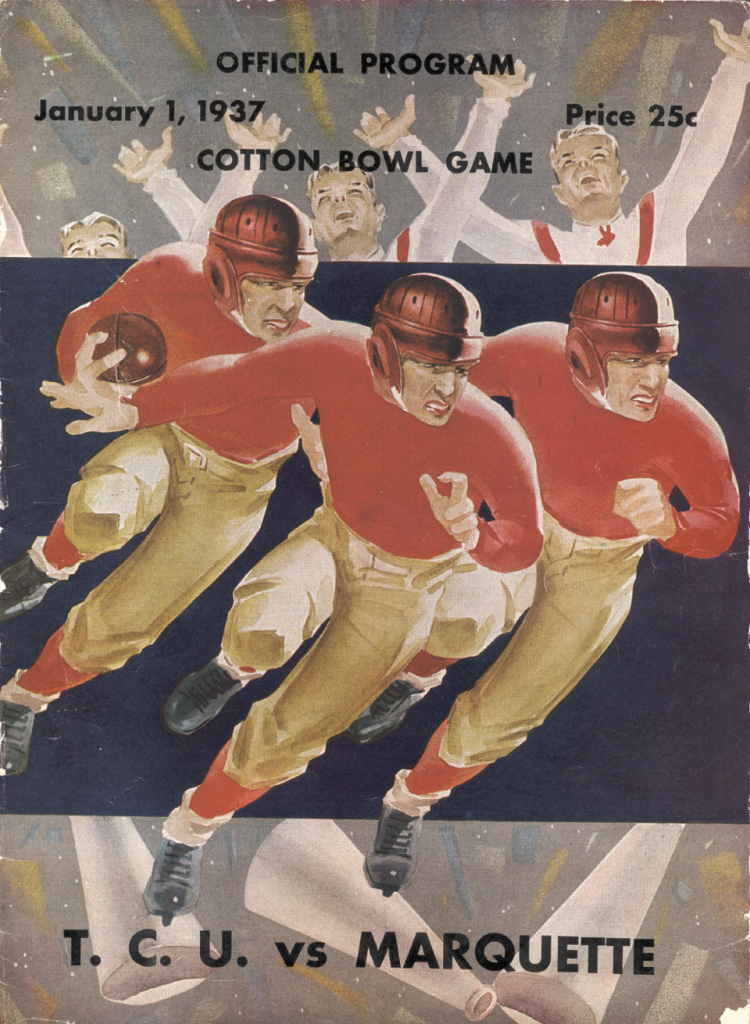
Take a moment for gridiron art appreciation:
May 12 American Football History Timeline
- May 12, 1892 – Rules Convention adopted a rule, among others, that the Umpire could warn any person coaching from the sidelines, and a second offense would have the offender watch the rest of the game “behind the ropes” or away from the field of play and with other spectators.
- May 12, 1966 – St. Louis’ Busch Stadium opens; Braves lose to the Cards 4-3 in 12 innings. The St. Louis Football Cardinals played in Busch Stadium from 1966 through the 1985 season. The St. Louis Rams also played there and were the last home team in the final gridiron game, played on October 22, 1995, against the San Francisco 49ers. After the Rams left Busch Stadium, it was retrofitted for baseball only. Grass replaced the Astroturf, and numerous other improvements were completed at Busch Stadium.
May 12 Football Hall of Fame Birthdays
Happy Birthday to these gridiron legends! Since today is May 12, 2026, we celebrate a lineup of Hall of Famers and “undefeated” stars whose impacts span over a century of football.
Here is the list in order of birth:
- Art Wheeler [1872] A legendary guard for Princeton in the early 1890s, “Beef” Wheeler was the anchor of a defensive unit that famously ended Yale’s 37-game winning streak in 1893 to secure a National Championship. A three-time All-American, he led a Tiger line that shut out 26 of 35 opponents during his collegiate career before being inducted into the College Football Hall of Fame in 1969.
- Harold Davis [1934] A dominant multi-sport threat at Westminster College, Davis was a three-time NAIA All-American quarterback who led the Titans to a staggering 27-1-1 record, including three undefeated seasons. His legendary athleticism extended to the basketball court, where he scored over 1,200 points, earning him a place in the College Football Hall of Fame in 2004.
- Joe Cichy [1948] The ultimate “winner,” Cichy transitioned from backup quarterback to an All-American safety at North Dakota State, where he spearheaded a 29-0-1 run and two national titles. Combined with his high school years, he achieved an incredible personal streak of 55 games without a loss, a legacy of success he later continued as a coach with 20 state championships at Shanley High.
- Don McCauley [1949] A versatile offensive machine for North Carolina, McCauley led the nation in all-purpose yards and scoring in 1969 and 1970, famously racking up 21 touchdowns in just 11 games. After the Tar Heels retired his jersey (No. 23), he enjoyed a productive 11-year NFL career as a reliable dual-threat back for the Baltimore Colts.
Conclusion
The milestones of May 12 highlight the incredible evolution of football’s rules, venues, and legendary figures. We move from Art Wheeler’s 19th-century grit at Princeton to the modern dominance of Hall of Famers like Don McCauley and Joe Cich. Their winning streaks and scoring records remain the stuff of campus legend. These stories—of stadiums that housed both homers and touchdowns, and players who excelled on both the gridiron and the hardwood—remind us that the history of the game is a rich tapestry of versatile talent. As we look back on these anniversaries, we honor the men who ensured football would grow from a sideline-coached experiment into America’s premier passion.