The 1910 American football season marked a turning point. After years of excessive physical risk and public concerns over player deaths, the sport underwent significant rule overhauls to improve safety and diversify gameplay.
Season Overview: A Game in Transition
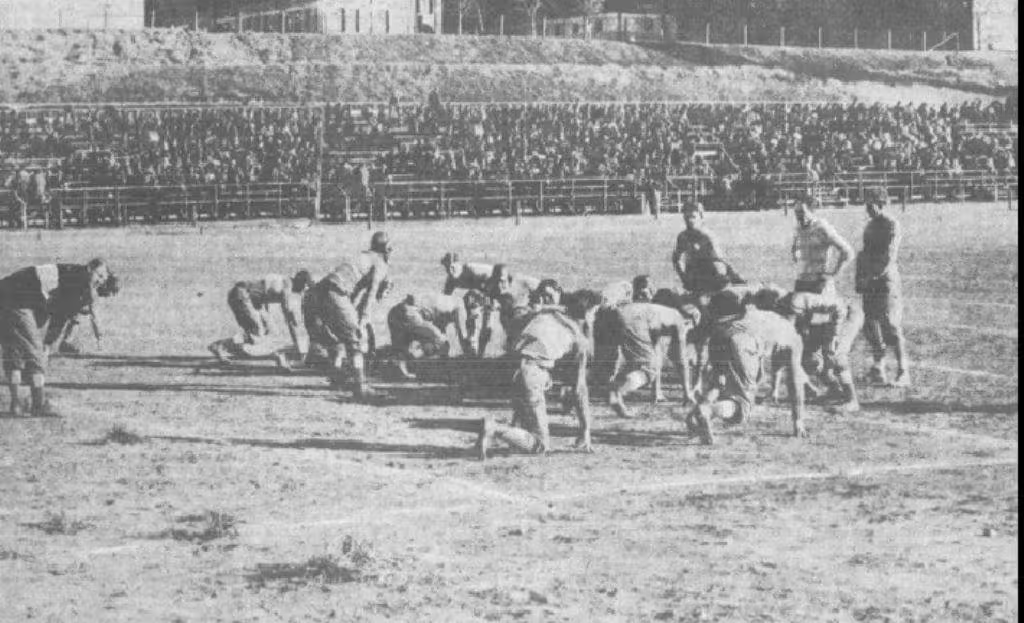
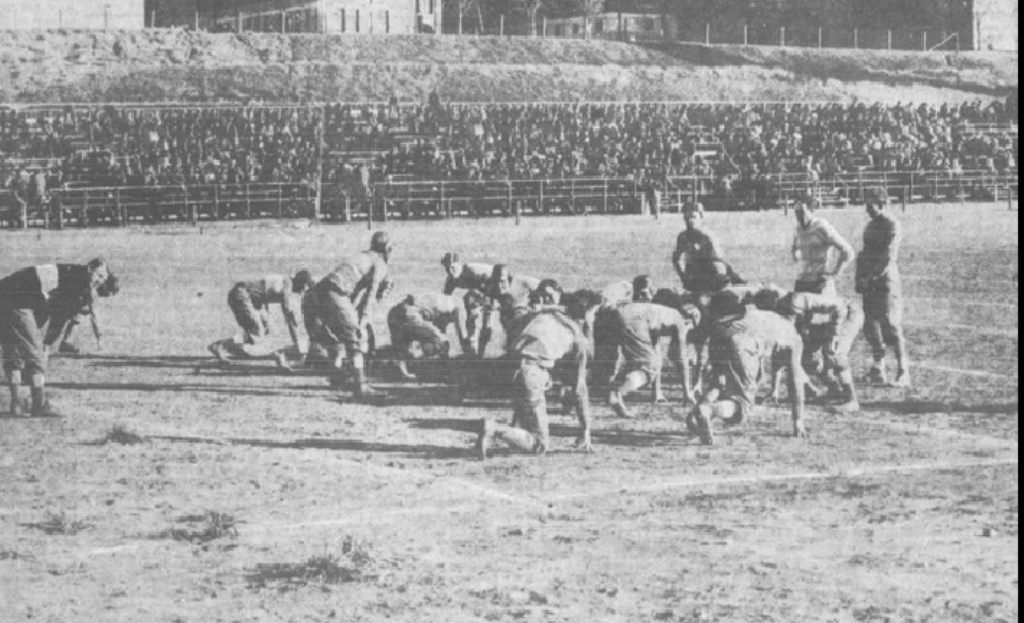
In 1910, the Intercollegiate Athletic Association of the United States (which later became the NCAA) implemented several major rule changes. These were intended to move the sport away from the use of ‘mass-momentum’ plays, such as the Flying Wedge—where players would form a V-shaped formation and charge as a group—which had led to numerous injuries.
The year 1910 was one of the most important years in the evolution of football, if not the most significant in the sport’s history. We have examined many of the revisions to the rules that the joint sessions of the Intercollegiate and Conference Committees proposed and passed in the past few editions of this series. The two committees would sit together and be known as the American Intercollegiate Football Rules Committee. This part of our series will conclude the revisions of 1910 and also provide the reasons necessitating the change in greater depth.
Line to gain rule revised
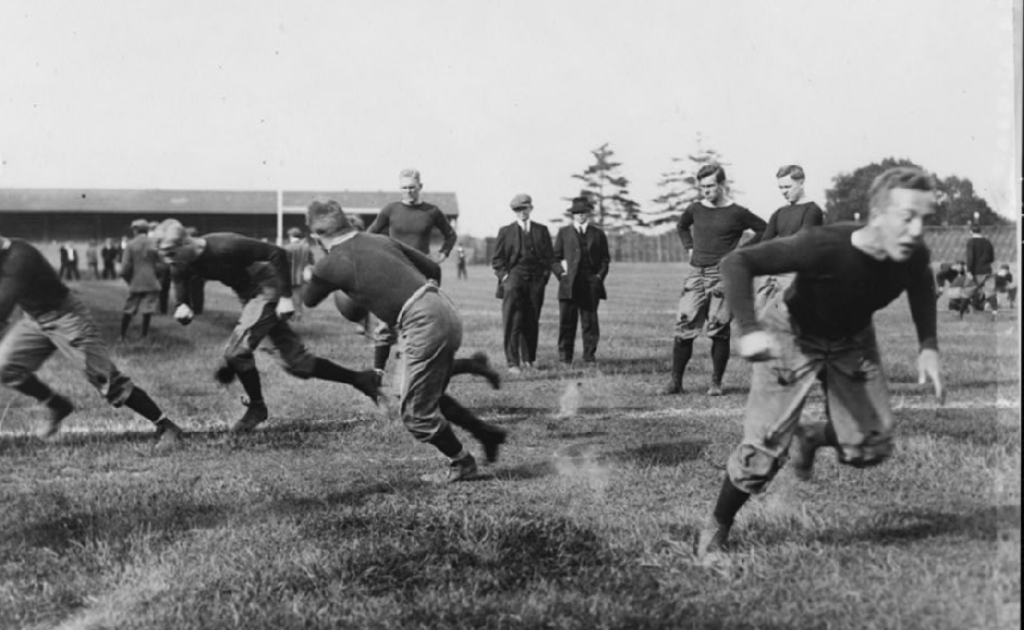
One change that we have not discussed much was considered long overdue by some committee members. Walter Camp and J. B. Fine of Princeton had been proposing that the distance of the line to gain should be increased from five yards to ten yards. Others, such as P. J. Dashiell of the Navy, suggested increasing the distance to eight yards. The recommendations from previous years were accepted in 1910, as the rule was revised to allow an offensive team to earn a first down by advancing the ball 10 yards in three downs. If the team in possession failed to advance the ball 10 yards in three downs, the opposition would gain possession of the ball at its position after the third down.
These extra five yards needed to reach the line of gain were significant, as they somewhat nullified the mass momentum and interlocked blocking plays that had been practiced. These plays generally only produced short gains, which were great when you had a distance of a mere five yards to conquer in three tries. It was a much more daunting challenge at hand to use the same plays to go twice that distance in the same number of attempts.
Tackling rules have also been modified.
Tackling techniques were tinkered with as well during the rash of rule revisions in 1910. Tackling a runner below the knees was illegal unless you were a defender positioned on the line of scrimmage. The terminals of this defensive line were the exceptions, though, as they were not allowed to hit a runner below the knees. The provision of this ruling that a defender who made his initial contact above the knees and then “slipped” to contact with the lower leg of the runner was acceptable and legal.
Another rule that altered defensive play was that of piling on. Players of both sides were now not permitted to pile on a downed runner. Previous years had seen this as an accepted practice, especially among defenders, but the action had resulted in many player injuries. This practice also caused a lot of ill will among guys at the bottom of the pile toward those who were jumping on top of the mass of humanity, as you can well imagine.
Rules for runners
Up till now, players who had possession of the ball had free rein, almost to do just about anything they wanted. The rule makers decided to put some restrictions on the ball carriers as well to create a more level and fair playing field. Hurdling players was no longer permitted without penalty. A later provision in 1910 gave an exception to this rule, stating that a man on his knee or knees may be legally hurdled.
The runner was allowed to place his hand on a teammate, but the runner could not grasp his teammate in an effort to be pulled along by him. New rules on who could become a runner changed, too. The offensive guard carrying the ball as a runner was illegal and would now be penalized five yards for doing so. The runner also would be penalized if he tried to extend his arms with the ball after the play had been declared dead.
Runners had restrictions on when and where they could kick from, too. A kick from scrimmage was only legal if it was kicked from a point five or more yards behind the line of scrimmage. This all but ended the rugby-style practice of kicking a field goal while running down the field.
The reasons for change
The main reasons for this plethora of changes can be best summed up by looking at the statistics of the 1909 season. There was a barrage of deaths and serious injuries, especially at the defensive tackle position. The reason this position was victimized was that the forward pass forced the defensive backs to play further downfield, rather than up with the tackles, to take some of the burden off run support. The steps to reduce these injuries were to eliminate mass-momentum plays by requiring seven men on the line of scrimmage, so the big guys could not build a good head of steam before contacting the defensive line. The line’s extension to 10 yards also helped rid the menace of mass momentum blocking. To counter the loss of offensive firepower, the scales were balanced by easing restrictions on the forward pass.
The game was really taking on the form it has today, but there was still some tweaking to do. Please look back soon for the 1911 edition of this series when our story continues.
A Deep Dive into 1910 Football History and Highlights
- May 3, 1910 – Rise of the NCAA. The US Library of Congress notes that the Intercollegiate Athletic Association of the United States changed its name to the National Collegiate Athletic Association (NCAA).
- November 19, 1910 – Cartier Field, South Bend, Indiana- The Notre Dame Fighting Irish hit a milestone as they reached win number 100 against Ohio Northern in a 47-0 blowout. (source)
- November 26, 1910 – AAA Grounds, Hamilton, Ontario – The 2nd Grey Cup was played to determine a Canadian Champion per the American Football Database. The University of Toronto Blues kept the title, knocking off the home team Hamilton Tigers, 16-7, before a crowd of nearly 12,000 fans. (source)