In 1879, American football finally found its soul. This was the year Walter Camp, the “Father of American Football,” began dismantling the rigid rugby framework to create something uniquely American. From the official legalization of the snap-back to the first iterations of the line of scrimmage, the 1879 season transformed a chaotic scrum into a game of strategic precision.
If you want to understand why we move chains and huddle today, you have to look at the innovations of 1879.
A Deep Dive into 1879 Football History and Highlights
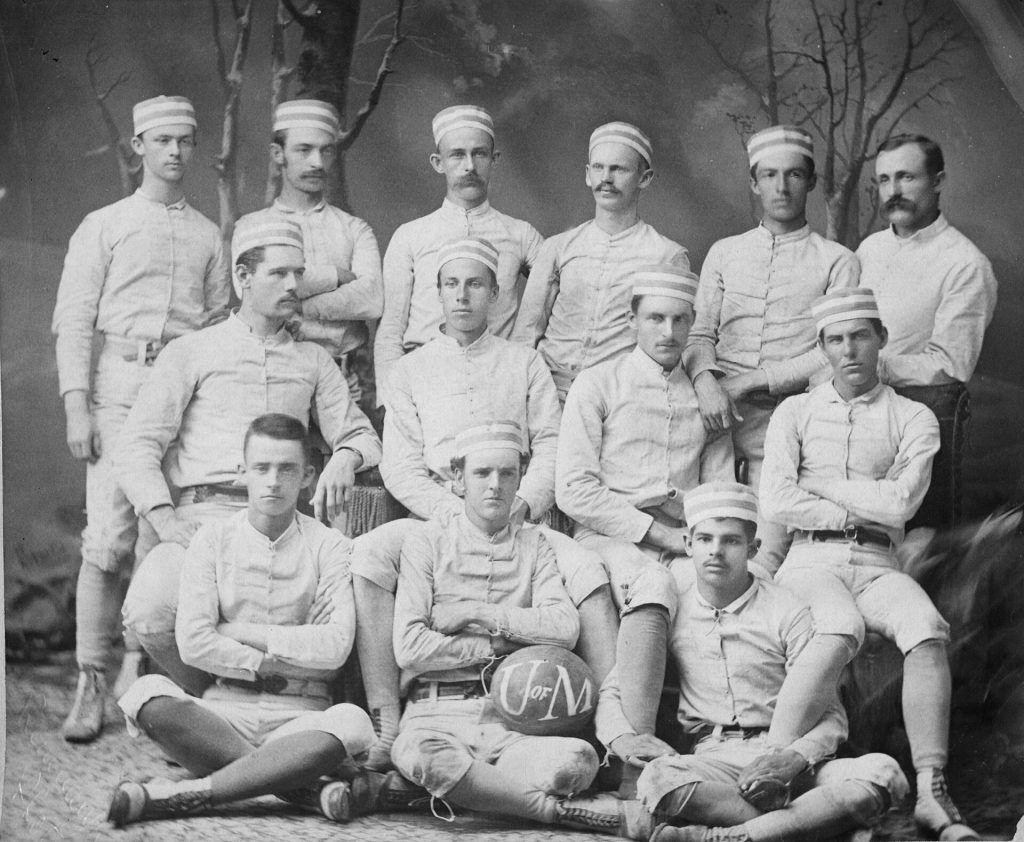
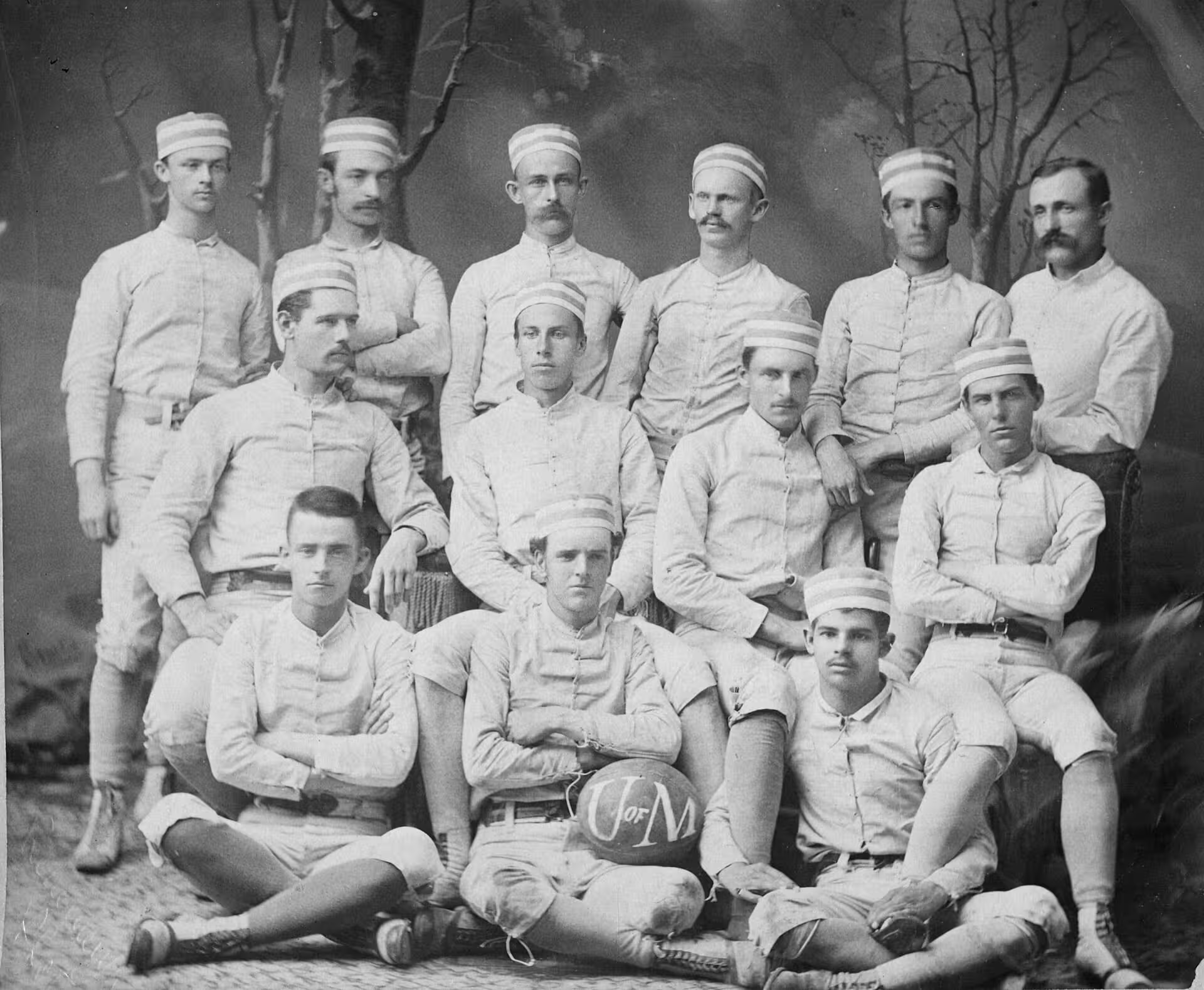
Back row: Jack A. Green, William W. Hannan, David DeTar, Charles A. Mitchell, Frank Reed, Albert S. Pettit
The University of Michigan had a significant event occur in the spring of 1879; the story dates back to the previous fall. In October 1878, The Chronicle published a letter from the Racine College football team proposing a game at a neutral site in Chicago. Racine offered to procure the grounds, manage the advertising, and pay Michigan two-thirds of the gate money. In late October, the Michigan Football Association voted to accept the challenge, provided the teams play the game in the spring. The Association explained
- May 30, 1879, the University of Michigan played its first-ever intercollegiate football game against Racine College.
Walter Camp again voiced some suggestions at the IFA Rules meetings in 1879.
- Spring 1879, Walter Camp proposed a reduction in the number of players from 15 to 11. Although the motion failed in 1879, it sparked the debate that would lead to the permanent change in 1880.
- Spring 1879, Walter Camp’s advocacy for the “snap-back” (rather than the chaotic rugby scrum) gained significant traction during this season’s committee meetings.