Forget the “scrum”—1880 was the year American football finally stood in a straight line.
While earlier years focused on whether to kick or carry the ball, the 1880 season introduced the most fundamental mechanics of the modern game. This was the year that defined how a play starts and who gets to finish it. By replacing the chaotic rugby “scrum” with a structured line of scrimmage, the sport moved away from its British roots and toward the tactical “gridiron” chess match we know today.
In this exploration of the pivotal 1880 season, we’ll uncover:
- How Walter Camp successfully reduced teams from 15 players to the iconic 11-man roster.
- The birth of the snap—and why it was originally done with a foot instead of a hand.
- The creation of the Quarterback position as the primary signal-caller.
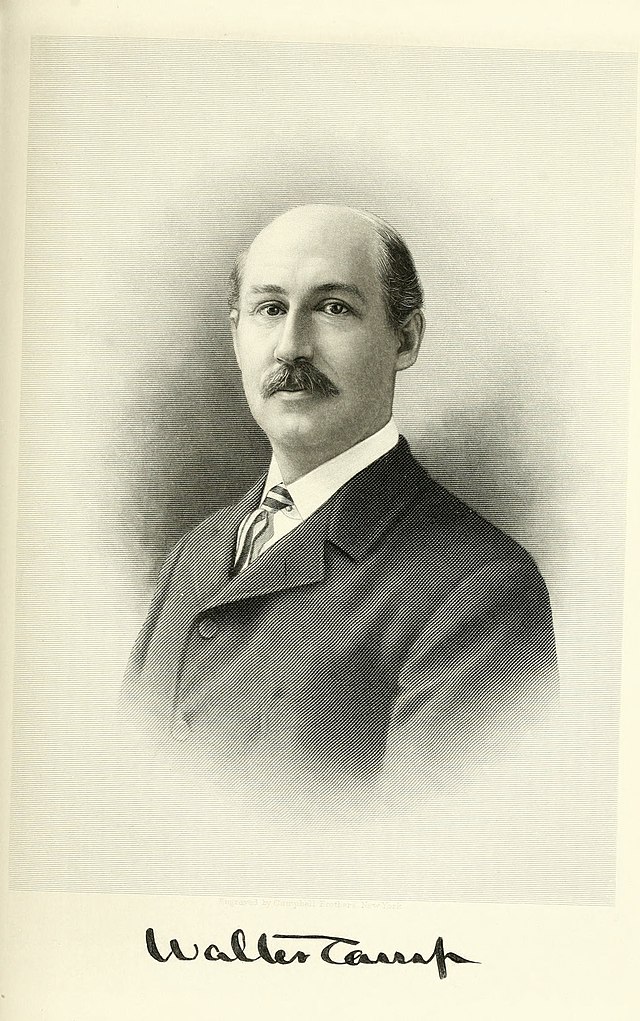
Unknown photographer
A Deep Dive into 1880 Football History and Highlights
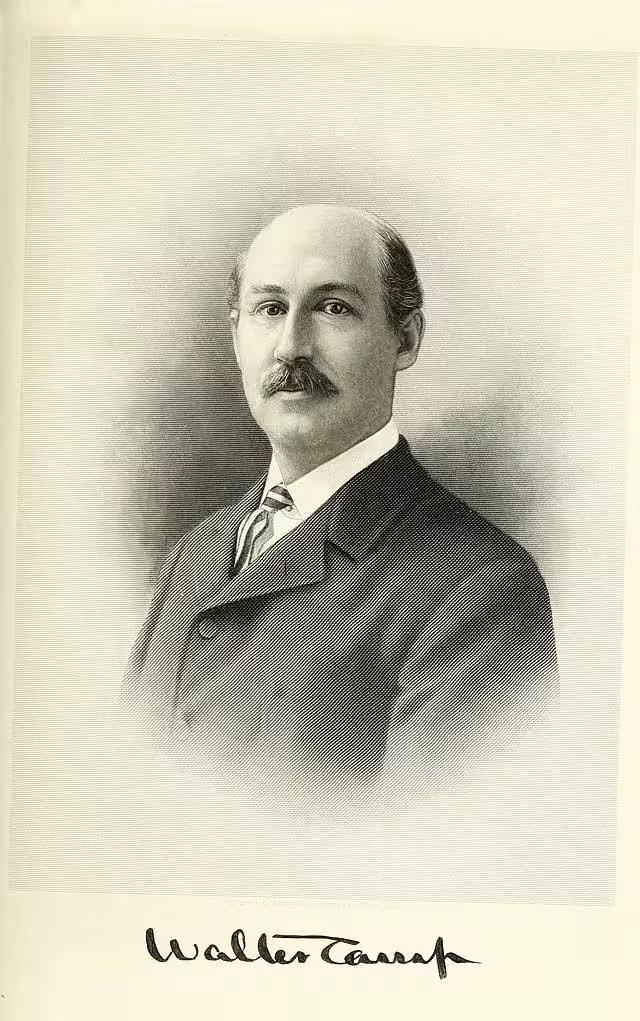
The 1880 season is widely considered the most transformative year in the development of American football. At the Intercollegiate Football Association (IFA) convention, several “Walter Camp Rules” were officially adopted that permanently split the sport from Rugby Union.
- April 9, 1880 – The first college football game played south of the Mason-Dixon line: Kentucky University and Centre College faced off in a chaotic match (under Princeton Rules) that looked more like rugby than the sport we know today. The final score was a strange 13-3/4 to 0 in Kentucky’s favor.
- October 12, 1880 – Walter Camp of Yale, after years of legislating for it with the IFA rules body, finally convinced the other schools to adopt a rule of only 11 players per side, rather than the 15 played with previously.
- October 12, 1880 – Walter Camp petitioned for and was granted the rule revision of scrimmage, a snap to start each play, and thus the positions of snapper (center) and quarter-back (quarterback). Historians such as Darin Hayes point to this as the starting point of American football.
- October 16, 1880 – Rutgers and the Stevens Institute may be the first game to have used the new rule of scrimmage. Historians such as Bert Gambini point to this as the birth of American football.
1. The Invention of the Scrimmage & Snap
Before 1880, teams used a “scrum,” where players from both sides packed together and fought for a loose ball.
- The Change: The rule change granted the team in possession the uncontested right to play the ball.
- The “Snap”: This was the first time the “snap” was legalized. However, in 1880, the center used his foot to snap the ball back to a teammate, rather than his hands.
2. Establishment of the Line of Scrimmage
By granting one team possession, an invisible line was naturally created across the width of the field. This allowed teams to plan specific “plays” for the first time, as they knew exactly when and where the action would begin.
3. Team Size Reduced to 11
Walter Camp had been pushing to reduce the number of players for years to make the game less congested and more reliant on speed.
- 1879 and earlier: 15 players per side (Rugby standard).
- 1880: The IFA officially adopted 11 players per side, which remains the standard today.
4. The Birth of the “Quarter-Back”
With the new snap rule, a specific role was needed to receive the ball from the “snapper.” The rules established that the person who first received the ball from the snap was the Quarter-Back. Interestingly, under the original 1880 rules, the Quarterback was forbidden from running forward with the ball; he had to pass or hand it off immediately.
5. Standardized Field Dimensions
While field sizes had fluctuated, 1880 saw a push toward the standard 110 by 53 1/3 yards, creating the rectangular “box” that would eventually be marked with the lines that gave it the nickname “gridiron.”