How does a game of chaotic rugby scrums transform into the most popular sport in America? One man from New Britain, Connecticut, held the blueprint. Walter Camp didn’t just play the game; he invented its soul. By introducing the line of scrimmage and the system of downs, Camp stripped away the “free-for-all” of the 19th century and replaced it with a game of strategy, precision, and positions like the quarterback. From coaching the unbeatable 1888 Yale Bulldogs to founding the All-America tradition, Camp’s influence is woven into every yard gained on a modern gridiron.
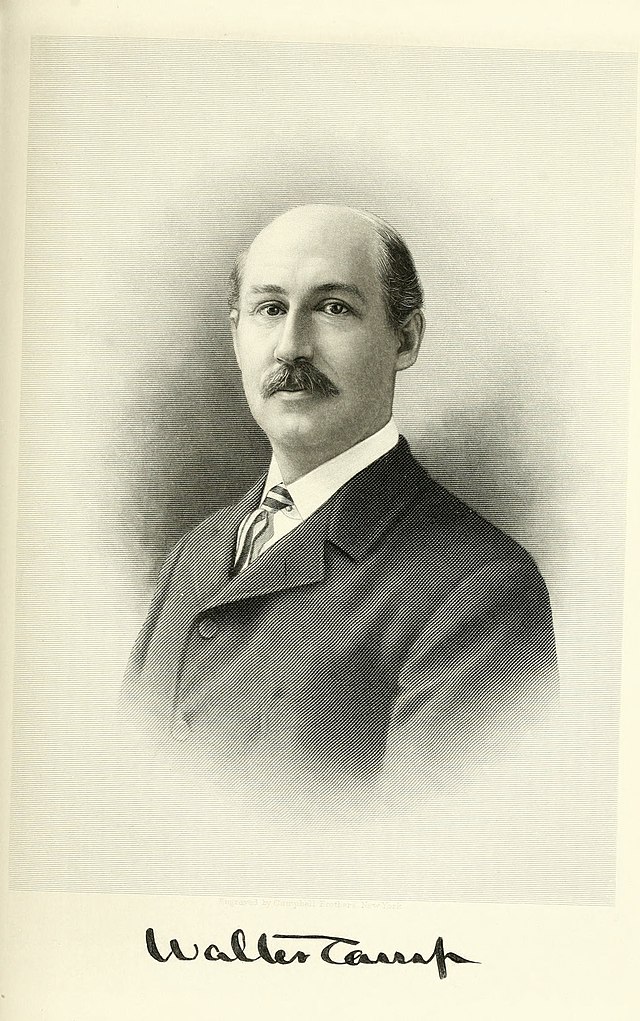
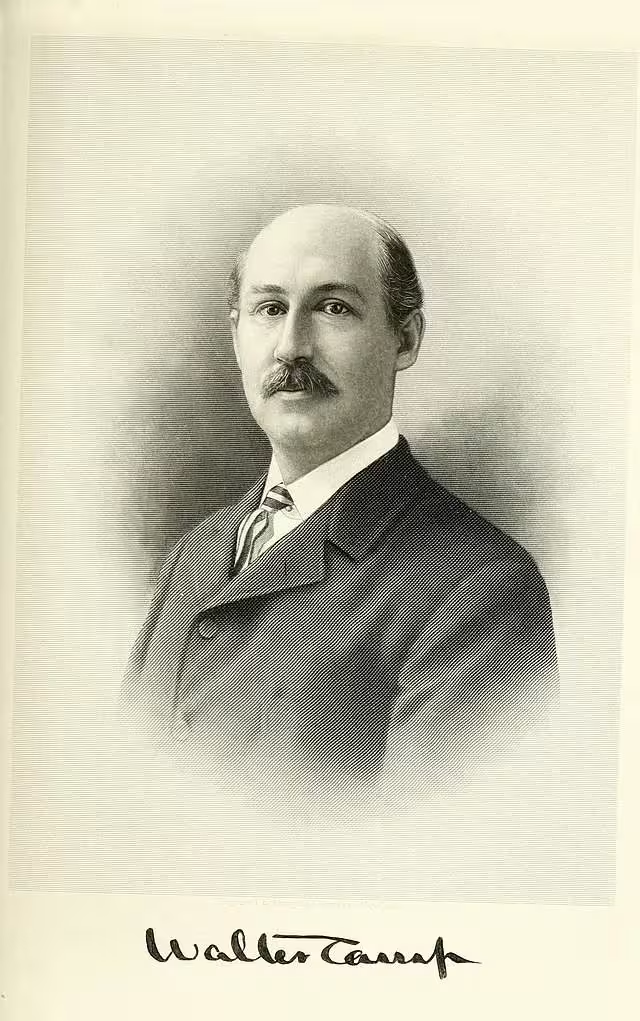
Unknown photographer
Football Bio
April 7, 1859 – New Britain, Connecticut – Walter Camp, the great player and coach from Yale, was born.
Camp is known as the father of American football because of his proposed innovations, including the line of scrimmage, a series of downs, and the creation of the player positions of snapper and quarterback to handle the transition of scrimmage. These revisions set American football on a course to become a sport all its own and to distance itself from the already established games of soccer and rugby.
Camp was also an innovative coach who spearheaded some of the most dominant college football teams of all time. Walter Camp was the coach of the Yale Bulldogs from 1888 to 1892 and the Stanford Cardinal from 1892 to 1894-1895. According to Jay Abramson of the History of College Football Podcast, in the 1888 season, the average margin of victory was 54-0; therefore, Yale went 13-0. In fact, the Bulldogs shut out every opponent and scored over 60 points 6 times. They even knocked around an outmatched Wesleyan team 105-0, with their closest game being a 10-0 shutout over Princeton.
That 1888 team amazingly outscored its opponents 698-0. It wasn’t a fluke either, as Camp and the Bulldogs repeated the feat in 1888-1892, posting a 68-2 record and 3 unscored-upon, undefeated teams in his 5 years. When not coaching, Camp officiated games and even started the Walter Camp All-American awards at the end of the season. Walter continued to attend the rules meeting until 1925, when he died at a rules convention.
Conclusion
Walter Camp was far more than a coach or player; he was the primary visionary who shaped American football’s identity. His 1888 Yale team remains a statistical anomaly, a perfect 13-0 squad that didn’t surrender a single point—a feat made possible by the very rules he helped codify. Even as he transitioned to Stanford to spread the game to the West Coast, his commitment to the “Rulebook” never wavered. His death at a rules convention in 1925 was a poetic end to a life dedicated to the evolution of the sport. Today, every time a center snaps a ball to a quarterback, they are executing a play first imagined by Walter Camp.
Accolades and Football Accomplishments
- “Father of American Football”: Credited with inventing the line of scrimmage, downs, and distance.
- College Football Hall of Fame: Inducted as a coach in 1951.
- Yale Coaching Record: 68–2–0 (97.1% winning percentage).
- 1888 National Champion: Coached Yale to a 13-0 record, outscoring opponents 694–0.
- Founder of the All-America Team: Began the tradition of honoring the nation’s best players in 1889.
- Rule Committee Pillar: Served on the football rules committee from its inception until his death.
- Stanford Football Pioneer: Coached the Cardinal for three seasons, helping establish the sport in California.
- Innovator of Positions: Formalized the roles of the Quarterback and Snapper (Center).
- Physical Fitness Advocate: Created the “Daily Dozen” exercise program used by the military during WWI.