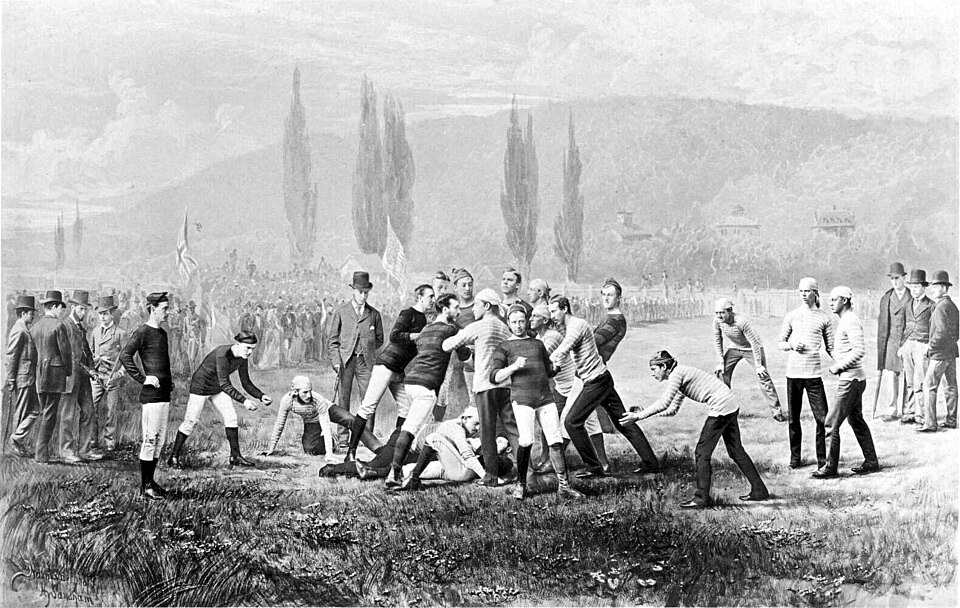
Before the bright lights of Saturday nights and the roar of professional stadiums, the fate of American football was decided on a dusty field in Cambridge, Massachusetts. On May 14, 1874, Harvard met McGill University in the first international football match on U.S. soil—a clash of rules that would forever alter the sport’s DNA. While the “soccer-style” game ruled the south, this northern encounter introduced the oblong ball and the thrill of the “run.” As a result, it sparked a revolution. From these historic roots to the tactical genius of Hall of Fame quarterback Howard Harpster, May 14th stands as the day the gridiron truly found its form.
May 14 American Football History Timeline
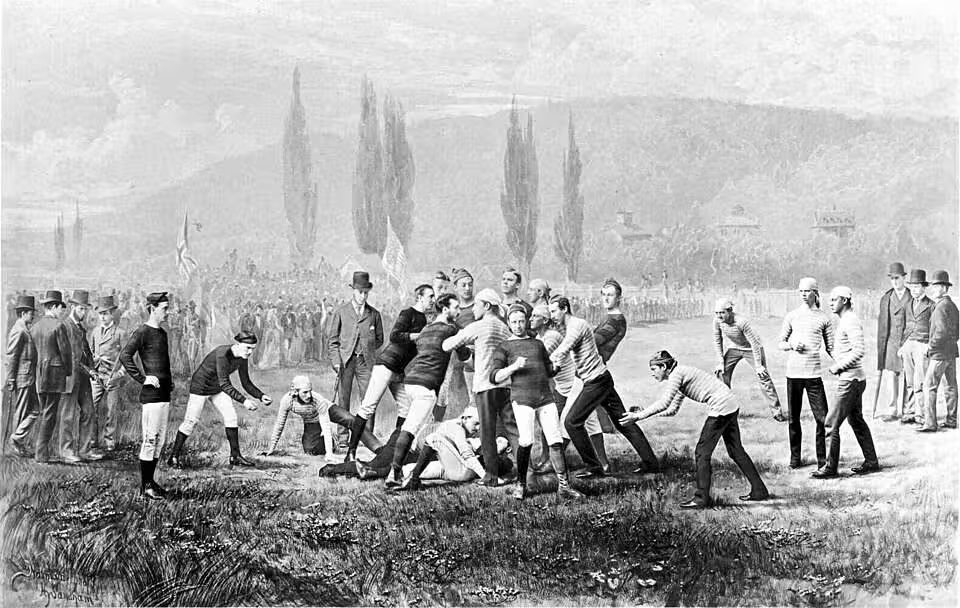
- May 14, 1874 – Harvard versus McGill game #1
The Boston Globe on May 14, 1874, had this excerpt in their column called the SUBURBS, CAMBRIDGE. Football –
The McGill University students who are here to play Harvard in football today and tomorrow were in Cambridge yesterday. They visited Jarvis Field in the afternoon and, after viewing the grounds on which the matches will be played, indulged in a short “kick” preparatory to their labors this afternoon. Furthermore, they are a fine-looking and strongly built set of men, and their friends are sanguine that they will get away with the Harvard team without trouble.
This is a report on the first time a football team and its entourage were in the game’s host city 24 hours prior to kick-off. Today, this occurrence is commonplace and almost mandatory in our era of Division I football.
Remember, this is the first international football game on US soil!
Prior to this, two schools playing each other was rare. Okay, there was the 1869 soccer match between Princeton and Rutgers, which is often credited as the first football game. It was, in fact, much closer to soccer than what we know as American football, as you were not allowed to carry the ball and could barely touch the ball with your hands. In addition, most games on college campuses were intramural.
The American Heritage website gives us more insight.
In the spring of 1874, a group of athletic Harvardians grew tired of intramural competition and looked for another college to play against. Scorning the soccer-like game played to the south, they found a worthy opponent in McGill, of Montreal, which also played something close to rugby.
When the captWhen team captains met, they found key rule differences. The Canadian game allowed more running and used an oblong ball. Therefore, they agreed to play two games—one on May 14 under Harvard’s rules and one on May 15 under McGill’s. Harvard won the first game 3-0, while the second … Just like the fans of that era, we will make you wait until the event date, and we will tell you more about it tomorrow in our May 15 edition. (source)
I will share with you that that weekend in Massachusetts was extremely pivotal in the creation of the game we love. It was a spark that gave players and spectators a glimpse, in spring 1874, of how special American football could be. Yes, a spark, one that would set off the tinderbox six years later when a group of men, including Walter Camp, sat down and made some major reforms to the way colleges would play this new game. Much of it was inspired by the way these young men from McGill explained a game they played to the boys from Boston. Tune in tomorrow for the details…
May 14 Football Hall of Fame Birthdays
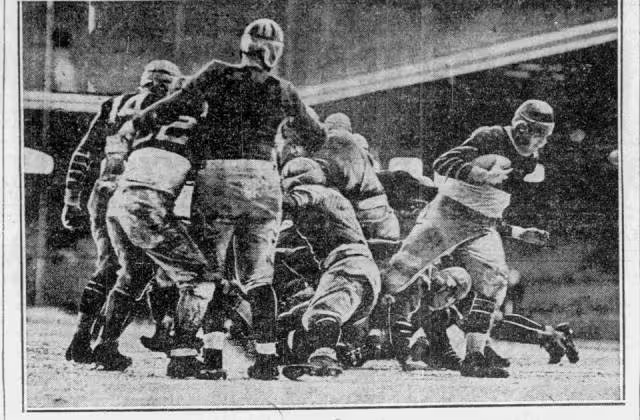
- Howard Harpster [1907] – Carnegie Mellon’s quarterback from 1926 through the 1928 season
Conclusion
The legacy of May 14th centers on the innovation that began with Harvard and McGill. Their willingness to mix rules for their historic match set the foundation for the sport’s evolution. The 1874 game was more than a contest; it ignited changes codified by Walter Camp, shaping American football’s future.