
Howard Harpster outwitted the most formidable defenses of the 1920s with a coaching mind trapped in an All-American’s body. As the primary architect of Carnegie Tech’s golden era, Harpster transformed the quarterback position into a tactical laboratory. He dared to pass from his own end zone and converted improbable third downs with sheer audacity, earning a reputation as the most brilliant field general in the East. Now, discover the story of the man who led the Tartans to national prominence. He entered the Hall of Fame as a true pioneer of the cerebral game.
Football Bio
May 14, 1907 – Salem, Ohio – Carnegie Mellon’s quarterback from 1926 through the 1928 season, Howard Harpster, was born.
The National Football Foundation, in its bio of this great player, notes that he was a brilliant on-field tactician. Carnegie Tech, as it was called back then, had a QB in Harpster who was such a good strategist that he could pull off the unexpected in the heat of the moment. Furthermore, the trait brought him acclaim as one of the great Eastern quarterbacks of the late 1920’s. He was one of the first to challenge enemy defenses by passing from his own end zone. He also made it a successful maneuver.
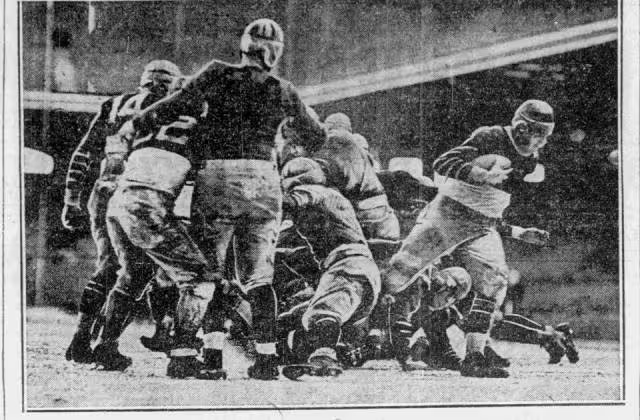
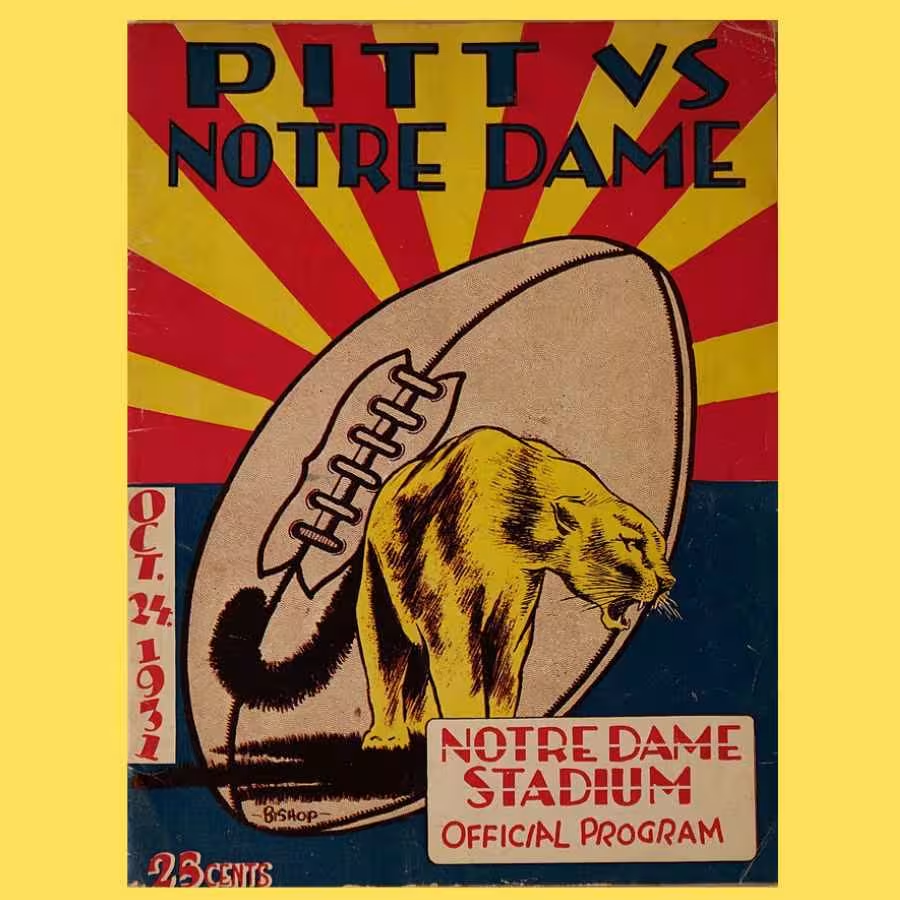
During a 1928 game against Notre Dame, Howard called for a quarterback sneak on a third-down-and-15 play, turning the surprise call into a 35-yard gain. His game-situation reactions prompted many to say he had the mind of a coach. The 1928 season was a great one for Howard as he earned All-American honors. He also led Carnegie Tech to a 7-1 record with barely an interception. He was a great defender too, as proven by his three seasons. Tech’s goal was crossed only three times, once on a fumble recovered by Notre Dame in the end zone.
Howard handled all of his team’s kicking and punting and was noted for consistently booting within the 60-65 yard range. Howard Harpster received the great honor of being selected for inclusion into the College Football Hall of Fame in 1956. After graduating in 1933, at the young age of 25, Harpster became Carnegie Tech’s head coach.
He had four seasons at the helm against a major-college schedule, and his squad posted a 12-20-3 record. There were some big victories posted there, though, as they got the “W’s” against competition by the likes of Notre Dame, Temple, and Purdue. Moreover, they tied Pitt and Michigan State.
Conclusion
Howard Harpster cements his legacy as one of the most innovative leaders in the history of Carnegie Mellon athletics. He redefined the expectations of a quarterback by merging elite punting distance with a fearless passing attack that caught legends like Knute Rockne off guard. Moreover, by transitioning from a Hall of Fame player to a major-college head coach by age 25, Harpster proved that his understanding of the gridiron was decades ahead of his time. He remains the standard-bearer for the “thinking man’s” quarterback.
Accolades and Football Accomplishments
- College Football Hall of Fame: Inducted in 1956.
- Consensus First-Team All-American: 1928.
- Master Punter: Consistently averaged 60–65 yards per punt throughout his career.
- Defensive Prowess: Anchored a defense that allowed only three touchdowns over three seasons.
- 1928 Victory over Notre Dame: Led Carnegie Tech to a historic upset over the Fighting Irish.
- Head Coaching Milestone: Became the head coach of Carnegie Tech at just 25 years old.
- Notable Coaching Victories: Secured wins over Notre Dame, Purdue, and Temple during his coaching tenure.
- Innovative Tactician: Credited as one of the first quarterbacks to successfully implement passing from the end zone.