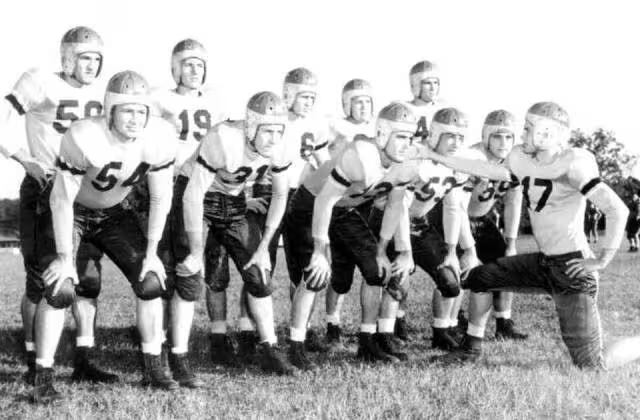
We discuss with historian and author Joe Ziemba the top players in NFL history who wore the number 44 jersey!
We would like to thank the National Football Foundation, Pro Football Hall of Fame, On this day.com, and Pro Football Reference Websites for the information shared with you today.
Do you want more football history? Grab a copy of our latest book, "Marooned," on the 1925 Pottsville Maroons NFL franchise saga.
*OR* Grab a copy of our book on Western Pennsylvania football history, "World's Greatest Gridiron Team" on the 1903 Franklin All-Stars
Drop us a line at PigskinDispatch@gmail .com and check out and subscribe to the Pigskin Dispatch YouTube channel.
Miss our football by the day of the year podcasts, well, don't because they can still be found at the Pigskin Dispatch website.
Transcript
It's time for another bonus edition of the Pixicon Daily History Dispatch.
Speaker A:And we have the football by numbers jersey number 44.
Speaker A:Historian Joe Ziemba joins us once again to go through the greatest players that wear the number 44.
Speaker A:Coming up in just a moment.
Speaker A:This is the Pixicon Daily History Dispatch, a podcast that covers the anniversaries of American football events throughout history on a day to day basis.
Speaker A:This is your host, Darren Hayes and we're podcasting from America's North Shore to bring you the memories of the gridiron one day at a time.
Speaker A:So with Mike and Gene Monroe as well as Jason Neff supplying us with their tunes, go no huddle through today's football history headlines.
Speaker B:This podcast is part of the Sports History Network, your headquarters for the yesteryear of your favorite sport.
Speaker B:You can learn more@sportshistorynetwork.com.
Speaker A:Hello my football friends.
Speaker A:This is Darren Hayes of pigskindispatch.com and welcome once again to the Pig Pen.
Speaker A:For tonight we have another great football Football by numbers bonus edition of the Pigskin Daily History Dispatch.
Speaker A:And joining us for the jersey number 44 is the best that ever wore that jersey number is once again our friend, historian, fellow podcaster, author Joe Ziemba.
Speaker A:Joe Ziemba, welcome to the Pig Pen.
Speaker B:Thank you, Darren.
Speaker B:Always enjoy this.
Speaker B:This is a lively, lively set of hours or minutes where we can talk about some of the guys that maybe have been forgotten.
Speaker B:And with your wonderful program of recognizing players who are a specific number, I'm learning more than I ever thought.
Speaker B:So thank you for the opportunity again.
Speaker A:Oh, I'm learning too.
Speaker A:I hope the listeners are getting the same deal that you and I are because it is really an interesting feat to do this, to go through all these players.
Speaker A:You really get to see a lot more than you would any other way that I can think of.
Speaker A:So we thank you for joining us here again.
Speaker A:I guess we start off sort of where we always do and we it's with the Pro Football hall of Fame and they have about a dozen different gentlemen that are in the hall of Fame that they say WORE the number 44 and some of them didn't wear it for very long.
Speaker A:We'll mention them, but there are others that were for quite a bit of time and we'll talk quite a bit about them and just go through them real quick here.
Speaker A:First of all, we had Ray Flaherty that were number 44.
Speaker A:I'm not sure which years, but Ray told definitely went in as a coach, I believe as A contributor in the Pro Football hall of Fame, but he did play John Riggins, Dick LeBeau, Floyd Little, Bobby Dylan, Leroy Kelly, Bruiser Kennard.
Speaker A:I just love that name.
Speaker A:Arnie Weinmeister, Dave Casper, Bill Dudley, Ernie Nevers and Steve Owen.
Speaker A:I mean, some great players on this list in the Pro Football hall of Fame that were the number 44.
Speaker B:We have quite the list tonight.
Speaker B:And maybe I thought, Darren, that those hall of Famers who only played one or two years with that jersey, not that we're going to forget them, but maybe concentrate on the others who wore 44 for several years or more.
Speaker B:And then there's a great deal of quality folks that wore that number who are not in the hall of Fame, but maybe someday they'll get that recognition and we can talk about them tonight as well.
Speaker A:Okay, so I guess the people that we're saying that we probably won't talk too much that we just mentioned on a Hall of Fame list is Bruiser Kennard, Arnie Weinmeister, Dave Casper, Bill Dudley, Ernie Never, Steve Owen, and of course, Coach Ray Flaherty.
Speaker A:We probably won't talk much about them because they only wore the jersey for one or two years during their career.
Speaker A:But there are still five hall of Famers that had quite a bit of time in the number 44.
Speaker A:And so we'll focus on them.
Speaker A:And like Joe says, we have quite a few individuals that are not in the hall of Fame yet, as I like to say, but had some substantial years in the number 44 and some substantial careers, and we want to really focus in on those folks.
Speaker B:Yeah, there's so many neat players.
Speaker B:In fact, I want to bring one up even before we talk about the hall of Famers.
Speaker A:Okay, a punter.
Speaker B:How about that?
Speaker B:We never talk about punters.
Speaker A:You're always digging for those kickers and putters, and we got to give them some love.
Speaker B:So even before we talk about the hall of Famers, person named Jarrell Wilson, who played with Kansas City his entire career except the final year with the Patriots.
Speaker B:Sixteen years in the league, and for 15 of those years, he wore number 44.
Speaker B:And the reason I bring him up is a gentleman named Hank Stram, who we all know had a great quote about Mr.
Speaker B:Wilson's punting efforts.
Speaker B:He said, I'm prejudiced, but he's the best punter I've ever saw.
Speaker B:He'll go down in history as the best kicker in the NFL seven times, all Pro, three times in the Pro bowl, won a Super bowl, played in an incredible 217 games.
Speaker B:And he was named to the hall of fame's all 70s decade team.
Speaker B:So he led the league five times in the league in punts and punting average.
Speaker B:And one of our better nicknames we've encountered recently, Thunderfoot.
Speaker B:So Jarrell Wilson, who played in the league from 63 to 78, I might put him up there as one of my recommendations for our top 10 tonight.
Speaker A:Okay.
Speaker A:I think he's definitely worth consideration.
Speaker A:We'll put him on here and take a look at him because I know we have some position players, a lot of them to talk about, but definitely I have him marked and we'll come back and check him out near the end here.
Speaker A:Fair enough.
Speaker B:Yeah, he was quite an amazing player for a punter, as some of the other players would say.
Speaker B:So it's nice that we can give him a little bit of recognition today.
Speaker A:Most definitely.
Speaker A:Most definitely.
Speaker A:Okay.
Speaker A:Where would you.
Speaker A:Do you want to go into our hall of Famers that we do want to talk about, since that's sort of traditionally what we do about one of.
Speaker B:The players from the hall of Fame we might talk about.
Speaker B:As a rugged fullback.
Speaker B:6 2, 230 pounds.
Speaker B:John Riggins played for the jets, but probably best known with Washington.
Speaker B:Again, a guy who had an interesting career in that two of his best years ever were at the tail end of his career when he was in his mid-30s.
Speaker B:He had the best yardage mark and he led the league in rushing attempts in 82.
Speaker B:And then he led the league in touchdowns in 83 and 84.
Speaker B:years old in:Speaker B:So quite a consistent performer, one with a lot of determination.
Speaker B:Very consistent.
Speaker B:When you look at the thousand yards seasons, he had ended up with over 11,000 yards in his career and 104 touchdowns.
Speaker B:That's just amazing what he did.
Speaker B:that's what's sitting out the:Speaker B:And that led to a little bit of a friction with a coach, Joe Gibbs.
Speaker B:And after Riggins had set out and Joe Gibbs traveled to Kansas to try and make some kind of offering to get Riggins back.
Speaker B:And Gibbs recalled that he had a camouflage outfit on.
Speaker B:He had been hunting him and a buddy, he had a beer can in his hand.
Speaker B:It was 10 in the morning and he's meeting his coach for the first time.
Speaker B:And I'm thinking sarcastically, this guy really impresses me.
Speaker B:But I went in there and halfway through the conversation he says, you know, you really need to get me back there, Joe.
Speaker B:I'll make you famous.
Speaker B:I thought to myself, oh my gosh, he's an egomaniac.
Speaker B:I'll get them back and then I'll trade them.
Speaker B:I'm not putting up with any fruitcake.
Speaker B:So Gibbs flies back to Washington and two days later he says, Riggins called me and says, hey Joe, I made up my mind, I'm going to come back and play next season.
Speaker B:I thought it was great.
Speaker B:I've got him back and then I'll trade that sucker.
Speaker B:But then he says, there's only one thing I want in my contract.
Speaker B:I said, what was it?
Speaker B:He says, a no trade clause.
Speaker B:So that's how Riggins got back to the Redskins way back when.
Speaker B:Hall of Famer from:Speaker B:A great nickname of Diesel.
Speaker A:Yeah, I mean who can forget him?
Speaker A:He, he was a real hard runner, especially with those Redskins.
Speaker A:There's that you're talking about with Gibbs.
Speaker A:You know, he, he really powered their offense and I think the Diesel was a very appropriate name for him, that's for sure.
Speaker B:No, it sure was.
Speaker B:You know, and another, another running back that we could talk about a little bit is Floyd Little.
Speaker B:And Floyd played with his entire career with Denver.
Speaker B:nco to win a rushing title in:Speaker B:yards, which he did in:Speaker B:So quite a career with the Broncos.
Speaker B:Led the league in rushing and yards and touchdowns and aver a couple three times.
Speaker B:And an unusual statistic when he was the first I think to rush for lead the league in rushing for a last place team.
Speaker B:And he was the smallest back in stature.
Speaker B:He was 5:10, 1:96 smallest back to lead the NFC or NFL in rushing since World War II when he did so back in the early 70s.
Speaker B:So Floyd Little, again a remarkable career nickname was the franchise.
Speaker B:So perhaps we consider.
Speaker B:Can consider him for one of our top 10 wearing the number 44 tonight.
Speaker A:Yeah, most definitely.
Speaker A:And he was born in the town where football was sort of created.
Speaker A:You know, Walter camp stomping grounds of New Haven, Connecticut, you know, home of Yale, so.
Speaker A:And born on the fourth of July too.
Speaker B:Doesn't get any better than that.
Speaker A:Right, Right.
Speaker A:Yeah, I think definitely I'm just going to go back to it and say, I think, you know, Riggins probably ought to be on our list too since you mentioned him, if that's okay with you.
Speaker A:We'll put the Riggins and definitely outstanding running Backs.
Speaker A:All right, so they will take our first two spots.
Speaker A:Which direction would you like to go to next, Joe?
Speaker B:Yeah, maybe we can talk about the defensive backs on our list from the hall of Fame and a couple of interesting items about Bobby Dillon first then maybe Bruce Taylor.
Speaker B:Bobby Dillon played from 52 through 59, led the league in 56 and yards off of interceptions.
Speaker B:So he was eight years his entire career with the packers wearing number 44, which I liked four times a pro Bowler.
Speaker B:also named to the second all:Speaker B:But the thing I found out about him was truly amazing that as a kid he was in an accident and lost an eye.
Speaker B:So he played his entire football career with a glass eye getting 52 interceptions, which is still a Green Bay packers record and therefore elected to the Green Bay hall of fame in 74.
Speaker B:And he's in the recent class that was inducted in the Pro Football hall of Fame.
Speaker B:Bobby Dillon, just 61 and 180, played his career with one eye, which is truly, truly amazing.
Speaker A:Especially to have 52 interceptions.
Speaker A:That's just remarkable.
Speaker A:You figure the eyes are probably one of the most important sensory for a defensive back to get that many interceptions.
Speaker A:So that's really remarkable.
Speaker A:Wow, very interesting.
Speaker B:Another defensive back also wore number 44, Crowley.
Speaker B:in:Speaker B:And when he broke in in:Speaker B:rookie of the year awards in:Speaker B:Had a great, great career after football.
Speaker B:He owned 18 Burger Kings so I don't know how many guys owned 18 Burger Kings.
Speaker B:So we congratulate Bruce Taylor for that.
Speaker B:A successful on and off the field.
Speaker A:Yeah, that's pretty interesting to have that many franchise of one franchise.
Speaker A:You know, he must really like the the Whopper maybe, huh?
Speaker A:Yeah, always go for the onion rings.
Speaker B:entire career which went from:Speaker B:He was on the all:Speaker B:So he was a more recent conductee I believe into the Pro Football hall of Fame.
Speaker B:But one we can also consider for our Top ten tonight.
Speaker A:Yeah, definitely.
Speaker A:And as a matter of fact, okay, you just mentioned, you know, those three defensive backs, you know, LeBeau, Dillon and Taylor.
Speaker A:And I'm, I'm thinking, you know, probably LeBeau and Dylan with those big numbers on those interceptions, especially Dylan with 52 interceptions with one eye.
Speaker A:I think those are pretty substantial.
Speaker A:I think they deserve to go on the list right now, if that's okay with you, don't you?
Speaker B:Let's do that.
Speaker B:Yeah.
Speaker A:Okay.
Speaker A:Maybe Mr.
Speaker A:Taylor will look at the end again.
Speaker A:I don't know if he quite doesn't have quite those numbers, but we'll check him out again near the end.
Speaker A:Okay.
Speaker A:Would you like to speak on.
Speaker A:I guess our last hall of Famer that we said had substantial years was leroy Kelly with 10 seasons wearing the number 44.
Speaker B:Yeah, again, spent all those years with Cleveland, six Pro Bowls, won an NFL title, led the NFL in rushing TDs three times.
Speaker B:And from 66 through 68 he had 15, 11 and 16 touchdowns.
Speaker B:But also led the league in rushing twice in 67 and 68.
Speaker B:And in that 68 season he was pretty phenomenal.
Speaker B:Rushed for:Speaker B:So when he retired back after 73, he was fourth all time in the league in rushing and he was third all time and touchdown scored with 74.
Speaker B:ll Award, as we mentioned, in:Speaker A:Yeah, I think with the credentials like that, you know, that many Pro Bowls, that many, all Pros hit that magic number, you know, going over 7,000 yards rushing in the NFL and over 70 touchdowns, I think that is a pretty special running back.
Speaker A:There's not too many have done that.
Speaker A:And I think Mr.
Speaker A:Kelly also deserves to maybe take that fifth spot, if that's okay with you.
Speaker B:Yeah, sounds good.
Speaker A:Okay, so we are halfway there and they're all our hall of Famers.
Speaker A:Just a review.
Speaker A:We have John Riggins, Dick LeBeau, Floyd Little, Bobby Dylan and Leroy Kelly are our first five number 44s on our top 10 list.
Speaker B:I think we're going to have a tough time.
Speaker B:A nice challenge picking the other five because there's several had wonderful careers, maybe just short of the hall of Fame, but who wore that 44 proudly.
Speaker B:And a lot of people obviously have worn that number over the years and some maybe only had a two or three year career in the NFL.
Speaker B:And of course our standards are quite high here.
Speaker B:We're not even letting hall of Famers on our list of top tens for the number 44.
Speaker A:Yeah, we're being awful picky tonight, that's for sure.
Speaker A:A lot of great names in there.
Speaker A:Do you have anybody in particular you'd like to go to next?
Speaker B:Yeah, I have to do a little preference here.
Speaker B:Chicago Cardinal.
Speaker A:Okay.
Speaker B:Would be John David Crow.
Speaker B:Broke in the league in:Speaker B:e's a member of the NFL's all:Speaker B:He came into the league very promising.
Speaker B:He won the:Speaker B:eve Texas A and M, he said in:Speaker B:One of the great quotes.
Speaker B:He was superlative and running receiving and he did some passing as well as his career shows almost 5,000 yards rushing, almost 4,000 yards and receiving.
Speaker B:And he also had some passing yards too, about 800 yards in his career.
Speaker B:So he was all over the place.
Speaker B:lege Football hall of Fame in:Speaker B:Wait, he wasn't in the league yet, so I apologize for that one.
Speaker B:I can't read my own writing sometimes.
Speaker B:yer of the year in College in:Speaker B:But John David Crow played for the Cardinals when they went to St.
Speaker B:Louis in:Speaker A:Yeah, great, great credentials there and everything.
Speaker A:I think he's definitely one.
Speaker A:I don't know that he make cracks that list right now, but definitely somebody I think we want to talk about near the end here.
Speaker A:So I'll put a little mark by him.
Speaker A:He's very interesting player.
Speaker B:Did have several players who were say drafted as halfbacks players, but maybe got heard and became more of a receiver.
Speaker B:we're going to go way back to:Speaker B:Darren.
Speaker A:Sure.
Speaker B:Name on the list may sound familiar.
Speaker B:Familiar.
Speaker B:Kyle Roat.
Speaker B:He was a six foot end and halfback with the Giants.
Speaker B:Played his entire career with them from 51 through 61.
Speaker B:as the very first pick of the:Speaker B:The five times all probably.
Speaker B:And member of the:Speaker B:Had a tough childhood.
Speaker B:He lost his mother during World War II and also lost a brother on Iwo Jima.
Speaker B:But he was the captain of The Giants for eight years.
Speaker B:But he had some interesting things off the field.
Speaker B:There used to be a television show called To Tell the Truth where they would ask questions of people and they try and fake you out, the panelists, whoever they were.
Speaker B:And he was able to successfully make the panel think that he was an undercover police officer.
Speaker B:On appearance on To Tell the Truth.
Speaker B:But even more importantly for today's players, he was one of the first union organizers to get all players traded equally no matter what and served as the very first president of the National Football League Players Association.
Speaker B:When he retired, he led the New York Giants and receptions with 300 all time receiving yards and touchdowns with 48.
Speaker B:So a great receiver as he kind of got hurt after his second year and switched almost entirely 100% to being a receiver for the Giants.
Speaker B:So he may be one of our top 10 tonight.
Speaker B:wrote back from beginning in:Speaker A:Okay, I will mark him down.
Speaker A:And who would you like to speak of next?
Speaker B:Well, there's another guy back from a little bit earlier in the 50s named Pete Rutzlaff.
Speaker B:And he was an end and a halfback.
Speaker B:Did a little bit of both.
Speaker B:led the NFL in receptions in:Speaker B:ard for player of the year in:Speaker B:He had a little bit of a hard road getting into the league.
Speaker B:e was drafted by the Lions in:Speaker B:Must have bulked up a little bit.
Speaker B:But man, he really had a great career after that.
Speaker B:Led the league in 58 with 56 receptions.
Speaker B:Told about 7,400 yards in his career.
Speaker B:Had a couple of great nicknames.
Speaker B:One was Baron, the other was Pistol Pete.
Speaker B:And we're talking about number 44 tonight.
Speaker B:And his number 44 has been retired by the Eagles.
Speaker B:He also served as a president of the Players association after his playing career, I believe.
Speaker A:Yeah, definitely.
Speaker A:Another interesting character that we want to talk about again.
Speaker A:Yeah, you're finding some really good ones here, Joe.
Speaker B:These are some real gems and I had no idea on the statistics of some of these guys.
Speaker A:Yeah, there's some folks that you know.
Speaker A:I know a couple of them I'm not real familiar with.
Speaker A:You just let me learn about a new player so I thank you for that.
Speaker B:Hey, Darren, I wanted to ask.
Speaker B:Oh, excuse me, go ahead.
Speaker A:No, no, no, go ahead.
Speaker A:I was just going to ask you.
Speaker B:I was going to ask you, do you know who had the largest thighs in the history of the National Football League?
Speaker B:We here at the Sports History Network try and uncover stuff that no one's heard about.
Speaker A:Oh God.
Speaker A:If I was going to ask or guess about it, I would say Earl Campbell.
Speaker A:But he didn't wear 44, so it's probably the wrong answer.
Speaker B:Well, the reason I like this is we're not number 44 tonight.
Speaker B:And we have a guy who wore that throughout his career who also had 44 inch thighs.
Speaker B:What a coincidence.
Speaker B:And his name is Robert Newhouse, the human bowling ball.
Speaker B:Played for Dallas his entire career beginning in 72.
Speaker B:And he had a kind of unusual body.
Speaker B:In fact, his teammate Charlie Walter said, or water said that Robert was physically speaking, he didn't look like an NFL player.
Speaker B:He was more like a chunk of granite.
Speaker B:And he had small shoes for a big guy.
Speaker B:Well, he's 5 10.
Speaker B:Said his weight was 209 but teammates said that could have fluctuated up and down by or up by about 40 pounds.
Speaker B:And he wore a size 10 shoe with 7e width which is kind of a triple double wide.
Speaker B:And from looking it up it said if you measure 7 inches, that's how wide his foot was.
Speaker B:So his feet were so big width wise that he would go through three pairs of shoes at times in a normal pro game.
Speaker B:So again here at the Sports History Network we're telling you which guy goes through the most pair of shoes in one game.
Speaker B:He had a couple of firsts in his career.
Speaker B:ouchdown in giants Stadium in:Speaker B:And he was the first running back to ever throw a touchdown in the super bowl, which is Super Bowl 12, when he threw a 29 yard Dutch scoring pass to Golden Richard.
Speaker B:So there we have it for the human bowling ball.
Speaker B:He carried about 5,000 yards in his career.
Speaker B:I'm not sure if we'll make our top 10, but top 10 best nicknames.
Speaker B:I think we're going to have to put them on there.
Speaker A:I think so.
Speaker A:Yeah, that's definitely.
Speaker A:It's a very befitting name for him too because I remember him playing quite well and he was real low center of gravity.
Speaker A:I remember.
Speaker A:Very tough tackle it seemed like for the defenders and knocked down.
Speaker A:So very aptly named.
Speaker A:As long as we're on running backs.
Speaker A:What do you think about Chuck Foreman?
Speaker B:Yeah, another name I remember is Chuck of course played with the, with the Vikings.
Speaker B:ast year with the Patriots in:Speaker B:on the second team of the all:Speaker B:I thought his numbers would be bigger.
Speaker B:He did have 3,000 yard years, but he didn't really play that long.
Speaker B:73 through 80, gained about right around 6,000 yards in his career.
Speaker B:So a nice steady professional.
Speaker B:Made the Pro bowl five times though, which I wasn't aware he made it that many times.
Speaker A:Yeah, I was kind of surprised too.
Speaker A:I thought he would have more yards.
Speaker A:,:Speaker A:But yeah, you're right, his career sort of got cut off a little bit.
Speaker A:Course he had quite a few carries there.
Speaker A:He's almost 300 yards or 300 carries a season for about three seasons in a row, just shy of it.
Speaker A:75, 76, 77.
Speaker A:So he was definitely the bell cow for the Fran Tarkington led Vikings back then.
Speaker A:So maybe that sort of takes a wear and tear on his body.
Speaker A:Just couldn't make the long career out of it.
Speaker A:But definitely he was an interesting one to talk about.
Speaker B:Yes, yes.
Speaker A:But I think he'll, like you say, he'll probably be on the outside looking in on this top 10 list because there are some guys with some better numbers I think.
Speaker A:And speaking of that, how about John Harris?
Speaker A:Have you have anything on John Harris?
Speaker B:, John a Good Defensive back,:Speaker B:Played his first several years from 78 through 85 with Seattle.
Speaker B:Then his last three years with Minnesota.
Speaker B:Again another guy who must have been a Dynamo on defense.
Speaker B:in:Speaker B:So he was, came out of Arizona State, 6 foot 2, 200 pounds and just looks like a very valuable performer because when he started the game, he finished the game, it looked like.
Speaker B:So he didn't come off the field too much during his career?
Speaker A:No, and one thing that, you know, I saw those numbers jump out, I remember the name and I remember him being pretty good.
Speaker A:But you know, he had:Speaker A:And I don't show where he ever was in the Pro bowl or an all pro.
Speaker A:And you think with 10 interceptions that would be pretty substantial.
Speaker A:Must have been a lot of people picking off passes that year or something.
Speaker A:And that would have been the AFC for Seattle back then.
Speaker B:Oh yeah, I couldn't find any all pro years for him either.
Speaker B:Interesting.
Speaker A:But yeah, pretty substantial number having 50 interceptions and you know, a double digit year.
Speaker A:But I think maybe we'll put him under consideration at the end here?
Speaker B:Yes.
Speaker A:Okay.
Speaker A:Do you have anybody that you'd like to go to next?
Speaker B:Oh, there's all sorts of good ones, but we know people don't want to listen to me babble for a few hours.
Speaker B:But we have a guy who was famous in college, had a good pro career, but was better known for being on the COVID of Sports Illustrated than he was for his playing career, it appears.
Speaker B:And that would be Mike Guman.
Speaker B:G U M A N.
Speaker B:I hope I pronounced that correctly.
Speaker B:, but in the:Speaker B:Mike played for Penn State and the photo appeared on the COVID of Sports Illustrated.
Speaker B:ESPN voted that number six on its all time list of moments that define college football.
Speaker B:and:Speaker B:Never had a whole lot of yards rushing after his first couple of years.
Speaker B:But he stayed in the league like I said, from 80 through 88.
Speaker B:So probably not going to be a consideration for our top 10 tonight.
Speaker B:But Mike again is one of those great stories of football that we always love to share.
Speaker A:Hey, I'd love to hear that story about him making Sports Illustrated for getting hit hard.
Speaker A:Probably didn't feel good for him, but makes him famous, that's for sure.
Speaker B:There is one halfback who is quite well known as one half of the Goldust twins for the Green Bay packers with Jim Grabowski, and that's Donny Anderson.
Speaker B:Came out of Texas Tech, played with the packers from 66 through 71, then went over to St.
Speaker B:Louis for the last three years of his career.
Speaker B:So he had decent numbers, Wore that number 44.
Speaker B:Looks like just about every year in his pro career.
Speaker B:But one thing that I found interesting about him, he was a two time super bowl champion.
Speaker B:He was also the punter for the packers.
Speaker B:And he and Vince Lombardi worked on a new concept where traditionally punters would kick it as far as they could and away from people and just get rid of it.
Speaker B:And Donny Anderson is the one who is credited with originating hang time, kicking as high as possible and enabling the defense to get after the punt.
Speaker B:Returner.
Speaker B:People would say to the packers, well you know what?
Speaker B:He only kicked at 36 yards for an average that year.
Speaker B:That's not too good.
Speaker B:yards in:Speaker B:When they started doing that, and that makes a whole lot of sense.
Speaker B:We'd see guys blasting the ball to the end zone, but then people have a chance to come back 15 or 20 yards with the, with the punt.
Speaker B:But here they had absolutely no chance with the hang time.
Speaker B:And so the NFL has maneuvered its rules a little bit since that time.
Speaker B:But Donnie Anderson's the guy, one of the gold dust twins with the great nickname of the Golden Palomino who was able to originate hang time on punting.
Speaker A:Wow.
Speaker A:So Anderson and Lombardi ended up figuring out that you can out kick your coverage.
Speaker A:So yeah, those are some great tidbits.
Speaker A:You really dug hard this week.
Speaker A:You're finding some dandies here.
Speaker A:All right.
Speaker A:I'm not sure that he will make our list, but definitely an interesting story.
Speaker A:That's what we love to hear.
Speaker A:How about, do you have some other folks that you'd like to talk about?
Speaker B:Another running back we could talk about?
Speaker B:Ahmaud Bradshaw.
Speaker B:I was in the league from:Speaker B:One of our recent players.
Speaker B:We're discussing a two time Super bowl champ with the Giants and then finished his career with Indiana.
Speaker B:But he was the leading rusher in both Super Bowls he played in.
Speaker B:So he's one of only eight people to do so.
Speaker B:That is to be the leading rusher in a Super bowl twice.
Speaker B:He had:Speaker B:is career finished just under:Speaker B:So might not be enough to get him into our top ten tonight.
Speaker B:But really an interesting statistic that he came to shine when the spotlight was brightest in the Super Bowl.
Speaker A:Yeah, he was quite the change of pace back I had early in his career because I think the Giants had Brandon Jacobs then.
Speaker A:So he was sort of the lightning to Jacob's thunder and they were quite a complimentary pair in the backfield for the Giants.
Speaker B:All right, another one more halfback I thought we would talk about.
Speaker B:Actually a fullback would be Bob Christian from Northwestern who played for the Bears and then finished up with Carolina and the Falcons.
Speaker B:are not all that impressive,:Speaker B:But the fact that he was in the league that long and of course wearing number 44, which we like in his post career, again was interesting.
Speaker B:He's now a pilot.
Speaker B:He always wanted to be a pilot.
Speaker B:And so even though he didn't gain much on the ground, he certainly is gaining it now in the air.
Speaker B:Darren.
Speaker A:Getting those frequent flyer miles that's for sure.
Speaker B:That's right.
Speaker A:d we recognize him from those:Speaker A:But Tom Rathman, who played running back.
Speaker A:Oh, right.
Speaker B:Yeah.
Speaker A:He was an interesting guy because I think he was mainly, if I remember right, you know, they haven't done his running back, but I think he was a lot.
Speaker A:he ended up having just over:Speaker A:But he also had:Speaker A:And it was two Super Bowls to his name.
Speaker A:To super bowl championships to his name when he was on a team.
Speaker A:ecognize from remembering the:Speaker A:Dallas Clark.
Speaker A:I know I have them, right?
Speaker B:Yeah.
Speaker A:Yeah.
Speaker A:Dallas Clark was a tight end.
Speaker A:I don't believe he's playing anymore.
Speaker A:fairly recent, but he came in:Speaker A:2013 was his last season with the Baltimore Ravens.
Speaker A:And, you know, he also played for Tampa Bay in between there.
Speaker A:And he had an interesting career.
Speaker A:He had 5,600 yards receiving, 53 touchdowns from the tight end position, was in a Pro bowl, made All Pro one year and won a Super bowl with those Colts with Peyton Manning.
Speaker A:And he was sort of that guy that Peyton could always count on.
Speaker A:And when everybody else was covered, he'd always go down to his big tight end.
Speaker B:e had that phenomenal year in:Speaker B:And looking.
Speaker B:Looking at his statistics, it found out that was only the second time in history that a tight end and was able to catch 100 passes in a year.
Speaker B:I thought that was pretty amazing.
Speaker B:Yeah.
Speaker B:Because you don't think of a tight end as being thrown to that much.
Speaker B:But as you said, he had a quarterback who's looking for him.
Speaker A:Yeah.
Speaker A:I wonder who could have been the other one.
Speaker A:Maybe Gonzalez.
Speaker A:Possibly.
Speaker B:Yeah, I wonder.
Speaker B:Yeah.
Speaker B:Yeah.
Speaker A:Think it probably have to be somebody like Tony Gonzalez or someone like that, but maybe Sterling Sharp or something.
Speaker B:Maybe it was Mike Ditka.
Speaker A:Maybe.
Speaker A:Maybe.
Speaker A:I don't know if Halas would let them put up 100 passes.
Speaker A:All right.
Speaker A:Do you have anybody else that you'd like to put under consideration?
Speaker B:I think the last one I have is a safety.
Speaker B:Dave Weimer from Notre Dame.
Speaker B:Left this earth way too early at the age of 34.
Speaker B:years with San Francisco from:Speaker B:So again, his numbers were pretty good, though.
Speaker B:48 career interceptions for 536 yards.
Speaker B:So those interceptions, again, kind of stand out, indicating again, a very consistent performer.
Speaker B:And I noticed also that when he passed away that there was a Disney movie named A Saintly Switch, which was dedicated to him after he passed away.
Speaker B:So that's Dave Weimer, the safety.
Speaker A:Okay.
Speaker A:All right.
Speaker A:Okay.
Speaker A:Is there anybody else we want to talk about to you?
Speaker A:Because we got five more, gentlemen, and we have a pretty good list of people to consider for those five positions.
Speaker B:I noticed we said earlier that a lot of the players who were the number didn't play that long, which is really not their fault.
Speaker B:But we try and find some from different areas of spotlight to see if they might be appropriate for our list tonight.
Speaker B:So I think we've got a good bunch to choose from.
Speaker A:I.
Speaker A:I agree.
Speaker A:So let's see if I have these names right.
Speaker A:That we said we wanted to come back and talk about.
Speaker A:We had Gerald Wilson, the punter that we.
Speaker A:You talked about earlier, and he had definitely had some good credentials that you gave us.
Speaker A:Bruce Taylor, Pete Red Slaff, John David Crow, John Harris, Kyle Rote.
Speaker A:I think that's.
Speaker A:That's ones we said we definitely want to come back and talk about.
Speaker A:I don't know if I missed any there.
Speaker A:I think the other ones we said we didn't think would quite make the list.
Speaker B:Yeah.
Speaker B:Well, I might go ahead and suggest Kyle wrote not only for what he did on the field, which is pretty superlative, but also his activity in forming the players union or players association.
Speaker A:I definitely agree with that.
Speaker A:That's.
Speaker A:That's some pretty substantial stuff that he had there.
Speaker A:And I really like your punter.
Speaker A:I like Gerald Wilson.
Speaker A:I mean, I was surprised.
Speaker B:I didn't know much about him, so.
Speaker B:But wow, what a career.
Speaker B:What a long career.
Speaker A:Yeah, especially when you have was a.
Speaker A:Hank Stram, you said was, you know, pretty well best punter you ever saw.
Speaker A:That sounded like some pretty good numbers there.
Speaker A:So I think he would take our seventh spot, if that's okay with you.
Speaker A:And then we have a bunch of gets tougher here for these last three positions.
Speaker B:Yeah.
Speaker A:So let me refresh our names here.
Speaker A:John Harris, John David Crowe, Pete Reslaff, Bruce Taylor and Cuts.
Speaker A:That's ones we have left.
Speaker A:So it's four.
Speaker A:Four names that we said to have left.
Speaker A:Unless I don't think, like Chuck Foreman.
Speaker A:I don't think he had quite the numbers that we.
Speaker A:Yeah, we're looking for.
Speaker A:And Robert Newhouse, I don't think, had quite the numbers mod.
Speaker A:Bradshaw didn't really have those numbers.
Speaker A:Unless maybe I'm wrong or maybe.
Speaker B:Yeah, Well, I do like John David Crow.
Speaker B:Of course, again, I'm being prejudiced.
Speaker A:Well, he had a Heisman Trophy.
Speaker B:Yeah.
Speaker B:So we're 44 for 11 years.
Speaker A:Okay.
Speaker B:You.
Speaker A:You talked me into.
Speaker A:You convinced me he's a.
Speaker A:He's a football player.
Speaker A:If Bear Bryant spoke that highly of him, then he's.
Speaker A:He had to be good.
Speaker A:All right, so that is eight names, and I think was a.
Speaker A:Bruce Taylor had some interesting tidbits, if I remember correctly.
Speaker A:Let me look at him again.
Speaker A:Yeah, he had those return yards that made him particularly attractive as a player.
Speaker A:Maybe he's not who I'm thinking of, though.
Speaker A:Maybe it was John Harris.
Speaker A:Maybe that's what I'm thinking of.
Speaker A:There's one you.
Speaker A:I should have made a better note of it.
Speaker A:You said something that really caught my.
Speaker A:My ears a little bit.
Speaker B:Oh, on Bruce Taylor.
Speaker A:I'm sorry, John.
Speaker A:John Harris, he had the 50 interceptions.
Speaker B:Oh, yeah.
Speaker B:Yeah.
Speaker A:I think.
Speaker A:I think that's pretty deserving of a spot, if that's okay with you.
Speaker B:That would be good.
Speaker B:Yes.
Speaker A:Okay, so that's our ninth.
Speaker A:And I'll let you.
Speaker B:Boy, I'm.
Speaker B:There's a couple here.
Speaker B:I like Pete Rutslaff.
Speaker B:I like Robert Newhouse for a top 10.
Speaker B:Kelly made six Pro Bowls, but a very short career.
Speaker B:And Dick LeBeau, 62 interceptions.
Speaker A:Well, we have LeBeau and Leroy Kelly on there already.
Speaker B:I'm sorry.
Speaker B:Yes, we do.
Speaker B:Yes.
Speaker A:Yeah, yeah, we have.
Speaker B:We.
Speaker A:They.
Speaker A:We put them on already.
Speaker A:Those hall of Famers ahead the years.
Speaker B:See?
Speaker A:Yeah.
Speaker A:I mean, Red Slap, I think.
Speaker A:Yeah.
Speaker A:Bring up a good point there.
Speaker A:You want to go with Red Slap as our tech.
Speaker B:I like Red Slap.
Speaker B:Yeah.
Speaker B:Yeah.
Speaker A:Okay.
Speaker A:We'll go with Pete.
Speaker A:Red slap as our 10th.
Speaker A:So let's.
Speaker A:Let me call them off again here.
Speaker A:So we have Pete Rutslaff, John David Crow, John Harris, Kyle Rote, Leroy Kelly, Bobby Dillon, Floyd Little Dick LeBeau, John Riggins.
Speaker A:And I'm missing somebody here.
Speaker B:Jerrell Wilson.
Speaker A:Jarrell Wilson.
Speaker A:Yep.
Speaker A:Yes.
Speaker A:So those are our top 10 greatest number 44s that we came up with tonight.
Speaker A:Well, that was.
Speaker A:That was probably one of the tougher ones that you and I did together.
Speaker B:It was.
Speaker B:Yeah, it was fun, but it was so tough, I got confused as to who was in the hall of Fame and who was on our top 10.
Speaker B:That shows how prestigious our top 10 list is.
Speaker A:That's right.
Speaker A:We had some tough critiquing to make that top 10 tonight, that's for sure.
Speaker A:But you, once again, you had some great stories on some of these players that I don't.
Speaker A:I know I learned quite a bit tonight just listening to you from your research.
Speaker A:So great job once again.
Speaker B:Thank you.
Speaker B:Thank you.
Speaker A:Speaking of research, what do you have coming up on the When Football Was Football podcast that we can look forward to?
Speaker B:Well, our next podcast is going to talk about a group of friends from the south side of Chicago who were Cardinals fans.
Speaker B:e to pick played the Bears in:Speaker B:The Cardinals were at the bottom, and the Cardinals pulled off a major upset.
Speaker B:But these fans pulled off something else, which is what we're going to talk about in our podcast, which shows what great true fans the Chicago Cardinals had.
Speaker B:And the worst part about it was the temperature was 12 below zero before game time.
Speaker B:These guys went out there.
Speaker B:One of them had lost his legs in Okinawa and was in a wheelchair.
Speaker B:But that's kind of how our story starts and then how it ends is kind of fun.
Speaker B:This tale of the Cardinals.
Speaker B:And then after that, we're going to talk about the first pro football game played by Ernie Nevers.
Speaker B:We've talked about Ernie a lot over the years, the great Duluth Eskimo and Chicago Cardinal.
Speaker B:But his introduction to the world of pro football was kind of a roundabout way, and it wasn't with an NFL team.
Speaker B:And so we tracked that down to see what Nevers got paid and who he played with.
Speaker B:It was a very short career.
Speaker B:It could have been the last time he ever played pro football.
Speaker B:But things turned around for him later.
Speaker B:So those are the ones that are coming up the next month or so.
Speaker A:Well, that was a good segue because he was on our number 44 list of hall of Famers, too.
Speaker B:That's right.
Speaker B:Yeah.
Speaker A:Talk about.
Speaker B:So, see, that was a great restraint on my part because I said, oh, yeah, Nevers, this is great.
Speaker B:But only wore number 44 for one year.
Speaker B:So we had to kind of look at other folks.
Speaker A:And I think that's deservedly so.
Speaker A:I think that was a good idea because there's some.
Speaker A:Some of those guys that wore that 44 did a lot more substantial things in their time wearing that than the hall of Famers.
Speaker A:Only wore it for a season or two.
Speaker A:So I think that was a good choice.
Speaker A:Well, my friend, I thank you very much for spending time with us and doing all that digging and all that great history that you shared with us once again.
Speaker A:And I know we have you for some more numbers coming up here.
Speaker A:Again, I think you have one in later in the number 40s.
Speaker A:As a matter of fact, I think you have number 49 you're signed up for.
Speaker A:All right, that's right around the corner.
Speaker A:So we'll look forward to speaking with you again soon.
Speaker B:That will be great, Darren.
Speaker B:Again, thank you for the opportunity to share a little bit of football history.
Speaker B:And we promise we'll do our best to find some really obscure facts that no one else can hear except on this wonderful show.
Speaker A:You are the master of that, you know, finding the largest thighs, guy that went through the most shoes.
Speaker A:All kinds of great things we learned tonight.
Speaker A:And so thank you very much, Joe.
Speaker B:You are welcome.
Speaker B:Thank you.
Speaker B:We look forward to doing it again.
Speaker A:Okay.
Speaker A:Peeking up at the clock, the time's running down.
Speaker A:We're gonna go into victory formation, taking knee and let this baby run out.
Speaker A:Thanks for joining us.
Speaker A:We'll see you back tomorrow.
Speaker A:For the next podcast, we invite you to check out our website, pickskindispatch.com not only to see the daily football history, but to experience positive football with our many articles on the good people of the game, as well as our own football comic strip, cleet marks comics, pigskindispatch.com is also on social media outlets, Facebook, Twitter, Instagram, and don't forget the Pigskin Dispatch YouTube channel to get all of your positive football news and history.
Speaker A:Special thanks to the talents of Mike and Gene Monroe, as well as Jason Neff for letting us use their music during our podcast.
Speaker B:This podcast is part of the Sports History Network, your headquarters for the yesteryear of your favorite sport.
Speaker B:You can learn more@sportshistorynetwork.com.