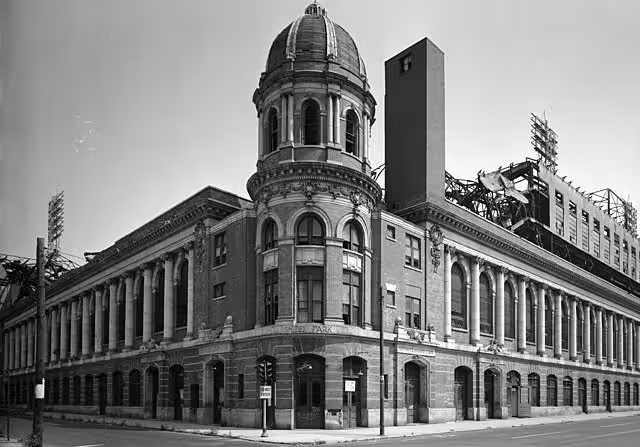
From the groundbreaking of an architectural marvel to the grit of a man who sacrificed a finger for the win, April 13th is a day defined by pure football iron. It’s the day Philadelphia’s legendary Shibe Park began its journey in stone and steel. As the home to the “Steagles” and a blizzard-soaked NFL Championship, the stadium became a stage for legend. But the legends don’t stop at the stadium gates—on this same day, we also celebrate the births of Jimmy Leech, the VMI scoring machine, and Francis “Pug” Lund, the Minnesota hero who overcame an amputation to lead his Gophers to a National Title. Strap on your leather helmet as we revisit a day of relentless determination and iconic milestones.
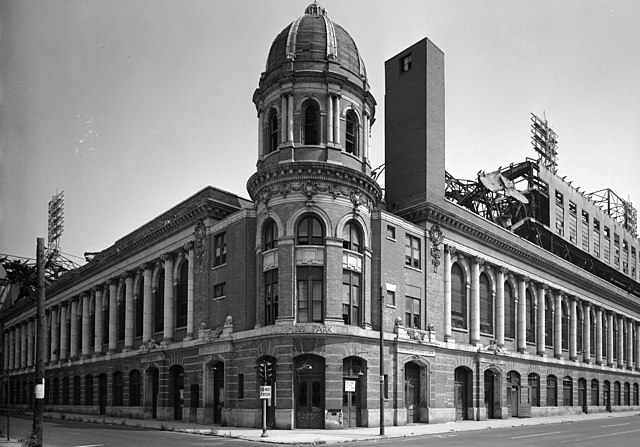
Historic American Buildings Survey/Historic American Engineering Record, September 1973.
April 13 American Football History Timeline
- April 13, 1908, Groundbreaking on Philadelphia’s Shibe Park, home of the A’s & Phillies, as well as the Eagles and Steagles, too! Shibe Park is also often referred to as Connie Mack Stadium, named after the legendary player /manager of the Philadelphia Athletics from 1901 to 1950. From 1940 through 1948, according to an article on Philly.curbed.com, the Eagles called Shibe Park home, a steel-and-concrete stadium that seated 40,000. The French Renaissance-style stadium was the venue in 1948 of the NFL Championship during a blizzard, where the Eagles hosted and defeated the Chicago Cardinals to claim the League title.
April 13 Football Hall of Fame Birthdays
Happy Birthday to these legendary figures! Since today is April 13, we celebrate two of the toughest and most productive backs of the early 20th century.
Here is the list in order of birth:
- Jimmy Leech [1897] A prolific scorer for VMI, Leech led the nation with 210 points in 1920, helping the Keydets to a perfect 9-0 record while outscoring opponents 431-20. After serving as a Marine in World War I, he returned to the gridiron as a dominant force and was inducted into the College Football Hall of Fame in 1956.
- Francis “Pug” Lund [1918] A legendary “ironman” for the Minnesota Golden Gophers, Lund famously had his pinky finger amputated before the 1934 season to avoid being slowed down by an old injury. He overcame early-season fumbling struggles to lead Minnesota to a national title, capping his career as a versatile star whom coach Bernie Bierman called the greatest player he ever witnessed.
Conclusion
April 13 serves as a powerful reminder of football’s enduring spirit. For instance, the construction of Shibe Park, a French Renaissance-style stadium, stands as a testament to vision, while players like Pug Lund made individual sacrifices that defined football. This date highlights the “spark plugs” of the sport—pioneers who faced broken teeth, amputations, and world wars. Yet, they emerged as Hall of Famers who built the foundation of the game. Their stories of versatility and toughness remain the blueprint for gridiron greatness.