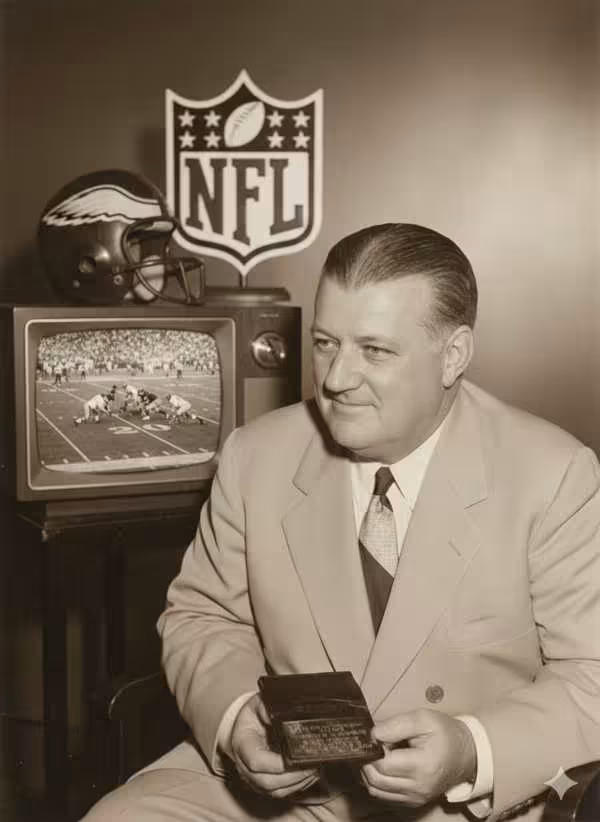
De Benneville “Bert” Bell was born on February 25, 1895, and became a transformative figure in American football, serving as a player, coach, owner, and the second Commissioner of the NFL.
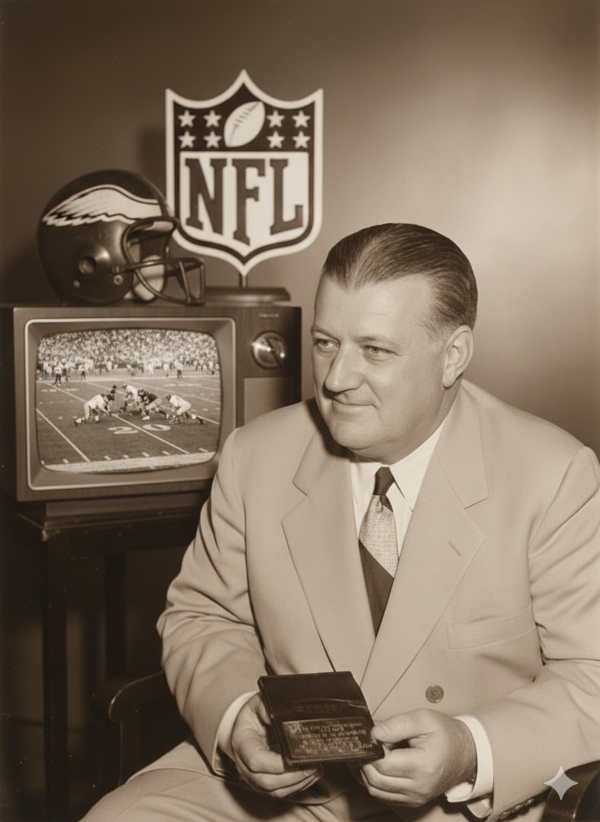
Date 15 September 1949
Here is a podcast episode in which I interviewed Bert’s son, Upton, about the legacy and legend of his famous father.
Early Career and Ownership
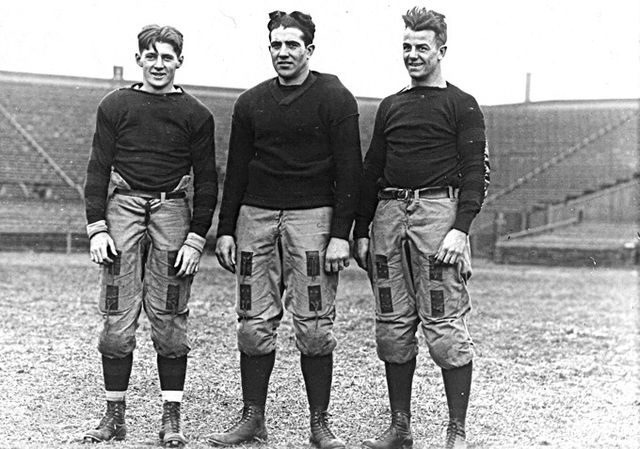
- College Success: Bell was the starting quarterback and captain for the University of Pennsylvania (Penn Quakers), leading them to their only Rose Bowl appearance in 1917.
- Founder of the Philadelphia Eagles: In 1933, he co-founded the Eagles after purchasing the assets of the Frankford Yellow Jackets. He is credited with naming the team after the NRA Blue Eagle symbol.
- The NFL Draft: In 1935, Bell proposed the creation of a collegiate player draft to create competitive parity. The first draft was held in 1936, with Bell’s Eagles making the first-ever selection (Jay Berwanger).
- Pittsburgh Steelers: After selling his interest in the Eagles, he became a co-owner of the Pittsburgh Steelers with Art Rooney from 1940 to 1946.
NFL Commissioner (1946–1959)
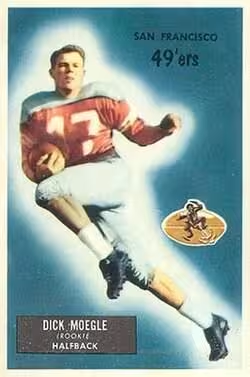
- League Stabilization: He oversaw the AAFC–NFL merger in 1949, which brought the Cleveland Browns, San Francisco 49ers, and Baltimore Colts into the league.
- Television Innovations: Bell was a pioneer in marketing the game for TV. He instituted the television “blackout” policy for home games to protect ticket sales and created the two-minute warning to allow for commercial breaks.
- Rule Changes: He is credited with professional football’s sudden-death overtime format and was a major proponent of night games.
- Player Relations: Despite pressure from owners, Bell was the first commissioner to officially recognize the NFL Players Association (NFLPA) and helped develop the league’s first player pension plan.
- Anti-Gambling Stance: He established strict anti-gambling policies and codes of conduct to maintain the league’s integrity.
Honors and Legacy
- Hall of Fame: Bert Bell was inducted as a charter member of the Pro Football Hall of Fame in 1963.
- The Bert Bell Award: Established by the Maxwell Football Club (which Bell founded), this award is given annually to the NFL Player of the Year.
- “On Any Given Sunday”: Bell is famously credited with coining this phrase to describe the competitive parity of the NFL.
Bert Bell’s Famous Football Father
John C. Bell (1861–1935) was a cornerstone of early American football, serving as a vital link between the sport’s rugged origins and its transition into a regulated collegiate powerhouse. A standout player at the University of Pennsylvania, Bell’s influence extended far beyond his time on the field, as he became one of the most powerful administrators in the game’s history.
His primary contribution was his long-standing tenure on the Rules Committee. During an era when football faced existential threats due to extreme violence and player fatalities, Bell was instrumental in implementing reforms that saved the sport. He was a key advocate for the legalization of the forward pass in 1906, a change designed to spread out the field and reduce the dangerous “mass-momentum” plays of the time.
As the patriarch of a legendary football family—his son, Bert Bell, became the NFL’s most influential commissioner—John C. Bell established a legacy of integrity and growth. He served as the Chairman of the Penn Football Committee and was a founding member of the NCAA. His vision for organized, fair, and safe competition provided the structural foundation upon which the modern NFL was eventually built.
Bell passed away on October 11, 1959, after suffering a heart attack while attending a game between his two former teams, the Eagles and the Steelers, at Franklin Field.