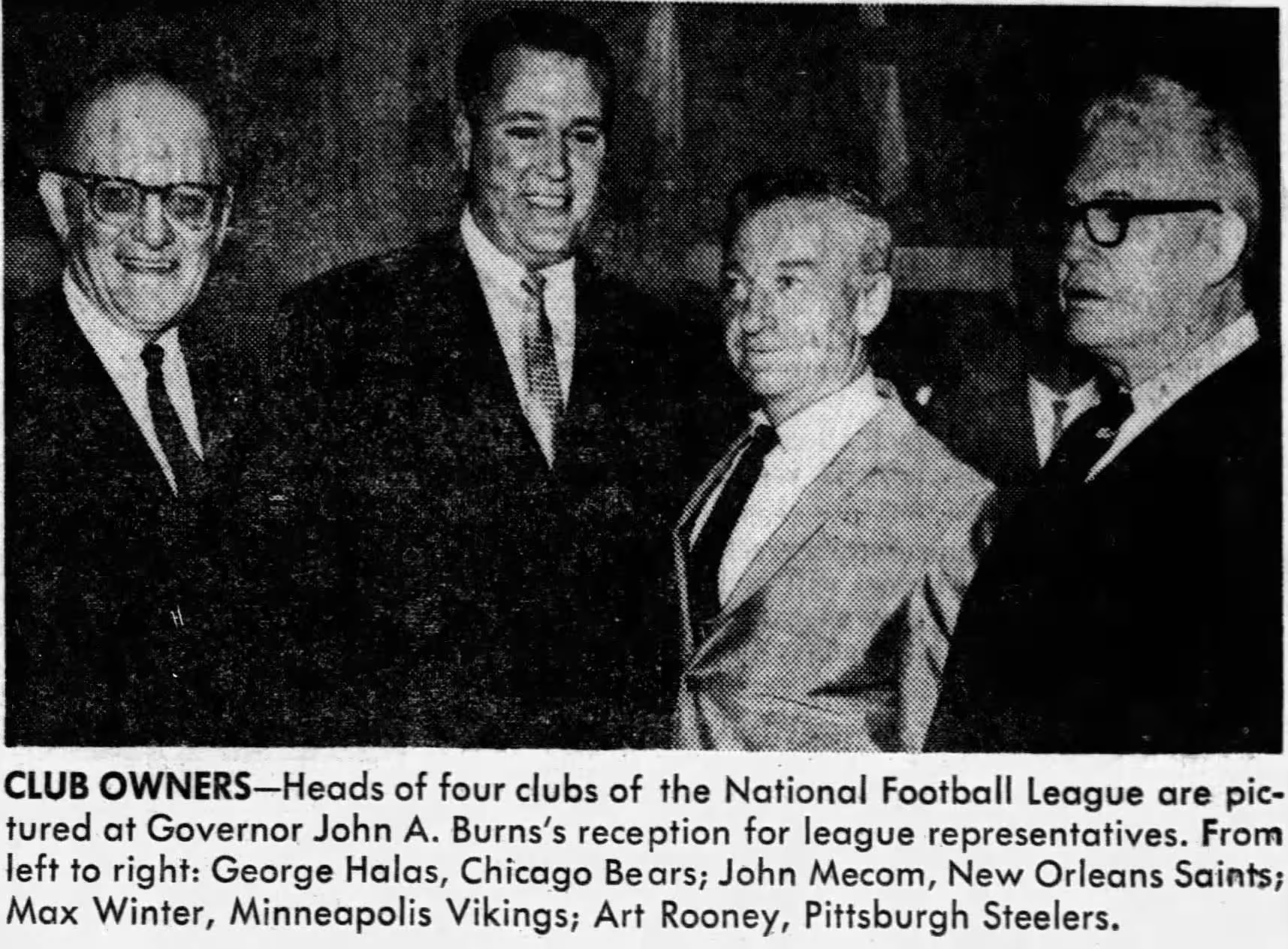
“We have gone from 12 to 16 clubs over the past seven years and we plan to study the over-all effect of that expansion before going any further. At the same time we are keeping other cities in mind.” ~ Pete Rozelle at the 1967 NFL Winter Meetings after a group of Honolulu investors pitched a proposal to be granted a franchise for Hawaii.
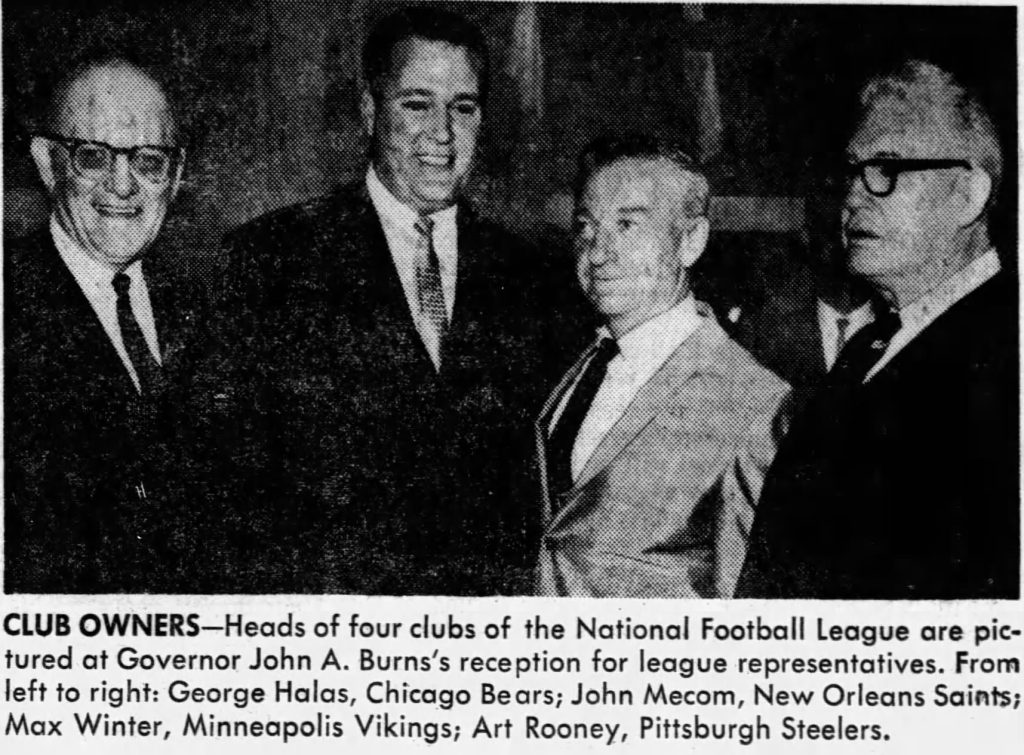
1967 NFL Owners Meeting Honolulu Star-Bulletin Honolulu, Hawaii · Thursday, February 23, 1967 via Newspapers.com
It is interesting how Rozelle worded this, as the NFL was on the verge of merging with the American Football League, in the largest expansion in League history (except for the APFA’s inception in 1920).
While Hawaii currently lacks an NFL team, its professional football history is surprisingly rich. In the mid-1970s, the Hawaiians of the World Football League (WFL) made Honolulu their home, even signing stars like Calvin Hill. Since then, the islands have primarily served as the NFL’s tropical playground, hosting the Pro Bowl for over 30 years at Aloha Stadium. Though logistical hurdles and stadium issues persist, Hawaii remains a dream expansion site, promising a passionate fan base and an unrivaled “home-field” advantage for any franchise looking to conquer the Pacific.
The 1967 NFL winter meetings in Miami were a watershed moment that fundamentally reshaped professional football. Following the 1966 agreement to merge the NFL and AFL, these meetings served as the laboratory where the logistics of a unified league were engineered.
The primary achievement was the realignment of the NFL’s 16 teams into two conferences (the Capitol, Century, Coastal, and Central divisions). This structure ensured competitive balance and paved the way for the modern playoff format. Additionally, the meetings finalized the details for the first-ever common draft, a move designed to end the ruinous bidding wars for college talent that had previously defined the two leagues’ rivalry.
League expansion was also a front-burner issue, as the meetings solidified the entry of the New Orleans Saints as the NFL’s 16th franchise. Beyond the boardrooms, owners addressed rules intended to standardize the game across both leagues. These sessions turned the theoretical merger into a functional reality, establishing the blueprint for the global sporting juggernaut the NFL is today.
Dave “The Intimidator” Wilcox dominated NFL offenses through sheer power and aggressive disruption. He punished tight ends, anchored the San Francisco 49ers defense for…