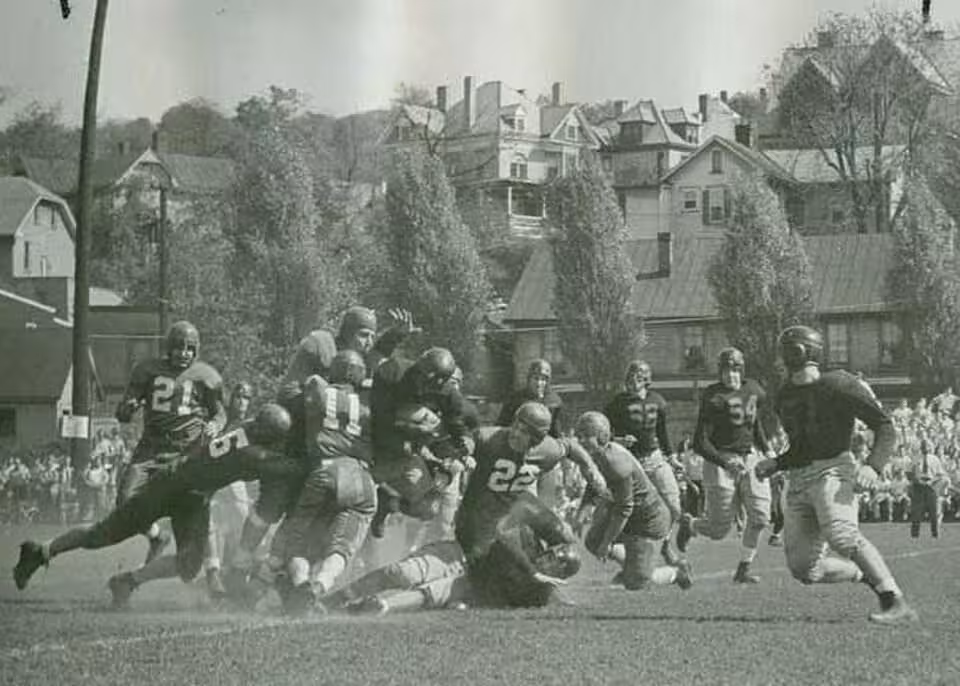
The 1940 American football season was a historic campaign that permanently altered the tactical landscape of the sport. It featured one of the most dominant championship performances in professional sports history and a fiercely contested race for the college national title, all set against the backdrop of an impending World War II draft.
Here is a glimpse of what football looked like in 1940.
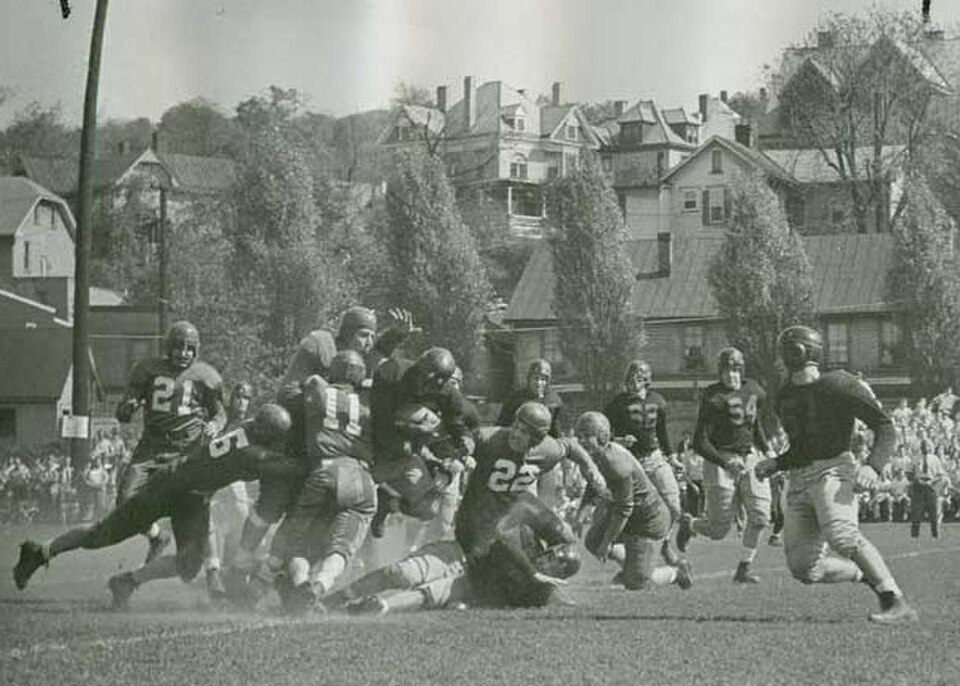
1940 Professional Football: The T-Formation Revolution
The 1940 NFL season culminated in a game that reshaped football strategy forever.
- The 73–0 Masterpiece: On December 8, 1940, the Chicago Bears faced the Washington Redskins in the NFL Championship Game. Washington had beaten Chicago 7–3 just weeks prior, but Bears coach George Halas implemented a highly sophisticated version of the T-Formation with pre-snap motion. The result was a 73–0 blowout victory for Chicago—still the most lopsided game in NFL history.
- Tactical Shift: The Bears’ resounding success with the T-Formation effectively spelled the beginning of the end for the traditional Single-Wing offense, forcing high schools, colleges, and pro teams across the country to adopt the modern T-formation.
- Individual Leaders: Green Bay Packers legend Don Hutson continued to dominate the league, leading the NFL in receptions (45), receiving yards (664), and touchdowns (7).
1940 College Football: Minnesota Rules the Nation
The college season was defined by powerhouse teams in the Midwest and West Coast, resulting in a powerhouse program capturing the ultimate prize.
- The AP National Champion: The Minnesota Golden Gophers, coached by Bernie Bierman, finished the season a perfect 8–0 to capture the AP National Championship. Playing a grueling schedule, Minnesota defeated five ranked opponents, including a legendary 7–6 victory over a dominant Michigan squad.
- The Michigan Legend: Despite finishing second to Minnesota in the Big Ten and national rankings, Michigan featured halfback Tom Harmon. “Old 98” won the 1940 Heisman Trophy in a landslide after leading the nation in scoring and putting on iconic performances, famously receiving a standing ovation from rival Ohio State fans in Columbus after his final game.
- The Rose Bowl: The undefeated Stanford Indians (10–0), utilizing their own version of the revolutionary T-Formation under coach Clark Shaughnessy, defeated Nebraska 21–13 in the 1941 Rose Bowl, capping an incredible turnaround from a 1–7–1 record the year prior.
Key Trends & Cultural Impact
- The War Looming: In September 1940, the United States instituted the Selective Training and Service Act (the peacetime draft). While it did not heavily disrupt the 1940 season, teams and players operated under the awareness that many of them would soon be called to military service.
- The Birth of the Modern Passing Game: The combination of Halas’s T-Formation and Shaughnessy’s success at Stanford proved that speed, deception, and passing could easily overpower raw, straight-ahead power football.
A Deep Dive into 1940 Football History and Highlights
- January 1, 1940 – Coach Howard Jones led his USC Trojans to another Rose Bowl victory, this time over Coach Robert Neyland’s Tennessee Volunteers, 14-0. The game MVP was USC QB Ambrose Schindler.
- January 14, 1940 – Gilmore Stadium, Los Angeles – The 2nd NFL All-Star Game went on as scheduled, as the Champion Green Bay Packers would play the best players from the remainder of the League. The All-Stars featured Washington’s Slingin’ Sammy Baugh and Bears Sid Luckman under center, with Detroit’s Cotton Price.
- April 12, 1940 – The NFL reduced the penalty for clipping. According to FootballZebras.com, until 1940, the offense might as well have given the ball to the defense immediately if they were flagged for clipping. Before 1940, a clipping penalty was a 25-yard penalty from the spot of the foul. From 1940 to today, the penalty has been 15 yards. At some point during the 1990s, all levels of football adopted the Block in the Back rule, which further clarified the clipping rule. Prior to this change, almost any block from behind was considered a clip. The Block in the back foul is a block from behind, above the waist, and carries a 10-yard penalty, while the clip is limited to behind-the-back and below the waist of the offended player.
- September 15, 1940 – The 3rd edition of the American Football League plays its first game. The Milwaukee Chiefs overcame the Columbus Bullies by the score of 14-2.
- November 10, 1940 –The Pittsburgh Steelers beat the Philadelphia Eagles 7-3 in a penalty-free game at Forbes Field.
- November 16, 1940 – The now infamous Cornell-Dartmouth “Fifth Down” game was played. This story is so juicy, we posted an article all on its own.
- November 17, 1940 – According to the official website of the Green Bay Packers, Packers.com, the first NFL team to travel by airplane to a game was the Green Bay Packers, when they went to NYC.
- November 27, 1940 – Tom Harmon becomes the first Michigan player ever to win the Heisman Trophy Award.
- December 7, 1940 – Lansdowne Park, Ottawa – playing for the Grey Cup was Ottawa defeating Toronto Balmy Beach, 12-5
- December 8, 1940 – Griffith Stadium, Washington, D.C. – The most lopsided NFL Title game ever. The National Football League Championship game played in 1940 is long remembered, not because it was a great battle, but because of the Chicago Bears’ dominance that day. History.com’s article brings all the details. The Chicago Bears embarrassed the Washington Redskins, 73-0, in the game. It was the most lopsided victory in NFL history, and it happened to be the NFL’s showcase game to determine its season’s champion.
- December 29, 1940, it was the 3rd NFL All-Star Game, in which the NFL champions faced an all-star roster of the best players from the rest of the League. If you remember back to our December 8 post, the Bears totally dominated the NFL Championship game against the Washington Redskins, winning 73-0. According to a 2019 Reddit post, the game was knotted at 14 a piece going into the halftime locker room. The Bears used great defense and some timely Sid Luckman throws to score twice more in the second half, as the Chicago Bears showed again why they were the best, defeating the NFL All-Stars, 28-14.