
 By Darin
 Before the era of multi-million dollar contracts and global broadcasts, the game of football was forged by powerhouse linemen who relied on pure grit and unmatched technique. Marty Below, a name synonymous with defensive dominance at the University of Wisconsin-Oshkosh, remains one of the most respected figures in early collegiate history. Born on this day in 1899, Below’s journey from the small-town fields of Oshkosh to the prestigious halls of the College Football Hall of Fame is a testament to the enduring legacy of a true gridiron pioneer.
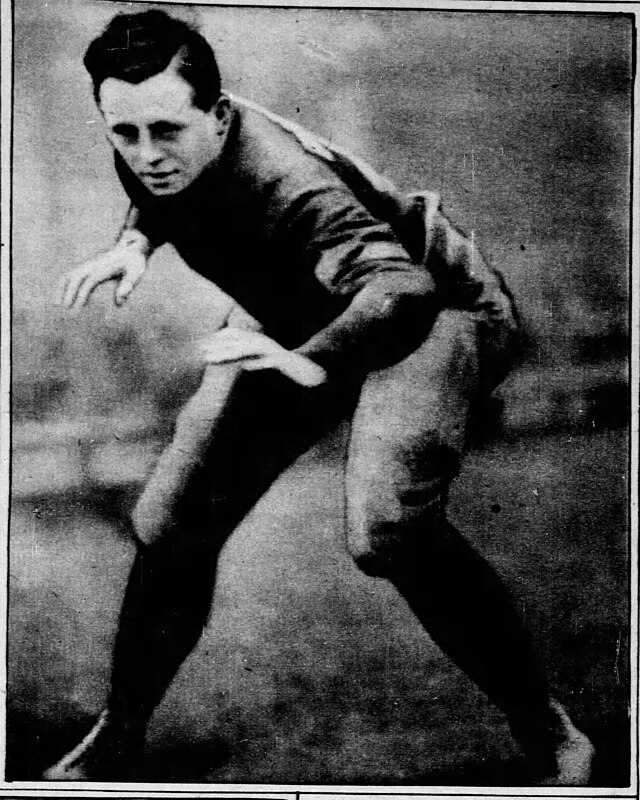
Caption text (not included) says “Wisconsin’s leader, Martin Below, plays at tackle.” via the Chicago Tribune and Wikimedia Commons
Football Bio
January 26, 1899 – Oshkosh, Wisconsin – The University of Wisconsin at Oshkosh tackle, Marty Below, was born. The National Football Foundation selected Marty Below to enter the College Football Hall of Fame in 1988.
Conclusion
Marty Below represents a golden era of college football where the game was won in the trenches. His birth on January 26, 1899, marked the beginning of a life that would eventually leave an indelible mark on the University of Wisconsin-Oshkosh and the sport at large. By the time he was inducted into the College Football Hall of Fame, his reputation as an immovable object on the line of scrimmage had been cemented for decades. Today, we remember Below not just as an athlete, but as a foundational pillar of Wisconsin football history.
Accolades and Football Accomplishments
- College Football Hall of Fame Inductee: Class of 1988 (National Football Foundation).
- University of Wisconsin-Oshkosh Hall of Fame: Charter Member (Inducted 1974).
- All-Conference Honors: Multiple-year selection as a standout tackle in the Wisconsin Intercollegiate Athletic Conference (WIAC).
- Team Leadership: Recognized as one of the most dominant two-way linemen in the history of the Titans’ football program.
- Historical Legacy: Widely regarded as the greatest player in the history of the UW-Oshkosh football program during the early 20th century.
