The Duke Speedster Who Charmed George Halas
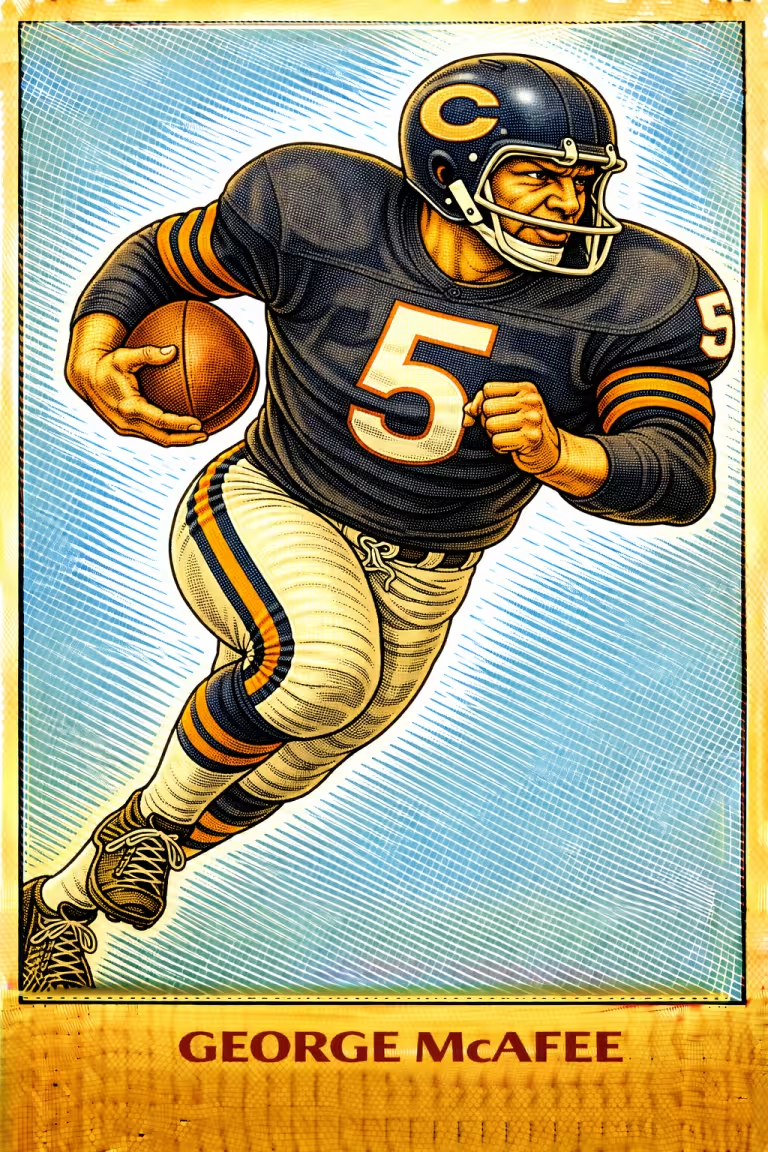
GEORGE MCAFEE
1940–1950
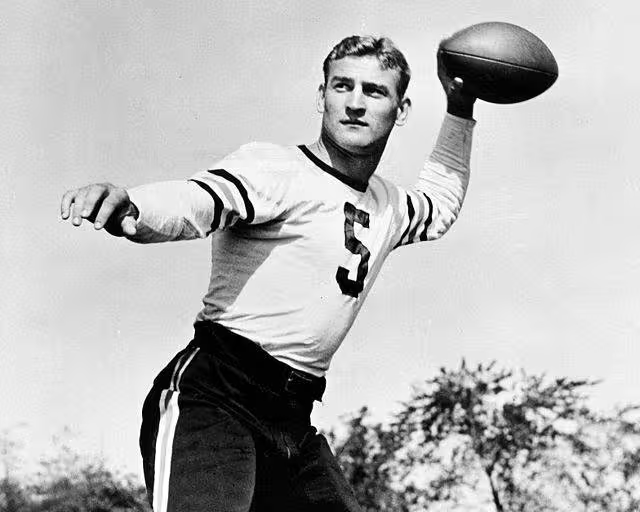
How does a player earn a nickname like “One-Play McAfee” in an era of grinding, 60-minute football? For George McAfee, it only took a single crease in the defense to turn a stalemate into a touchdown. As the engine behind Duke’s legendary “Iron Dukes” of 1938 and a versatile weapon for the Chicago Bears dynasty, McAfee proved that speed and instinct could overcome any size disadvantage. From the heartbreak of the Rose Bowl to the hallowed halls of Canton, discover the story of the man who revolutionized the NFL’s return game and changed the very shoes players wore to compete.
Football Bio
March 13, 1918 – Corbin, Kentucky – George McAfee, known for his speed and big-play ability at Duke and later in the NFL, was born. He was called “One Play McAfee” for his knack for changing games instantly and formed a strong backfield with Eric Tipton. The 1938 Duke team went undefeated and unscored upon until the final minutes of the Rose Bowl.

McAfee helped set up a go-ahead field goal before USC rallied for the win. McAfee later joined the College Football Hall of Fame and was drafted by the Chicago Bears, where he proved doubters wrong with his performance and versatility. It looked like that might be the perfect thing for Duke. But Southern Cal’s fourth-string quarterback, Doyle Nave, then led his team down the field for a touchdown in the game’s final seconds.
The National Football Foundation selected George McAfee for the College Football Hall of Fame in 1961. George was the second overall pick in the 1940 NFL Draft by the Chicago Bears. Even the wise Coach George Halas was unsure if he had made a mistake, as McAfee was smaller than the prototypical NFL back. One-Play-McAfee did not disappoint.
According to the Pro Football Hall of Fame, in 8 seasons, George scored 253 points and gained 5,313 total yards in the NFL. The two-way player also picked off 25 passes. He led the League in punt returns in 1948, finishing with a 12.78-yard-per-return average. As a side note, he also started the trend of wearing low-cut shoes in the NFL. At a small ceremony in Canton, Ohio, in 1966, the Pro Football Hall of Fame enshrined George McAfee.
Conclusion
George McAfee’s career serves as a bridge between the classic triple-threat era and the specialized explosive game of today. Despite being undersized for the 1940s, he made an outsized impact; he dominated on offense, defense, and special teams while serving as a tactical innovator for George Halas’s Bears. His legacy lives on not just in the record books, but in every player who prioritizes speed over bulk. McAfee remains one of the few athletes to be honored by both the College and Pro Football Halls of Fame, a fitting tribute to a man who truly only needed “one play” to make history.
Accolades and Football Accomplishments
- Pro Football Hall of Fame: Inducted in 1966.
- College Football Hall of Fame: Inducted in 1961.
- NFL 1940s All-Decade Team: Recognized as one of the best players of his era.
- 3× NFL Champion: Won titles with the Chicago Bears in 1940, 1941, and 1946.
- NFL Punt Return Leader: Led the league in 1948 with a 12.8-yard average.
- Pro Bowl Selection: Named to the Pro Bowl in 1941.
- Interception Record: Recorded 25 career interceptions as a two-way player.
- Duke University Legend: Key member of the 1938 “Iron Dukes” who went unscored upon in the regular season.
- Equipment Pioneer: Credited with introducing low-cut cleats to the NFL to maximize speed.
- First-Round Draft Pick: Selected 2nd overall in the 1940 NFL Draft.
(other source Golden Rankings and Pro-Football-Reference)
One comment