
 By Darin
 Thanks for joining us in another bonus edition of the book, and we hope you’re enjoying your read.
Ball Carriers in 1903: Timothy Brown of Football Archaeology Explains
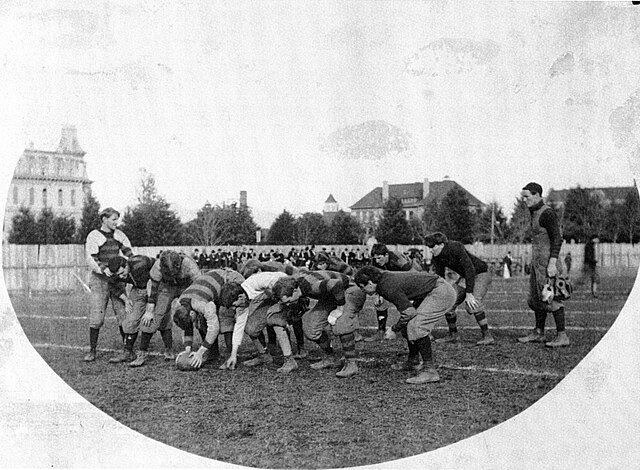
Hi, this is Timothy Brown of footballarchaeology.com. I’m the author of several books on gridiron history, including How Football Became Football. Starting in 1896, the football rules required offenses to have five players on the line of scrimmage, intended to limit mass plays.
Then, in 1903, the rules required seven players on the line of scrimmage between the 25-yard lines and five between the goal line and the 25-yard lines. So inside the 25-yard lines, teams moved ends, tackles, and guards into the backfield to block or to even carry the ball.
Even when the traditional linemen positioned themselves on the line of scrimmage, however, they still ran with the ball on guard, tackle, and end-around plays.
You can think of those as a full-house sweep, in which a team pulls both guards and sends all the backs around, and the backside guard receives the ball rather than one of the backs. Remember, at the time, the linemen were often the same size as the backs and were often smaller than the fullback.
In addition, the passing game did not yet exist, so there were no pass plays, no play action and no draws. Only running plays up the middle, to the right or to the left.
So mixing up which player ran the ball was one of the few forms of deception offenses had. Now back to the greatest gridiron team story.
