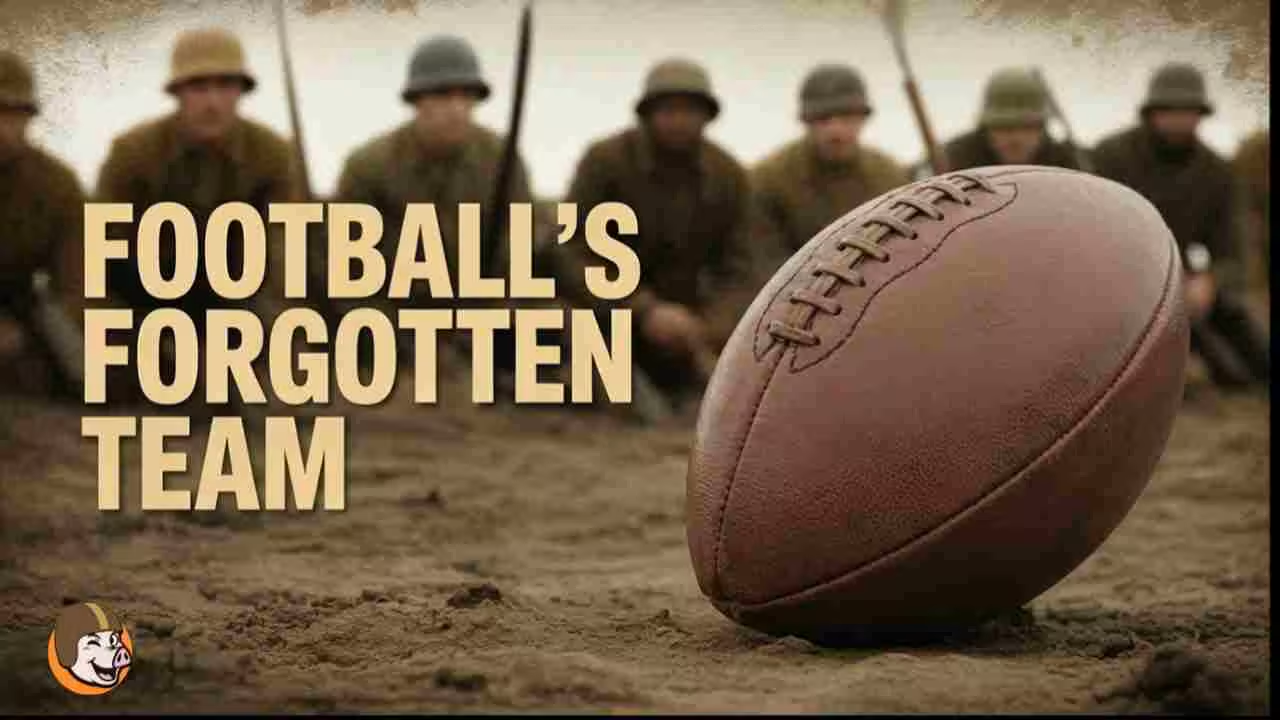
The primary focus of this podcast episode is to delve into the illustrious history of the 1918 Naval Station Great Lakes Blue Jackets football team and its significant impact on the early development of professional football in the United States. As the backdrop of World War I unfolded, military bases across the nation began cultivating sports teams, with the Great Lakes Naval Station emerging as a particularly noteworthy example. Our guest, Dan Charesta, elucidates the compelling narrative surrounding this team, highlighting its connections to iconic figures such as George Halas and its role in the formation of the National Football League. Through a series of insightful discussions, we explore the intricate interplay between military service and sports, revealing how the fervor of service football helped galvanize a national passion for the game. We invite you to join us as we uncover the historical significance of this team and the legacy it left on American football.
Join us at the Pigskin Dispatch website to see even more Positive football news!
Don't forget to check out and subscribe to the Pigskin Dispatch YouTube channel for additional content and the regular Football History Minute Shorts.
Miss our football by the day of the year podcasts, well don't, because they can still be found at the Pigskin Dispatch website.
Transcript
And during some of these camps, some football teams sprouted up.
Speaker A:We have our guest today, Dan Charesta.
Speaker A:Tell us all about one in the Great Lakes region coming up in just a moment.
Speaker A:And we're going to have a great discussion tonight with one team in particular with our guest, Dan Charist.
Speaker A:Dan, welcome to the Pig Pen, Darren.
Speaker B:Hey, how's it going?
Speaker B:I'm happy to be here, and I'm happy to talk about one of the teams.
Speaker B:I mean, I'm sure you've covered it on the Pigskin Dispatch a little bit.
Speaker B:I actually use it as a source on this project that I just got a hand on.
Speaker B:But, yeah, the:Speaker B:Excited to talk about them.
Speaker A:Yeah, we have never done a podcast that's really directed at them.
Speaker A:We had a few years ago, we did a spotlight on the 100th anniversary of the Rose Bowl.
Speaker A:So we went through all the Rose bowl games.
Speaker A:Of course, they had that very famous Rose bowl game with some very famous people in it.
Speaker A:So I know that's part of your story, too.
Speaker A:So just bits and pieces we've talked about.
Speaker A:But why don't you tell us a little bit about yourself first.
Speaker A:Tell us about your fandom and how you got excited enough to do a series on football history.
Speaker B:Yeah, so I grew up in Massachusetts.
Speaker B:Seacong, Massachusetts.
Speaker B:Shout out.
Speaker B:And so I was growing up there.
Speaker B:One of my first football memories was actually the Patriots made Super Bowl 31, which was Bludsoe versus Favre, if you remember that one.
Speaker B:Yeah, that was when I was in first grade.
Speaker B:So I kind of like got, you know, suckered into football fandom courtesy of that Patriots team.
Speaker B:Bludsoe, Curtis Martin, Bill Parcells, just some of the.
Speaker B:The big names on that squad.
Speaker B:And then from there, Yeah, I mean, I was fortunate enough to grow up in an era of Boston sports where, you know, they just had a crazy run.
Speaker B:I mean, I'm a fan of the Patriots first and foremost, and then the Red Sox and also Celtics and Bruins.
Speaker B:So to have that growing up.
Speaker B:And I still, I don't live in Massachusetts anymore, but I still follow the Patriots.
Speaker B:Watch them all the time.
Speaker B:Watch them every week.
Speaker B:Watched them when I was overseas.
Speaker B:The Red Sox, I follow a bit, too.
Speaker B:And then if the Celtics or the Bruins were to make the Finals, I would make sure to catch that as well.
Speaker B:So just a big sports fan in general.
Speaker B:And, yeah, so it kind of led to my professional life doing a little bit of sports coverage there.
Speaker B:And also was kind of the inspiration for this project was just my life in general, but life as a sports fan.
Speaker A:Okay, so the.
Speaker A:The naval station.
Speaker A:The Great Lakes Naval Station, of course, is closer over to my neck of the woods in the Great Lakes, you know, nowhere near New England.
Speaker A:How did you get connected with wanting to talk about this great team from history?
Speaker B:Yeah, it's really something that I think directly.
Speaker B:I feel like it's directly part of me in a way.
Speaker B:So I went from Massachusetts.
Speaker B:from Rhode island College in:Speaker B:And basic training for the Navy is in Great Lakes.
Speaker B:And then depending on your job, which we call rates, I know other branches will call it an mos, but your rate, some of those job trainings are actually what we would say, like across the street would be the term, which means it's at the base that's basically across the street from where you go to basic training.
Speaker B:So I was at basic, of course, for the normal allotted time, which at the time was about nine weeks.
Speaker B:And then I was an electrician for three and a half years in the Navy.
Speaker B:And then I transitioned to a job called mc, which is mass communication specialist, which is basically a journalist, photographer, videographer, graphic design, all rolled into one.
Speaker B:But for three and a half years, I was an electrician.
Speaker B:And my schooling was at Great Lakes.
Speaker B:ting basic training, November:Speaker B:So I stayed at Great Lakes for a year, experienced crazy winter, saw the Patriots win the super bowl against the Seahawks, snowed in at Great Lakes.
Speaker B:And then, yeah, from then on, I was able to go to some other cool places with the military.
Speaker B:I was in Japan on a ship, attached to a ship, which ended up switching to San Diego.
Speaker B:So I was living there for a bit, and then I spent four years in beautiful Naples, Italy, at AFN Naples.
Speaker B:And I'm also a huge Napoli soccer fan now.
Speaker B:So it's like Patriots, Napoli are kind of like 1a and 1b for my teams that.
Speaker B:That I follow.
Speaker B:So, yeah.
Speaker B:And while I was in Naples, I enrolled at the University of Alabama Online, did a journalism and media studies master's program.
Speaker B:And then for my thesis project is where this project took off.
Speaker B:Story, George hallis and the:Speaker B:So it kind of tied together that I was there and I had the opportunity to make this project and Here we are now, you know, I'm talking to you, Darren, about it and you even featured in the, in the series.
Speaker B:So I'm sure we'll get into that as well.
Speaker A:Yeah.
Speaker A:Well, first of all, you know, thank you for your service and you know, what a rich history and background of education you've gotten, you know, traveling the world and got just so many football connections from, you know, your Patriots to the Blue Jackets to the Crimson Tide, all in one thing, plus a little soccer thrown in there too.
Speaker A:So.
Speaker A:Yes, very, very cool.
Speaker A:So in your young life, you've got gone through a lot, so.
Speaker A:But we appreciate your service and all you and your, your brethren and sisters in the military that are keeping us free.
Speaker B:Of course.
Speaker B:Yeah, thanks for the support.
Speaker B:I got super lucky with all these duty stations.
Speaker B:I'm currently off active duty.
Speaker B:I'm currently still in the reserve.
Speaker B:But yeah, I was able to catch actually a lot of sports in a lot of different countries.
Speaker B:Unfortunately, no American football, but yeah, that's.
Speaker B:Maybe that'll spread to some of these countries later on beyond just one or two or three NFL games a season.
Speaker A:Yeah, it's, it's really going international.
Speaker A:We just talked to a guy the other day.
Speaker A:That's Estonia.
Speaker A:They have American football going on in Russia.
Speaker A:They're, they're playing American football.
Speaker B:All right.
Speaker B:It's spread all over the place.
Speaker A:So we're, we're excited about that.
Speaker A:Okay, so.
Speaker A:So let's go back.
Speaker A:So first of all, you know, I'm kind of intrigued that the Great Lakes Naval Station is still going strong and training young naval persons to serve in the Navy, which.
Speaker A:God, that's 100 some years plus.
Speaker B:Yeah.
Speaker B:So during my research, I was actually able to talk to Timothy Brown, who is an author.
Speaker B:He wrote a book called Fields of Friendly Strife.
Speaker B:It was a great resource for this.
Speaker B:And honestly, I didn't even know the origins of Great Lakes when I started taking on this project.
Speaker B:And he, he kind of, you know, gave me the rundown.
Speaker B:It's in the series, if you listen to it, the three part, about 30 minute per episode look at the blue jackets.
Speaker B:But back in, I think it was:Speaker B:So they wanted kind of a more century located base.
Speaker B:And it's right on, I mean, it's called Naval Station Great Lakes.
Speaker B:It's right on Lake Michigan.
Speaker B:Not that there's any.
Speaker B:At least when I was there.
Speaker B:There's no makeshift ships or anything there.
Speaker B:It's just where the base is at but so the origin of the base was there.
Speaker B:And then they got Captain William Moffett, who plays a pretty central role in the story of this team.
Speaker B:He was the captain of the base and he took it upon himself to really grow the base through sports once World War I came around.
Speaker B:And it really gave a name to the base.
Speaker B:Not just the football team.
Speaker B:That's the one that we're talking about today and the one that had the most prominence.
Speaker B:But they had teams in baseball and soccer.
Speaker B:I know, I think there might have been a ski team.
Speaker B:Maybe I'm talking.
Speaker B:Maybe I'm thinking of a different base.
Speaker B:But they had plenty of teams to go around and it was extensively covered.
Speaker B:Not just the football team, but another source that I used was the Great Lakes Bulletin from the day, which is no longer there.
Speaker B:But I was able to access a lot of the archival stories from there.
Speaker B:And yeah, not just the football team was there in the newspaper, but all the other teams and they were featured prominently throughout the base.
Speaker B:So that's how they kicked off.
Speaker B:And then, yeah, service football took over during World War I.
Speaker B:Many bases, many forts, all sorts of, you know, places like that that had, you know, military personnel there.
Speaker B:It was a great way for them to get out and show some base pride.
Speaker B:And service football, the.
Speaker B:The real key to this story is how it launched the NFL, helped launch the NFL with service football.
Speaker B:And Great Lakes was definitely the most well known of these teams.
Speaker B:And service football even came back around during World War II.
Speaker A:Interesting.
Speaker A:So I take it probably the height of population of the Great Lakes Naval Station was probably during both world wars.
Speaker A:Is that, would that be true?
Speaker B:I believe my guess and my research, I think it was 50,000 sailors were there, which is, I mean, crazy.
Speaker B:Think of a city nearby you that has 50,000 people.
Speaker B:And to imagine that on a base is pretty.
Speaker A:I can tell you the city I live in is a hundred thousand.
Speaker A:So that's half the population.
Speaker A:It'll be almost.
Speaker A:Wow.
Speaker B:Half the population.
Speaker B:You could probably is probably what, seven times if you filled the Erie Sea Wolves Stadium to capacity times that by about 7 or so.
Speaker B:It'd probably be what Great Lakes had.
Speaker A:Back in World War I. Yeah, probably about 10 times.
Speaker A:I think there's only 7,000.
Speaker B:I think it was 50,000.
Speaker B:I should have double checked, but it was, it was quite a bit way, way, way more than they would have today.
Speaker A:Yeah, man, that's a larger.
Speaker A:Much larger than I thought.
Speaker A:So that is, you know, they're playing against university teams.
Speaker A:It's bigger than any university.
Speaker A:It's bigger than any, you know, four or five universities put together probably at that time.
Speaker A:Very, very interesting.
Speaker A:So, okay, so they had, they had these teams.
Speaker A:They, you know, they're, they're playing these competitive sports and, you know, they're in Great Lakes Naval Station.
Speaker A:What should give us maybe the location?
Speaker A:I'm not sure that we, we told the listeners that for sure.
Speaker B:Yeah.
Speaker B:So Great Lakes is about one hour north of the city of Chicago.
Speaker B:So, yeah, I mean, nowadays you can take the train from Great Lakes right into Ogilvy Train center if you, if you know the, if you know the city at all.
Speaker B:So, yeah, I mean, myself, I was going in Chicago fairly regularly, but yeah, it's, it's right on Lake Michigan.
Speaker B:It's just north of Lake Forest, which is where, I believe the Chicago Bears have their training facilities.
Speaker B:And it's also, I think, where Michael Jordan was at when he was playing for the Bulls.
Speaker B:I think he had a mansion there.
Speaker B:So it's quite close to there.
Speaker A:Oh, very cool.
Speaker A:So, you know, George Hallis is very central in this story and in your series that you have going on with the, the Great Lakes Naval Football team.
Speaker A:And, you know, of course, that's a stomping ground.
Speaker A:He played at the University of Illinois, you know, end up going with the, the Blue Jackets and of course, you know, Decatur and the Chicago Bears.
Speaker A:So that's his stomping ground.
Speaker A:So I guess maybe that's where he got to know the lay of the land a little bit better.
Speaker A:Serving in the military.
Speaker B:Yeah, I mean, he, he is the namesake to the project I worked on.
Speaker B:ackie's George hallis and the:Speaker B:But.
Speaker B:And I kind of made the story a.
Speaker B:Focused on Hallis because he became such a figure in football.
Speaker B:You know, he was on the Decatur Staleys, moved the team to Chicago, made them the Bears, was owner, player, coach for like 40 years.
Speaker B:You know, he just had such a historic run, and he really was an interesting guy in football history.
Speaker B:I mean, if you cover football history at all, there's no way George House's name does not get brought up.
Speaker B:I want to say, for the actual Blue Jackets, though, I would say he was kind of just another player on the team.
Speaker B:I mean, they had three future hall of Famers on the team.
Speaker B:Jimmy Konzelman, who didn't even play.
Speaker B:He got benched in the, in the season.
Speaker B:He wasn't on the team.
Speaker B:He was on the team.
Speaker B:Excuse me.
Speaker B:But I mean, it was him.
Speaker B:It was George Hallis and Patty Driscoll as well, who went in for councilman as quarterback, I mean, for the team.
Speaker B:And I mean, quarterback was a totally different position that than.
Speaker B:Than it is now.
Speaker B:e Great Lakes blue jackets of:Speaker B:So those three players really were.
Speaker B:I mean, I think if I had to guess, I would say Driscoll was the star of the team.
Speaker B:And you could.
Speaker B:If you.
Speaker B:If you looked into this:Speaker B:But, yeah, I mean, George House himself, he.
Speaker B:He didn't really stick out as like the Tom Brady of.
Speaker B:Of the Blue Jackets.
Speaker B:He was probably more like.
Speaker B:I'm trying to think of maybe like a Rob Gronkowski kind of.
Speaker B:Kind of level of.
Speaker B:Of talent there.
Speaker B:Still a Hall of Famer, but probably not exactly carrying the squad.
Speaker B:Got to get the Patriots references in there, you know.
Speaker A:Yeah.
Speaker A:So, I mean, so these guys are, you know, these are some of the.
Speaker A:The brain trust of the early NFL, and that's probably your.
Speaker A:Part of your connection in the National Football League because, you know, of course, Halas was a coach and owner, you know, Chicago Bears, Decatur Staley's Conelman coached, you know, multiple places, including the Chicago Cardinals and some other places around.
Speaker A:I think even Driscoll ended up coaching in the NFL later on after his playing days.
Speaker B:Yeah, I want to throw a shout out for Jimmy Konsman, coach of the NFL champion.
Speaker B:And this is actually closer to me than Boston.
Speaker B:The Providence Steamroller.
Speaker B:I think it was:Speaker B:That's where I went to college was in Providence.
Speaker B:And I have.
Speaker B:I have a little bit of.
Speaker B:I'm from Mass.
Speaker B:Grew up in Mass, definitely from Mass, but there's a bit of Rhode island in me too.
Speaker B:So I want to make sure we get the Providence Steamroller mentioned here on the Pig Skin Dispatch.
Speaker A:Yeah, well, we've covered them quite well.
Speaker A:ok on the steamroller back in:Speaker A:So it's talks quite a bit about the championship, and of course, it ties into some of the teams I wrote about, you know, because one of their arch rivals was the Pottsville Maroons and some things that I'm very familiar with.
Speaker B:So I had a lot of fun with that.
Speaker B:I'm gonna have to get the reading list from you, Darren, after the.
Speaker B:After the show.
Speaker B:Because we talked before the show about all your works.
Speaker B:I knew of some of them, but not all of them, and none.
Speaker B:I have to give a look to the Providence steamroll there because, yeah, I grew up on the Providence Journal sports page, so every morning and my parents still get.
Speaker B:I just saw my parents.
Speaker B:I was reading the Providence Journal just this past weekend when I was visiting during New Year's.
Speaker B:So, yeah, got to get that book on the reading list.
Speaker A:Okay, very good, Very good.
Speaker A:All right, so let's talk about your project.
Speaker A:You.
Speaker A:You have this project you did a few years ago.
Speaker A:You had some experts on.
Speaker A:Why don't you tell us a little bit of the layout of what it is?
Speaker A:And I guess we failed to mention this is something that's recently been added to the Sports History Network for everybody to enjoy.
Speaker A:this podcast and Jackie's the:Speaker A:So, Dan, why don't you tell us a little bit about how you put this together?
Speaker B:For sure.
Speaker B:Yeah.
Speaker B:Well, first off, thanks for the plug there, Sports History Network.
Speaker B:Yeah.
Speaker B:You were helpful in many ways in this project, Darren.
Speaker B:So I just want to say thanks again for that.
Speaker B:I mean, you helped me get it on.
Speaker B:Get a home for it on Sports History Network, and you were also interviewed for the project.
Speaker B:But.
Speaker B:Yeah, so when I was at Great Lakes 10.
Speaker B:10 years ago.
Speaker B:Right.
Speaker B:There's really kind of something that keyed this project off is there's.
Speaker B:There's.
Speaker B:You have a feel at the base that it's old.
Speaker B:There's old buildings.
Speaker B:There are some photos around, and you kind of got to seek it out a little bit.
Speaker B:But.
Speaker B:And this is not a location most people would go to at the base.
Speaker B:You could probably be at the base for a year and never see what I'm about to tell you about.
Speaker B:had one game there during the:Speaker B:That was their home field.
Speaker B:And it's on the base, and it's in front of the main buildings.
Speaker B:It's currently in front of a gym and a theater and still the main building, but there's.
Speaker B:On the other side.
Speaker A:Is it still a football field?
Speaker B:It is not.
Speaker B:It's a field that gets very, very, very little use.
Speaker B:So on one side is the gym, on one side is a theater.
Speaker B:On one side is the main administration building.
Speaker B:And then if you go on the other side, which is closer to the entrance, they.
Speaker B:There is a plaque, and it basically states, like, here is Ross Fields, home of one of the Best football teams of the service football era of World War I and World War II.
Speaker B:And when I first saw it, I'm like, what's the deal?
Speaker B:You know, like, why don't I know more about this?
Speaker B:I'm like a guy who, you know, read the Providence Journal of Sports every morning, still listens to Boston Sports radio, follows sports pretty intensely.
Speaker B:And I didn't know anything about it, so it really piqued my interest.
Speaker B:Then did a little bit of research and then come to find out, you know, I got this opportunity in front of me ten years later, pretty much.
Speaker B:But for my thesis project.
Speaker B:You could either do a thesis project or you could do a thesis paper.
Speaker B:Someone who likes to create things.
Speaker B:I'm not really a writer, you know, I was even still for my civilian job, I'm doing content creation.
Speaker B:I don't want to write, so.
Speaker B:Which could be a good book.
Speaker B:But this project came about in my.
Speaker B:I graduated spring:Speaker B:But in the fall of:Speaker B:It was, I think it was sports journalism.
Speaker B:And the instructor was Lars Anderson.
Speaker B:So if you know Sports Illustrated, if you know some sports history books, he's an author and he's from Alabama and he does some teaching at the school and he was a professor.
Speaker B:I in the, the main project was you got to do a book pitch.
Speaker B:And I pitched this and he's like, oh, this is, this is cool.
Speaker B:He ended up being the advisor on the project.
Speaker B:And I got approved to, to do this project for the next semester for my thesis project.
Speaker B:Talked to the, talk to Lars Anderson, talked to the, the head of the department.
Speaker B:And, and I was able to start working on it.
Speaker B:So yeah, I read War Football by Chris Serb.
Speaker B:I read Fields of Friendly Strife by Tim Brown.
Speaker B:I listened to a few episodes of the Pigskin Dispatch when you did a few Rose bowl additions from back in the day.
Speaker B:And then I got on.
Speaker B:I was fortunate to use the university database.
Speaker B:Got a bunch of stories.
Speaker B:Pretty much the Great Lakes Bulletin was the top source.
Speaker B:But I mean there was other Chicago based newspapers and then some other ones based on where the team might have been playing.
Speaker B:And yeah, I mean, interviewed five people including yourself.
Speaker B:You were the first guest that I interviewed.
Speaker B:And then I had Chris Serb, I had Timothy Brown, I had Josie Emba, and then I had Dr. Charles Clark, who was a World War I and 2 professor from the college.
Speaker B:Was able to, you know, squeeze maybe two and a half, three hours of audio down into some clips, place it throughout.
Speaker B:I got some friends to well, not some, some friends and then some professionals to help me record some old bits of newspaper clippings in a Ken Burns esque style.
Speaker B:I'm a big Ken Burns historian, documentary fan.
Speaker B:I am currently watching the American Revolution.
Speaker B:But the way that he kind of has voices from the past talk, I incorporated that into this podcast as well.
Speaker B:And then I do a little bit of narration and kind of also tell my story like I'm telling you now, about my connection to the team and why it kind of matters to me.
Speaker B:And hopefully that strikes a chord with the listener and it matters to you and you pick up some football.
Speaker B:e, the game, the rose bowl of:Speaker B:And I mean, we even had Newt Rockne saying this was the best football team ever when he was coaching Notre Dame playing against Great Lakes.
Speaker B:And it's something that I think you really got to be a crazy football historian to kind of know about this team.
Speaker B:So I took it upon myself, you know, with that connection and with the, the college project, to get that word out of this team that featured three future Pro Football hall of Famers.
Speaker B:They won the Rose Bowl.
Speaker B:I mean, those are two things that stick to this day, you know, the hall of Fame and the Rose Bowl.
Speaker B:I mean, it's still the biggest game on New Year's Day, so I think that helps the listeners out.
Speaker B:But I mean, the real story is the connection to growing, helping launch the NFL.
Speaker B:And I mean, the NFL is the, the number one sports league in this country.
Speaker B:And it's really.
Speaker B:You could trace it back to this team.
Speaker B:So I think it's an important story if you like the sport of football.
Speaker A:Yeah, definitely is.
Speaker A:And you know, the Great Lakes, like you said earlier, went into the next World War, you know, some 20 years later, for 30 years later, and spawned some competition for, for the NFL.
Speaker A:And maybe you could talk a little bit about that.
Speaker A:Some of the famous names from that Great Lakes team.
Speaker B:Yeah, so I originally started this project and if you remember, you were the first person I interviewed and we actually talked quite a bit about this.
Speaker B:We.
Speaker B:It was originally going to be both teams, World War I era and World War II era.
Speaker B:And when it was all said and done, it was just World War I.
Speaker B:So.
Speaker B:But World War II, it's itself, I mean, they had so many names that, which would make football fans, you know, be like, oh my gosh, I had no idea that Paul Brown was the head Coach, you know, from the Cleveland Browns.
Speaker B:You know, he was coaching Great Lakes.
Speaker B:Before him was Tony Hinkle, which, if you follow college basketball is the name behind the Butler Gymnasium.
Speaker B:You know, uh, so those are just names on the sideline.
Speaker B:On the field was Steve Belichick, who was Bill Belichick's dad, who coached at Navy for.
Speaker B:At the Naval Academy for I think like 30 something years.
Speaker B:It might be more.
Speaker B:I think it's in the 30s.
Speaker B:Also on the team.
Speaker B:Yeah, yeah, it's crazy.
Speaker B:Uh, turned down many other positions from what I've.
Speaker B:From what I've learned.
Speaker B:And then Eric Parsigian was on the team, who is the future Notre Dame coach.
Speaker B:They even had one of the Heisman Trophy winners from back in the day.
Speaker B:Bruce Smith was on the team.
Speaker B:He won the Heisman in 41, was on the Blue Jack in 42.
Speaker B:And then the World War II team had Marion Motley.
Speaker B:And then who was in the.
Speaker B:The old.
Speaker B:You got to help me, Darren, with the league.
Speaker A:The All American aafc.
Speaker A:Yes, the Cleveland Browns, when the Browns.
Speaker B:Started, was on that Browns dynasty of that, that league.
Speaker B:they also beat Notre Dame in:Speaker B:So, I mean, the World War II team could be covered over the course of four seasons.
Speaker B:And this Great Lakes team was only around for two back during, during the World War I era.
Speaker B:So:Speaker B:y different roster going into:Speaker B:Put an end to the.
Speaker B:The World War I service era.
Speaker B:But, yeah, crazy, crazy names coming through there through Great Lakes, just through the football team.
Speaker B:It's crazy to learn.
Speaker B:And it's cool that the connection is there.
Speaker A:Yeah, very, very cool.
Speaker A:And I'll tell you, folks, it is very professionally done.
Speaker A:You know, Dan says he had a lot of help, but he doesn't give himself enough credit because it's a brilliant idea.
Speaker A:And he put it all together and, you know, as a college student at the time, you know, with a busy life in the military, he's calling strangers like, like this guy talking here, that's a, you know, probably not the easiest one to get a hold of.
Speaker A:And, you know, it was great because, you know, Timothy Brown and Josiemba and even Chris Serb, they're all been guests on here.
Speaker A:Actually, Josiemba has been on here probably 30 times.
Speaker A:Tim Brown's on here weekly for the last three or four years.
Speaker A:He's every Tuesday, he's with us on the.
Speaker A:In the pig pen.
Speaker A:And Chris Herb, just recently we talked about his recent book on Walter Eckersley, another Chicagoan that was recently wrote a book about.
Speaker A:But you know, you did a great job on this.
Speaker A:And so we're very proud at Sports History Network that you decided to join us and let us be a, you know, a purveyor of sending out your podcast and maybe just tell folks a little bit about, you know, how long is a series and what can they expect.
Speaker B:Yeah, for sure.
Speaker B:So I was fortunate that it came out, I think, as I wanted in terms of lengthwise.
Speaker B:So it's about three 30 minute episodes for the, for the podcast.
Speaker B:oject that was done in spring:Speaker B:I'm like, I'll get to this later.
Speaker B:And then, yeah, I was able to design the podcast art way later and yeah, found a home on the Sports History Network.
Speaker B:So I'm very, very fortunate that it's able to find a home and that the project is complete and ready for all the listeners.
Speaker B:Yeah, like I said, it was from the University of Alabama.
Speaker B:Not that the school has anything to do with what came out, but it was from, you know, that, that, that program that, that I was able to do this.
Speaker B:So.
Speaker B:Yeah, and I also just want to say, like, I was lucky that when I was in the military, I got some audio production experience when I was at AFN Naples because I was able to host some live radio shows while I was there.
Speaker B:So I got some experience there and that definitely helped put this all together.
Speaker B:So, yeah, thank you for the compliments there, Darren.
Speaker B:But yeah, it's three episodes.
Speaker B:Each kind of follows the arc of George Hallis and the arc of World War I. I wanted to incorporate the history of the war and why it.
Speaker B:It really got this team together was World War I.
Speaker B:If there was no World War, this team wouldn't have been around.
Speaker B:And who knows how the NFL would have eventually launched.
Speaker B:ely after because The NFL was:Speaker B:Is that, is that correct, Darren?
Speaker A:Yeah, yeah.
Speaker A:The Hub Mobile showroom.
Speaker B:There we go.
Speaker B:So that was:Speaker B:Came back during World War II, like we said.
Speaker B:So, yeah, I mean, I wanted to.
Speaker B:First off, you know, give my connection to the, to the project, hopefully gets the listeners in.
Speaker B:And then George House is the name, so it really centers around him a little bit.
Speaker B:But I really wanted to incorporate World War I, which I learned about as well, because as a, as a country, I think we're kind of, I mean, we had a bit, much bigger hand In World War II, the United States, that is.
Speaker B:And I mean, I'm sure, I mean, my grandparents both were in the military in World War II.
Speaker B:I'm sure you have some family that had the connection there.
Speaker B:So World War II, I think, is a little fresh in our minds.
Speaker B:But World War I, I think, is a little bit overlooked.
Speaker B:So I'm glad that I was able to tell that story as well from pretty much from the US Perspective in there.
Speaker B:But I wanted to get the whole story going and it just ties to the Blue Jackets and it goes all the way from there to winning the Rose bowl to how it helped launch the NFL, which was really the fact that college football was big, but colleges back in the day were not easily accessible, so it was kind of tough to have school pride.
Speaker B:But when the military came around with these service teams and everyone had connections to the military and sold out big stadiums and was able to bring all star rosters together, it really showed the, the American public that this could work.
Speaker B:That's really the takeaway from the project.
Speaker B:And yeah, it helped launch the NFL.
Speaker B:And yeah, I think, I think it's a cool story for anyone who likes sports.
Speaker B:Anyone who likes, you know, sports history, military history.
Speaker B:I'm a fan of both of those, so I think I was the perfect person to tell the story.
Speaker B:And yeah, I'm happy with the end result.
Speaker A:Yeah, I think you are now, I guess.
Speaker A:Before we let you go, do you have any future plans or thoughts of maybe doing any more projects like this?
Speaker B:Yeah, that's a great question.
Speaker B:Currently, I'm still riding the the project is done, let's chill out kind of mindset.
Speaker B:So, yeah, I'm kind of sitting around.
Speaker B:I'm not, I haven't figured out what the next move is.
Speaker B:I like, for my civilian job, currently I do videography.
Speaker B:But I also, my old civilian job, I did a lot of photography and graphic design and videography, so I kind of missed those things.
Speaker B:So I kind of tried to get back in there with, with some of the projects.
Speaker B:But I mean, I, I, I do like what this turned out and it would be cool if I could do a Jackie's Part two.
Speaker B:I mean, I had all my notes ready for You, Darren, for the next project about.
Speaker B:Tell me about the World War II team.
Speaker B:But I, I kind of gave the details on that a little bit earlier in the episode, so I think that's one that could probably be told.
Speaker B:The World War II era.
Speaker B:I don't know if it would need more episodes or whatever it might be, but yeah, I'll call you when I need some more.
Speaker B:Some more.
Speaker B:Some more sound clips if I get started on that one.
Speaker A:Hey, well, you know where to find me and you know where to find everybody else.
Speaker A:I'm sure everybody would be excited about that one as well.
Speaker A:So why don't you give us the title of.
Speaker A:Of your series and once again, where they can find it.
Speaker B:Yeah.
Speaker B:Story of George hallis in the:Speaker B:You can get it on wherever you get your podcast.
Speaker B:Our friend Arnie from Sports History Network really has it organized well and he got it set up.
Speaker B:I'm very fortunate that he was able to help because that's a whole nother task in the podcast world if you got to get that going.
Speaker B:So check it out wherever you get to your podcast.
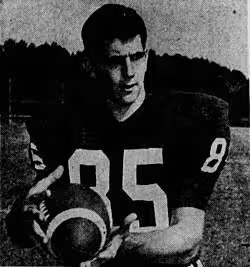
Speaker B:I just want to throw a fun fact out there that if you see the podcast art that is actually not George Hallis on the art, that is running back Harry Eilson.
Speaker B:I believe he was a running back for the.
Speaker B:For the Blue Jackets, but, yeah, that's him.
Speaker B:There's very little photo evidence of this team, and so he's on the COVID So it's not George Hallis.
Speaker B:You might think it is, but there's really little photographic evidence of anything.
Speaker B:1918 Cray Lakes Blue Jacket.
Speaker B:So just want to.
Speaker B:Just want to do a little disclaimer.
Speaker B:I don't think it ruins anything, but that's.
Speaker B:That's a different character.
Speaker A:Definitely gives it a nostalgic feel of the podcast.
Speaker A:So that's a good segue into the podcast.
Speaker A:So awesome.
Speaker A:Yeah, Very good iconology of it.
Speaker A:All right, well, Dan Charess, we really appreciate you joining us and telling us about this bit of history of football history from World War I and this blue Jackets team and your podcast series, Jackie's.
Speaker A:And we'd love to talk to you more about football again sometime soon.
Speaker A:And hopefully you do that.
Speaker A:Do that Jackie's, too.
Speaker A:Cause we'd love to hear that.
Speaker B:Give me a few years.
Speaker B:Maybe another master's degree for that one or something, Darren.
Speaker B:But yeah, thanks for.
Speaker B:Thanks for, again for helping with the project and for having me on here.
Speaker B:And I'm excited to check out, you know, more episodes and more, more works from you.
Speaker B:You know, get get some of these books that you've been doing.
Speaker B:Keep up the good work.
Speaker A:That's all the football history we have today.
Speaker A:F Join us back tomorrow for more of your football history.
Speaker A:We invite you to check out our website pigskindispatch.com not only to see the daily football history but to experience positive football with our many articles on the good people of the game as well as our own football comic strip clete marks comics.
Speaker A:Pigskindispatch.com is also on social media outlets, Facebook, Twitter, Instagram and don't forget the Big Skin Dispatch YouTube channel to get all of your positive football news and history.
Speaker A:Special thanks to the talents of Mike and Gene Monroe as well as Jason Neff for letting us use their music during our podcast.
Speaker B:This podcast is part of the Sports History Network, your headquarters for the yesteryear of your favorite sport.
Speaker B:You can learn more@sportshistorynetwork.com.