The NFL we recognize today—defined by high-scoring offenses, vertical passing attacks, and the tension of sudden-death overtime—wasn’t created on the field, but in a hotel conference room. On April 25, 1974, the league enacted a “total package” of sweeping changes that permanently shifted the balance of power from the defense to the offense.
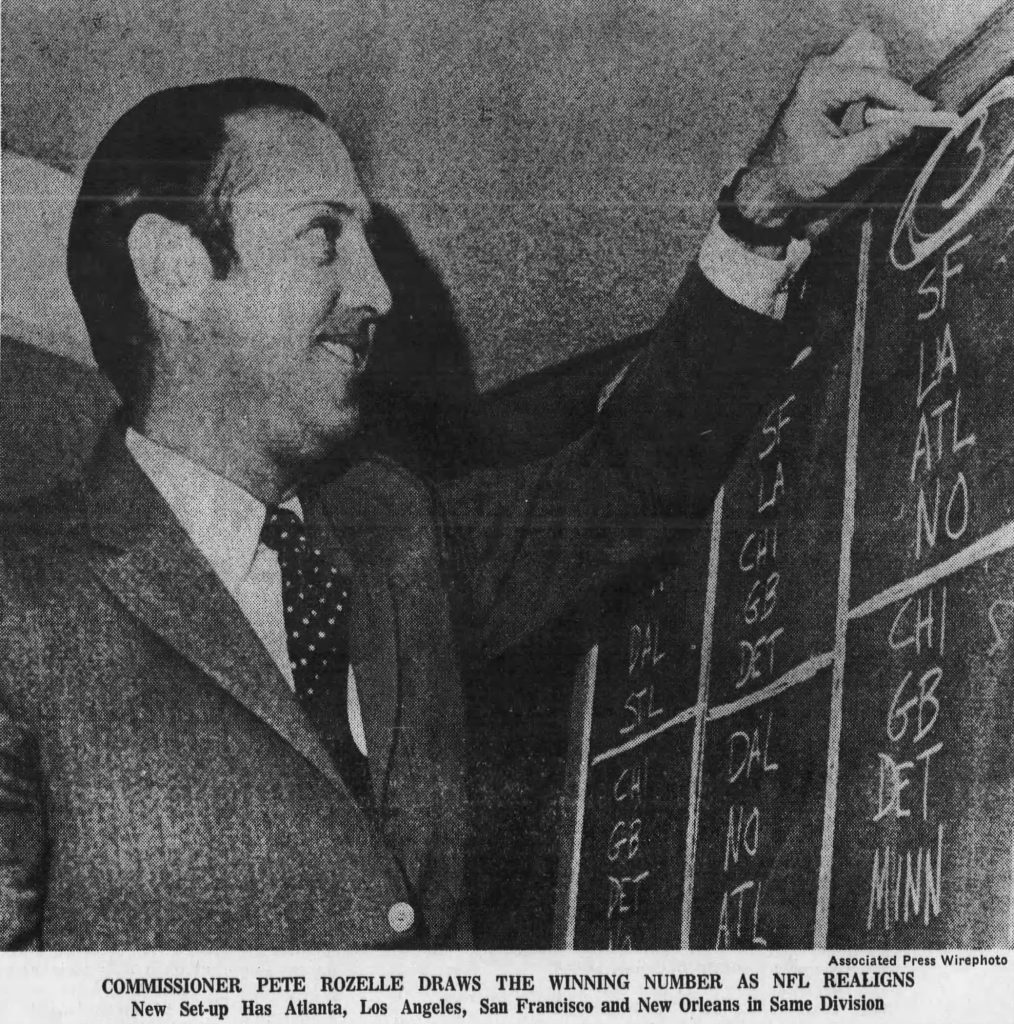
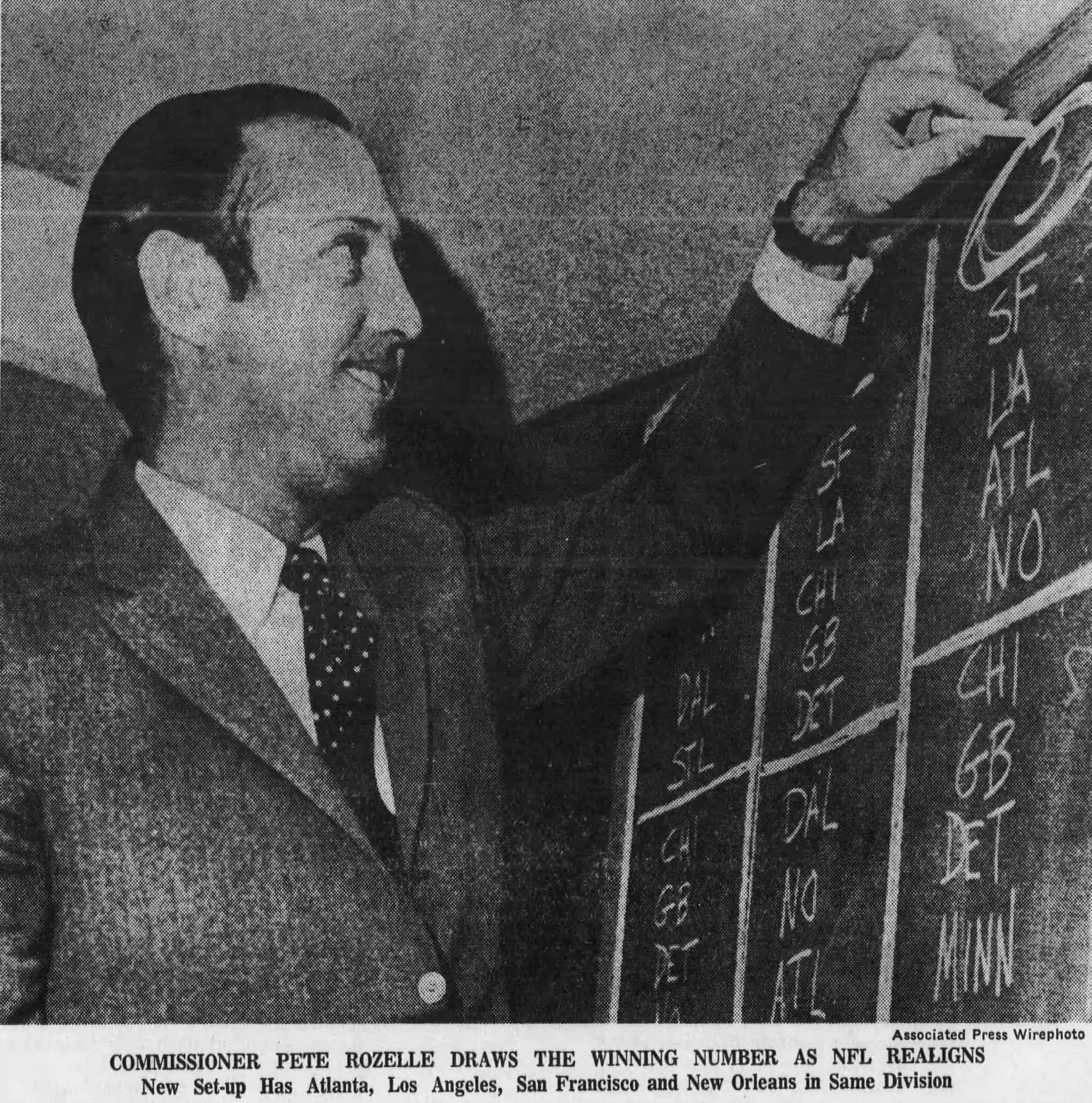
The Atlanta Constitution
Atlanta, Georgia · Saturday, January 17, 1970 via Newspapers.com
Rules Revision Storyline
While the league owners were busy rewriting the rulebook on April 25, the 1974 NFL Draft (held earlier that year in January) was already setting the stage for a new era of talent. This draft is legendary for producing the greatest single-team haul in history: the Pittsburgh Steelers selected four future Hall of Famers (Lynn Swann, Jack Lambert, John Stallworth, and Mike Webster) in the first five rounds. The 1974 rules reform was the perfect catalyst for these new stars, providing the offensive freedom for receivers like Swann and Stallworth to thrive.
April 25, 1974: Sweeping NFL Rules Reform
The Newspapers.com Football History Headline of the day comes from the April 26, 1974 edition of the Miami Herald, which has as its boldface heading, “NFL Brings In Sudden Death; Changes Rules For Field Goals!” The Herald wire service, of course, is talking about an April 25 NFL rules meeting in New York City that the League responded to criticism of safety and sagging offenses.
The sweeping changes were to first move the goal line to the end line and adopt sudden-death overtime for all regular and exhibition games. Another rule that made a difference was that a missed field goal would be returned to the 20-yard line or to the previous line of scrimmage, whichever was farther from the goal line, to start the next series. Commissioner Pete Rozelle, walking out of the meetings, was quoted as saying, “I am extremely pleased. I felt the coaches were doing too good a job with defenses. This should make things interesting.”
The article goes on to say that these changes, including one that moves kickoffs from the 35-yard line to encourage kick returns, are designed to increase offensive scoring. Another revision in the kicking game was that members of the punting and kicking teams could not go beyond the line of scrimmage until the ball was kicked.
Some of the biggest impact changes were eliminating downfield contact defensive backs could make on downfield receivers, such as roll-blocking and cutting. Offensive holding penalties were reduced to ten yards from the previous 15-yard variety, and crackback blocks, which are when the blocker is heading back towards their own goal line, could no longer be below the waist of the defender.
Why so many sweeping changes at one time? Rozelle, in his presser, said the changes had been in the works for 2 years but were voted down individually. The Commish stated,” The Competition Committee decided to present them as a total package rather than pick them apart.” To pass, at least 20 of the 26 franchises had to vote in favor, and according to Rozelle, it wasn’t even close. Atlanta Falcons Head Coach Norm Van Brocklin, who opposed the changes, expressed his feelings when he said,” My personal opinion is that it’s a reaction to the media. They were made by the owners and not by the coaches.” His statement implied that the coaches would now need to make even more crucial decisions in-game and spend more time during the week on scheme and strategy.
Years later, we can look back and say the rules, for the most part, started improving the League’s offensive firepower. The proof: let’s look at the stats according to Pro Football Reference. In 1973, teams averaged 19.5 points per game and 285.3 yards per game. In 1975, the points per game were 20.6, and the yards per game were 308.3. More offense was indeed gained, and with more scoring, the popularity of the game rose, and so did the revenues.
Conclusion
The 1974 reforms were more than just minor adjustments; they were a fundamental pivot toward the “Positive Football” that drives the league’s massive popularity today. By choosing to package the rules together, Pete Rozelle ensured the NFL wouldn’t just evolve—it would transform. The increase in yardage and scoring in the years immediately following 1974 proved the owners right: the fans wanted excitement, and the “Total Package” delivered it.