Pigskin Dispatch’s Part 3 in the Series on American Football History
English Kicks in some ideas for football
Whatever the game’s inspiration or origin, most modern versions of soccer are believed to have originated in England in the twelfth century. It became so popular in England that the kings of the time (Henry II and Henry IV) actually banned the game of football. The royals believed that this football was diverting interest from traditional English sports, such as fencing, archery, and jousting.
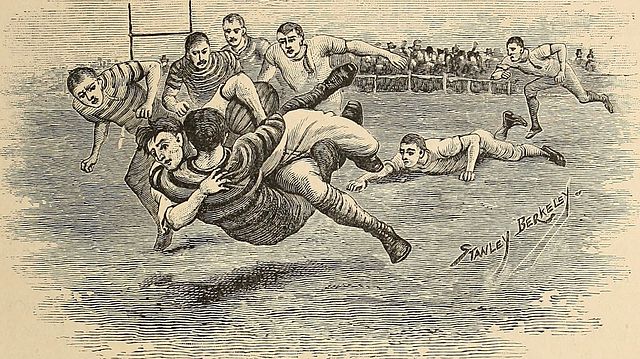
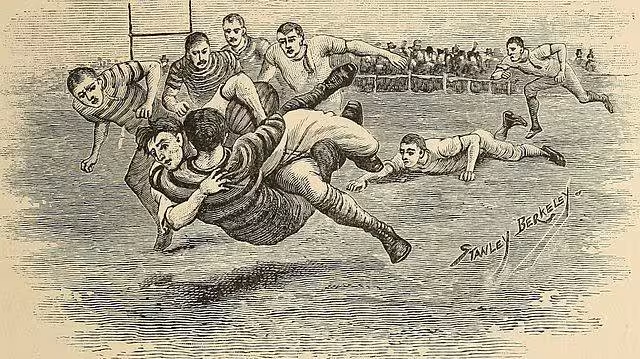
Stanley Berkeley (1855–1909)
The game didn’t really begin to take on any consistency in rules and boundaries until it was adopted as a sport in the seven major public schools of England in the early 1800’s. Six of the seven schools were largely playing the same game, while the seventh, Rugby School (founded in 1567), was playing a very different version of what was then called football. The other schools moved ahead, refining their rules, and eventually their game became known as “association football” – or soccer, as it was played back then, much as it is today.
The Rugby School
The Rugby School went in a different direction. At Rugby School, their version differed from the rule that players could hold and carry the ball in their arms. Legend has it that in 1823, one player disregarded the established rules, tucked the ball under his arm, and dashed across the opponents’ goal line. By the 1830’s, running with the ball at Rugby School was in common use, and 18-foot goal posts had been added with a cross-bar at 10 feet above the ground. The innovation of the crossbar was accompanied by a rule that a goal could only be scored if the ball passed over the bar from a place kick or drop kick. Apparently, this was done to make scoring easier from further out and also to avoid the horde of defenders standing in and blocking the goal.
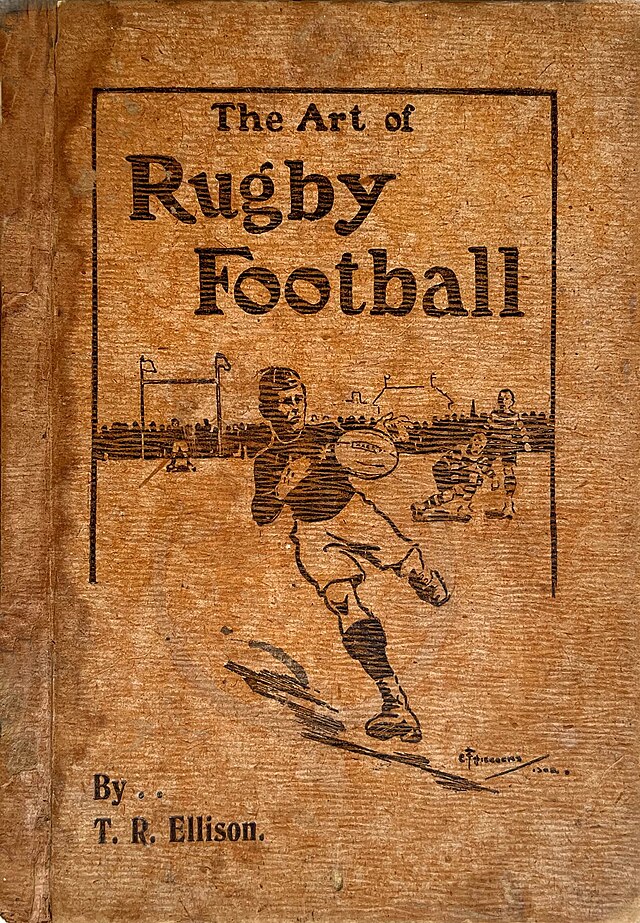
Modern-day American football terms originated from this version of rugby football. Players who were able to “touch down” the ball behind the opponent’s goal line were awarded a “try-at-goal” – the player would make a mark on the goal line and then walk back onto the field of play to a point where a place kick at the goal was possible (a conversion). There was also an “off-your-side” rule used to keep the teams apart. Passing the ball forward was not allowed. By the mid-1860s, British schools and universities had adopted Rugby’s game and honored the school by naming the “new football” rugby in its honor.
This form of football was imported to the New World by 17th- and 18th-century colonists. In 1840, a reporter wrote of a Yale University game: “If the truth were told, the game would make the same impression on the public mind as a bullfight. Boys and young men knocked each other down and tore off each other’s clothing. Eyes were bunged, faces blackened, much blood was spilled, and shirts and coats were torn to rags. Building on these British traditions, American ingenuity would soon take the evolving game in new directions. Check back soon for part 4, “The History of Football Timeline Continues in the New World,” right here on PigskinDispatch.com — your source for the good news about football.ll.