From the shocking resignation of a dynasty-building coach to the birth of the most punishing runners in gridiron history, March 29th is a date of seismic shifts. It’s the day Jimmy Johnson walked away from the Cowboys at the height of their powers and the day the “Cleveland Browns” officially evolved into the Baltimore Ravens. But beyond the front-office drama, we celebrate the birthdays of legendary “Horseman” Don Miller, the iron-willed Emlen Tunnell, and the unstoppable “Tyler Rose,” Earl Campbell. Dive into a day that redefined NFL schedules, attendance records, and the very identity of the game.
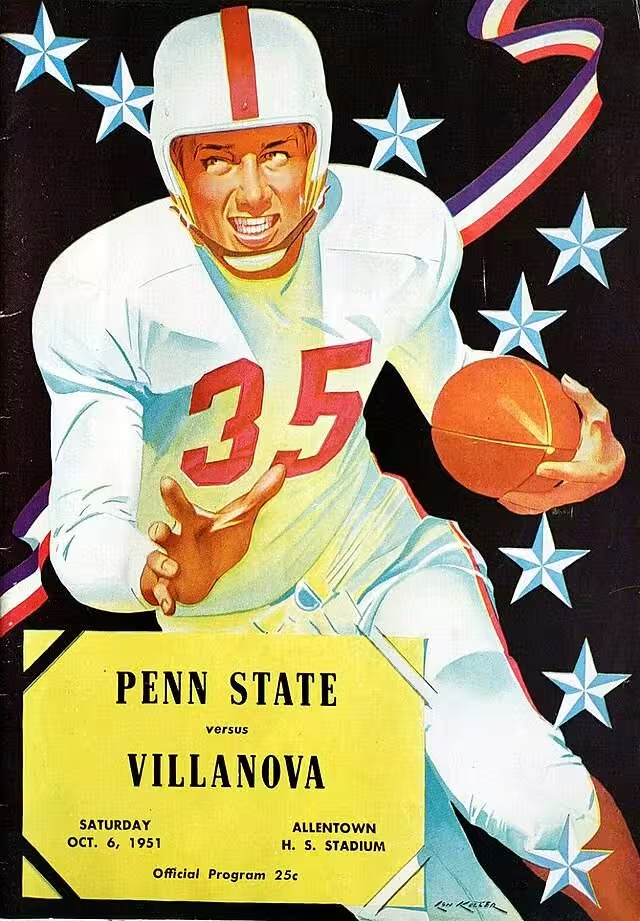
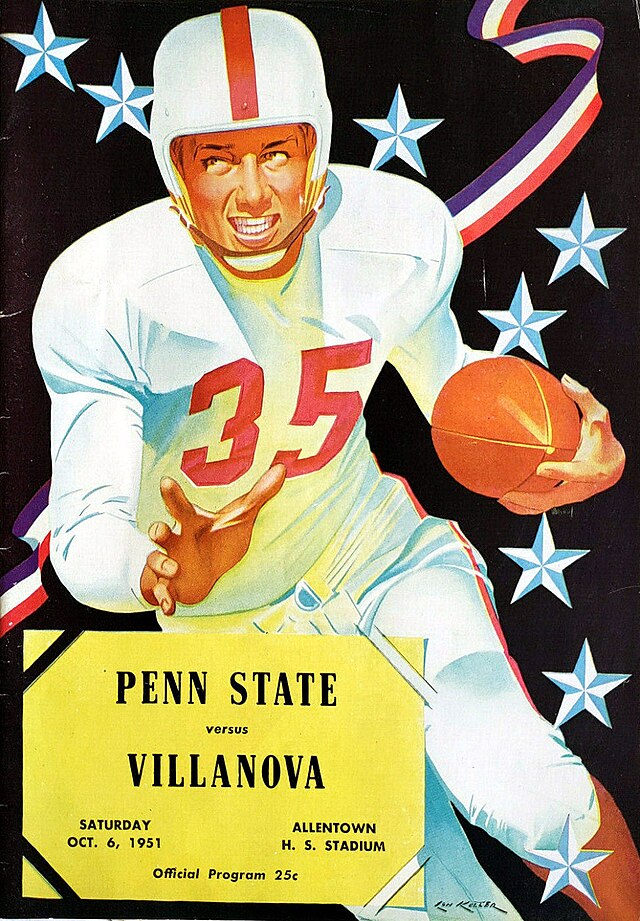
Enjoy this piece of gridiron art for a moment.
March 29 American Football History Timeline
- March 29, 2004 – The NFL announces that the 2003 Regular-season paid attendance of 16,913,584 for an average of 66,328 per game was an all-time record.
- On March 29, 1977, the NFL adopted the 16-game regular season and four-game preseason schedule, which began in the 1978 season. The new CBA, passed in 2020, voted to adopt a 17-game regular season.
- March 29, 1994, Coach Jimmy Johnson resigned as head Coach of the Dallas Cowboys. Johnson left the Cowboys because of a feud with owner Jerry Jones. Johnson coached five seasons in Dallas, made the playoffs in each of his last three, and walked away from the Cowboys after winning back-to-back Super Bowls (Super Bowl XXVII and Super Bowl XXVIII). Johnson returned as the head coach of the Miami Dolphins from 1996 to 1999 after a two-year hiatus.
- On March 29, 1996, the Cleveland Browns chose a new name, the Baltimore Ravens. Owner Art Modell decided to move the franchise out of the City of Cleveland, but one condition of the move was that the Browns’ name, logo, and records must remain in Cleveland, and his new team would have to adopt a new identity.
March 2 Football Hall of Fame Birthdays
Happy Birthday to these gridiron legends! Since today is March 29, it’s a perfect time to reflect on these Hall of Fame careers. Here is the list in order of birth:
- Don Miller [1902]The “workhorse” of Notre Dame’s immortal Four Horsemen backfield, Miller was a lethal open-field runner with a unique high-stepping gait. Under Knute Rockne, he averaged an incredible 6.8 yards per carry over his career and helped lead the Irish to the 1924 National Championship before being inducted into the College Football Hall of Fame in 1970.
- Jim Bausch [1906]A world-class athlete who won the decathlon gold medal at the 1932 Olympics, Bausch was equally dominant on the football field for the University of Kansas. He led the Jayhawks to their first Big Six title in 1930 and was a dual-threat star known for explosive plays, including a 95-yard kickoff return against Kansas State.
- Emlen Tunnell [1825]. Known as the “Offense on Defense,” Tunnell was a trailblazing safety who became the first African American player for the New York Giants and the first to be inducted into the Pro Football Hall of Fame. Despite a broken neck in college, he recorded a then-record 79 career interceptions over 14 seasons with the Giants and Packers.
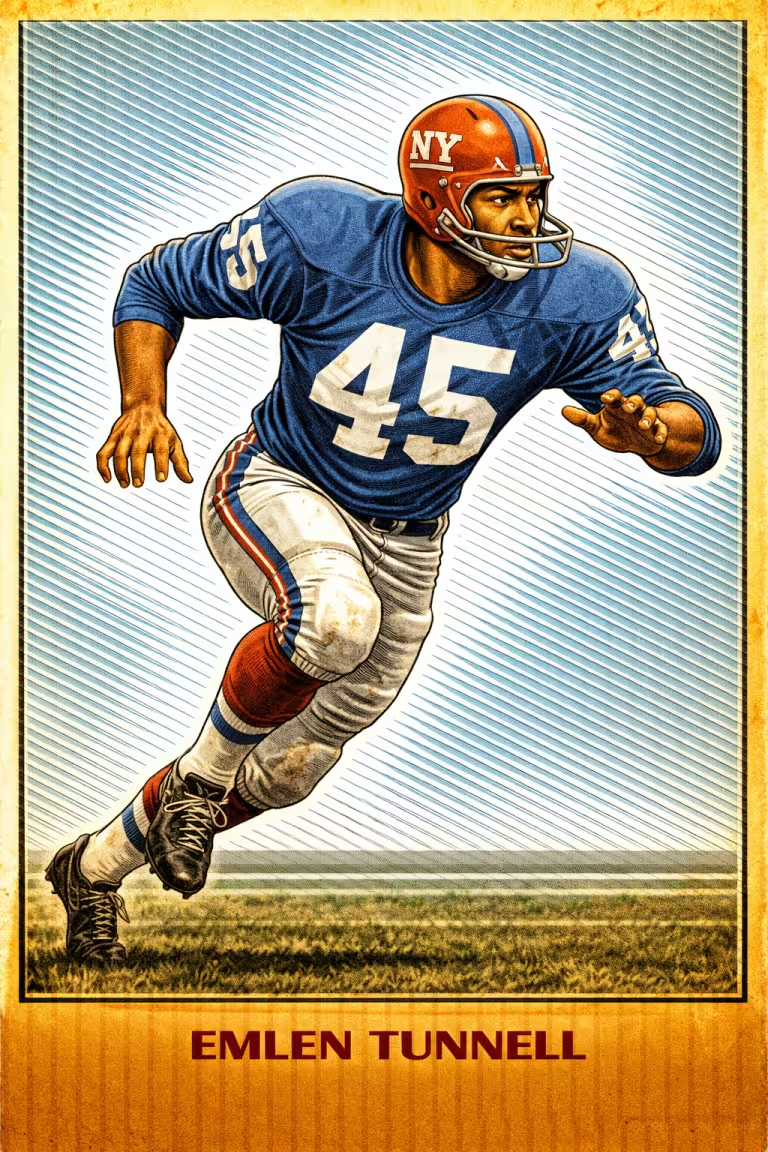
EMLEN TUNNELL
1948–1958
- Earl Campbell [1955]”The Tyler Rose” was a punishing power back who won the 1977 Heisman Trophy at Texas before becoming the #1 overall pick for the Houston Oilers. A 1991 Pro Football Hall of Fame inductee, Campbell’s legendary strength and 1934-yard season in 1980 made him one of the most feared runners in NFL history.
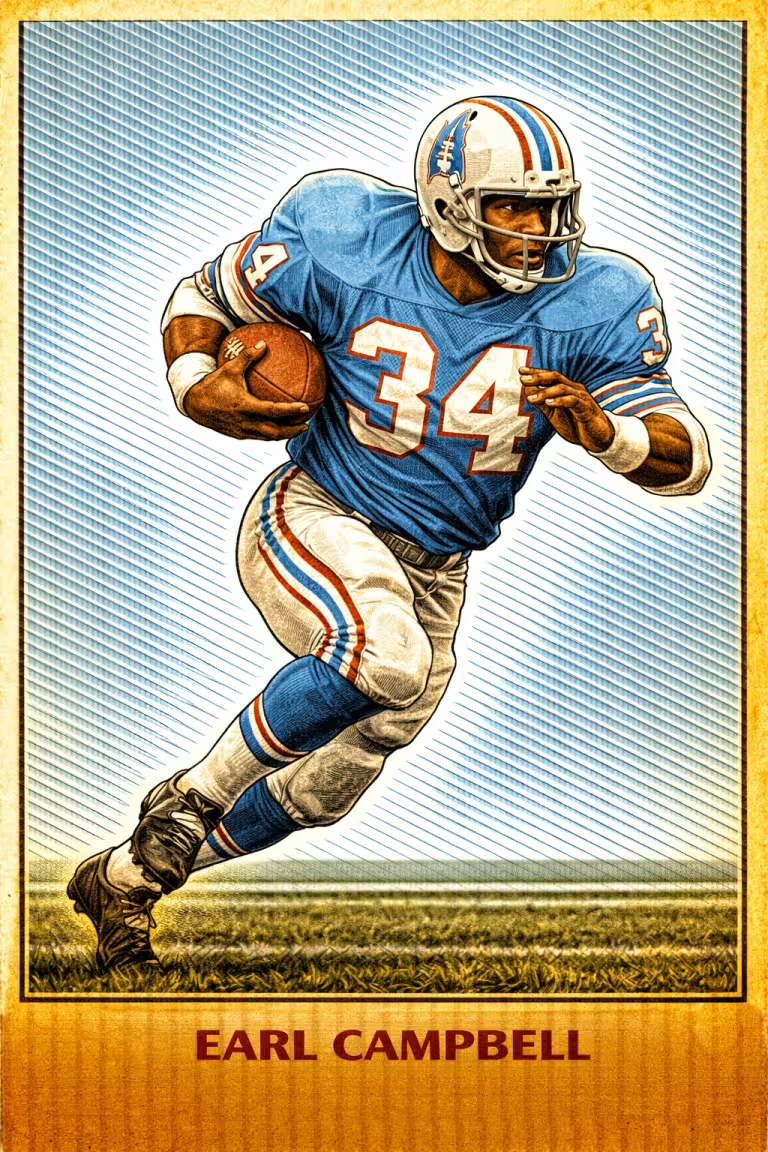
EARL CAMPBELL
1978–1984
Conclusion
Whether it was the 1977 adoption of the 16-game schedule or the record-shattering attendance figures of the early 2000s, March 29th serves as a roadmap for the NFL’s massive growth. The legacies of Earl Campbell’s power, Emlen Tunnell’s ball-hawking defense, and Don Miller’s open-field grace remind us that while owners and coaches may clash and franchises may move, the greatness of the players remains the heartbeat of the sport. As we look back on these milestones, we see a game that is constantly expanding its reach while honoring the titans who built its foundation.