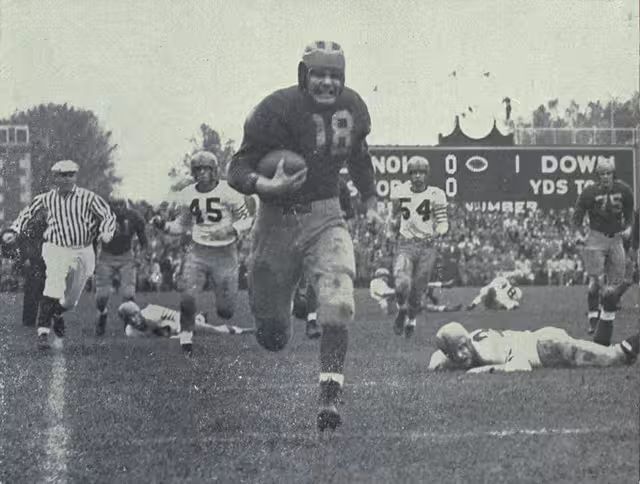
What makes a football legend truly stand out? For Chalmers “Bump” Elliott, it wasn’t just his “nifty” footwork on the field; it was the four years of grit he gained as a U.S. Marine during World War II before returning to dominate the Big Ten. As a rare athlete who starred for both Purdue and Michigan, Elliott’s 1947 season remains a masterpiece of collegiate efficiency, leading to a perfect record and a place among the immortals in the Hall of Fame.
Football Bio
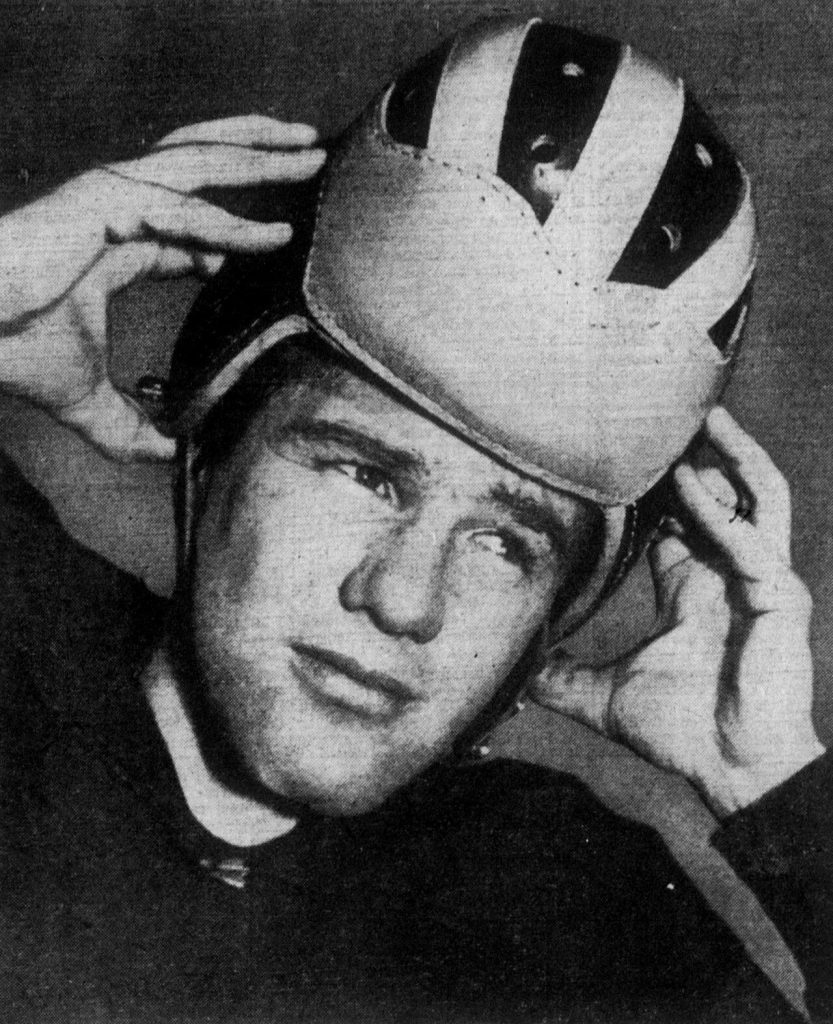
1947 via the Los Angeles Daily News by Wikimedia Commons.
January 30, 1925 – Detroit, Michigan – The nifty halfback that played both for Purdue and Michigan in college, Chalmers Bump Elliott was born and after committing to military service for four years as a US Marine from 1943 through 1947 Bump according to the NFF enrolled at Michigan and had a big year in 1947 when he led the Big 10 Conference as he scored eight touchdowns. The American Football Coaches Association named Elliott to its 1947 All-America team as Michigan went 10-0 and won the Rose Bowl. The National Football Foundation selected Bump Elliott for entrance into the College Football Hall of Fame in 1989.
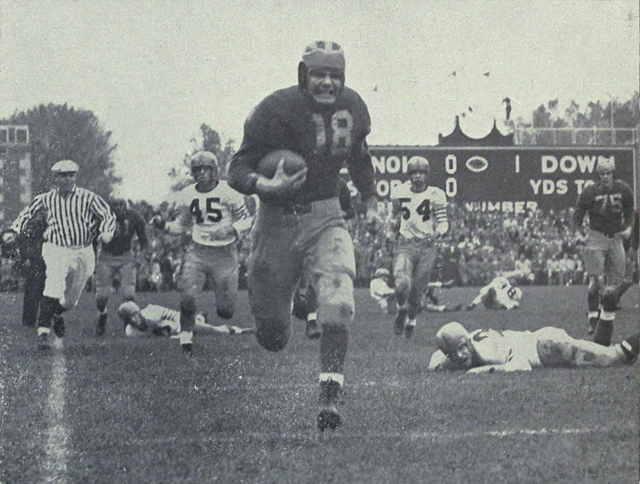
Unidentified (Michiganensian is the University of Michigan yearbook published by the University of Michigan) via Wikimedia Commons
The Nifty Halfback: Bump Elliott’s Journey from the Marines to the Hall of Fame
What makes a football legend truly stand out? For Chalmers “Bump” Elliott, it wasn’t just his “nifty” footwork on the field; it was the four years of grit he gained as a U.S. Marine during World War II before returning to dominate the Big Ten. As a rare athlete who starred for both Purdue and Michigan, Elliott’s 1947 season remains a masterpiece of collegiate efficiency, leading to a perfect record and a place among the immortals in the Hall of Fame.
Bump Elliott biographer, author Neal Rozendaal joins us to discuss his book on Bump Elliott and his 5 different capacities in the Rose Bowl games. Get a copy of Neal Rozendaal’s book Bump Elliott: The Best of College Athletics. and visit his work at NealRozendaal.com
From the Front Lines to the Goal Line: The Legend of ‘Bump’ Elliott
In the annals of the Big Ten, few names carry the dual-threat prestige of Chalmers “Bump” Elliott. Born on January 30, 1925, in Detroit, Michigan, Elliott was a standout athlete who managed a feat rarely seen today: starring for two of the conference’s biggest rivals, Purdue University and the University of Michigan.
However, his path to gridiron immortality was anything but traditional. Before he could cement his legacy in Ann Arbor, the call of duty intervened. Elliott committed to four years of military service as a U.S. Marine, serving from 1943 through 1947. This period of service instilled a level of discipline and toughness that would define his return to the football field.
Upon enrolling at the University of Michigan in 1947, Elliott enjoyed what many historians consider a “masterpiece” season. He dominated the Big Ten Conference, leading the league in scoring with eight touchdowns and providing the explosive playmaking ability the Wolverines needed to reach the pinnacle of the sport. Under his leadership on the field, Michigan went an undefeated 10-0, capping off the year with a dominant victory in the Rose Bowl.
His efforts did not go unnoticed. The American Football Coaches Association named Elliott to its 1947 All-America team, recognizing him as the premier halfback in the country. Decades later, his contributions to the game were permanently honored when the National Football Foundation selected him for induction into the College Football Hall of Fame in 1989.
Conclusion
Chalmers “Bump” Elliott represents the pinnacle of the “Greatest Generation” of athletes. His ability to balance the rigors of military service with elite-level athletics is a testament to his character and skill. By leading the Big Ten in scoring and anchoring a perfect 10-0 season at Michigan, he didn’t just win a Rose Bowl—he cemented a legacy that continues to inspire the “Maize and Blue” faithful. His 1989 induction into the College Football Hall of Fame serves as a permanent reminder of his impact on the game during one of its most transformative eras.
Verified Accolades and Football Accomplishments
- College Football Hall of Fame: Inducted in 1989.
- All-America Status: Named to the American Football Coaches Association (AFCA) All-America team in 1947.
- 1947 Season Dominance: Led the Big 10 Conference in scoring with eight touchdowns.
- Team Success: Integral part of Michigan’s perfect 10-0 season in 1947.
- Rose Bowl Champion: Captured the Rose Bowl title following the 1947 campaign.
- Military Service: Served four years as a U.S. Marine (1943–1947).
- Versatility: Successfully competed for two major programs: Purdue University and the University of Michigan.