How Knute Rockne’s Four Horsemen Conquered Ernie Nevers in the 1925 Rose Bowl
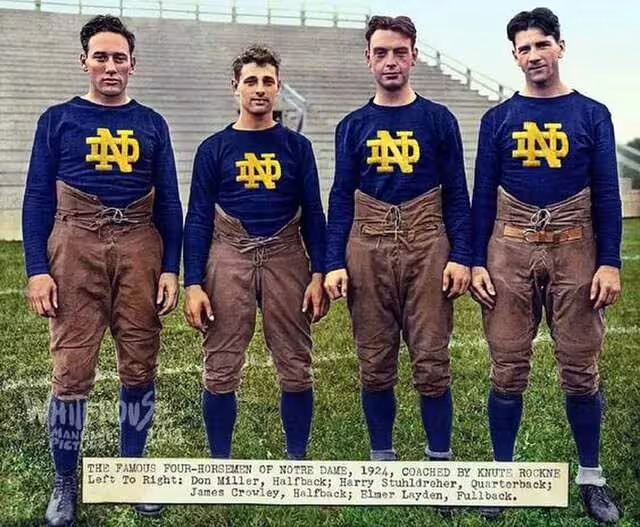
It was the ultimate clash of eras and icons. On New Year’s Day, 1925, the 11th Rose Bowl game featured two of the most revered coaches in football history—Notre Dame’s Knute Rockne and Stanford’s Pop Warner—pitting Rockne’s famously named “Four Horsemen” backfield against the brute force of Stanford’s nearly mythological player, Ernie Nevers. This single game would not only deliver Notre Dame its first bowl victory. Still, it would also cement a national championship and etch its details forever into the foundations of college football lore.
The Duel of Dynasties: Rockne vs. Warner
The game was billed as a strategic masterpiece between titans: Rockne, the innovative mastermind from the Midwest, against Warner, the brilliant tactician of the West Coast. While the coaching duel promised a defensive stalemate, the game quickly became an exhibition of opportunistic scoring, primarily fueled by Notre Dame’s aggressive defense and Stanford’s costly errors.
Stanford, led by the incomparable Ernie Nevers—who played a staggering 60 minutes despite battling injuries—dominated the line of scrimmage, controlling the ball for long stretches. Nevers himself was a force of nature, accounting for nearly all of Stanford’s offense, including 114 rushing yards and their only touchdown. Yet, even the great Nevers could not overcome the fatal flaw of his team: turnovers.
Elmer Layden’s Electric Heroics
The Fighting Irish victory, a decisive 27-10, was largely sealed by one of the famed Four Horsemen: Elmer Layden. While the quartet—Layden, Harry Stuhldreher, Don Miller, and Jim Crowley—had become national celebrities, it was Layden who delivered the performance of a lifetime in Pasadena.
Layden wasn’t just a threat on offense; he was a defensive terror. He exploited Stanford’s miscues by returning two separate interceptions for touchdowns, immediately changing the momentum of the contest. Layden scored a third touchdown on a run, finishing the day with three scores and directly contributing 18 of Notre Dame’s 27 points. His performance perfectly exemplified Rockne’s philosophy of team-wide dominance and capitalizing ruthlessly on opponent mistakes. The final score of 27-10 was a product of Notre Dame’s defensive prowess, as they converted Stanford’s turnovers into a National Championship celebration.
Conclusion
The 1925 Rose Bowl marked a pivotal moment for Notre Dame football, earning the program its first major bowl triumph and the first of many national titles. It was a contest where the strategic genius of Knute Rockne triumphed over Pop Warner, and the dazzling speed of the Four Horsemen overcame the gritty strength of Ernie Nevers. The game remains a foundational story in the history of the sport, immortalizing the players and coaches who clashed in Pasadena on that legendary New Year’s Day.