
 By Darin
 Imagine a league on the cusp of global change, the shadows of war looming over Europe, and a team forged in the frozen heart of Wisconsin dominating a sport still finding its footing. That year was 1939, and it echoes with the thunder of leather helmets and the roar of the Green Bay dynasty.
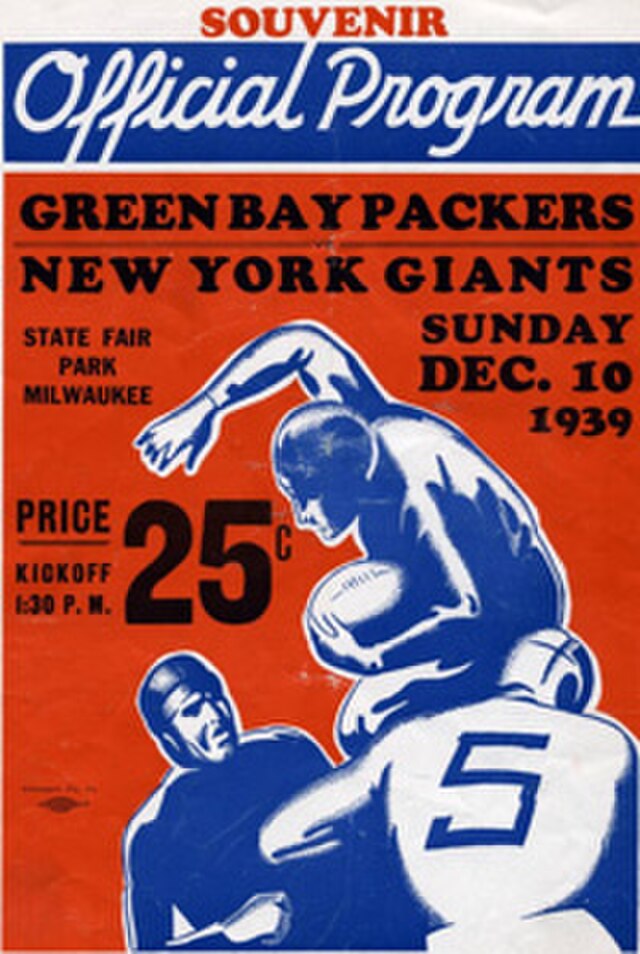
In a recent episode of the Pigskin Daily History Dispatch, host Darin Hayes sat down with historian Tommy A. Phillips to explore a season time often forgets, focusing on the Green Bay Packers’ legendary championship—a tale of grit, strategy, and destiny.
The Close Race of 1939
The 1930s were dominated by a fierce four-horse race in the NFL, primarily involving the Green Bay Packers and Chicago Bears in the West, and the New York Giants and Washington Redskins in the East. The 1939 season proved to be one of the closest races yet, forcing fans to track the standings until the final week.
The final standings reflected razor-thin margins. In the Eastern Division, the New York Giants (9-1-1) narrowly edged out the Washington Redskins (8-2-1). Out West, the Packers (9-2) squeaked past their bitter rivals, the Chicago Bears (8-3), to claim the division title. Crucially, as historian Phillips noted, this was an era where tie games did not count in the standings, making the divisional race unpredictable and intensely competitive.
The Packers’ Triple-Threat Arsenal
Led by the legendary Curly Lambeau, the 1939 Green Bay Packers were an offensive machine built for the single-wing era. Unlike today’s single-quarterback systems, the single-wing offense required multiple players capable of running, blocking, and—most importantly—passing.
The Packers boasted a fearsome trio of throwers: Arnie Herber, Clark Hinkle, and Cecil Isbell. This high-octane setup meant defenses could never be certain who had the ball or who might throw it, an intentional unpredictability that kept opponents off-balance.
Their primary target? The greatest receiver of his generation, Don Hutson. Hutson, who would retire with 99 career touchdowns, was the leading scorer for the 1939 team and a focal point of their offensive attack. This diverse attack propelled the Packers to their 9-2 record and secured their spot in the title game.
The Championship Rematch: Packers vs. Giants
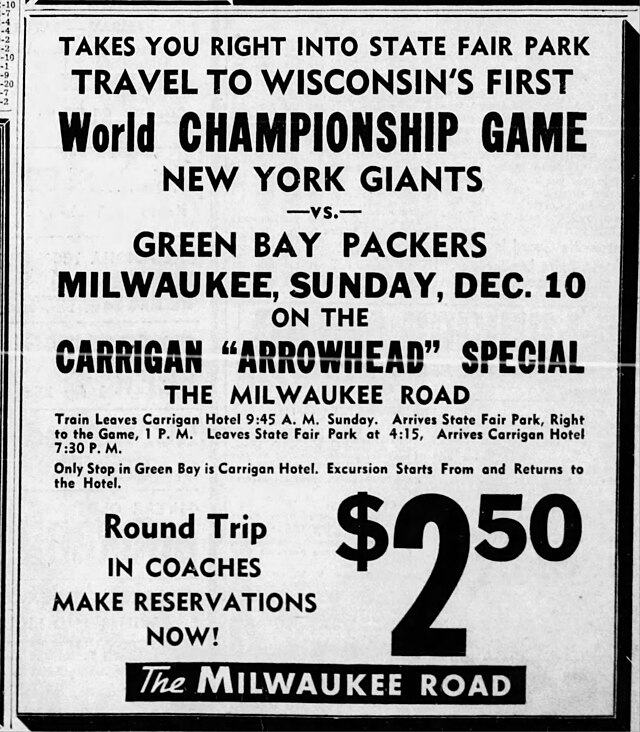
For the second consecutive year, the NFL Championship pitted Green Bay against the New York Giants. The year prior, the Giants had defeated the Packers by a narrow six-point margin. The 1939 rematch, held at the Wisconsin State Fair Park in Milwaukee, promised redemption for Green Bay.
It’s worth noting the fascinating tradition that saw the Packers split their home games between Green Bay and Milwaukee, often moving the biggest contests to Milwaukee for the larger crowd draw. The championship game was preceded by a colorful, local ceremony: the dedication of the venue as the “Dairy Bowl,” complete with a bottle of milk broken at midfield to promote Wisconsin’s vital industry.
History Made: The 27-0 Shutout
Despite the Packers moving the ball well, the first half was a tense defensive battle, ending 7-0 after Herber threw the game’s opening touchdown pass. The Giants stayed in the game by blocking two punts, though they ultimately failed to capitalize on the resulting field position.
However, the second half saw the floodgates open. The Packers’ potent offense, orchestrated by the three passers, delivered a relentless barrage of points. Cecil Isbell threw a touchdown pass, and kicker Erwin “Tony” Canadeo (who the speakers reference as Anger Brettson’s replacement on the team, though the game featured Carl Mulleneaux and was won by the scoring effort of Hutson and Hinkle) added two field goals. The final score was Green Bay 27, New York Giants 0.
This victory marked two significant historical achievements:
- It was the first shutout in NFL Championship Game history.
- It secured the Green Bay Packers their fifth NFL Championship (1929, 1930, 1931, 1936, and 1939).
The game also reflected the high-risk, high-reward passing style of the era, which historian Phillips highlighted: a staggering nine total interceptions were thrown in the game (six by the Giants, three by the Packers). This was not seen as devastating turnover but rather an accepted consequence of throwing the ball deep downfield.
The 1939 championship was a monumental moment for the franchise, confirming their place as the NFL’s first true dynasty. The victory firmly established the Packers’ identity, an identity that would later be physically saved from financial ruin by an unlikely event—the mysterious fire at the Rockwood Lodge, which, thanks to insurance money, kept the Packers alive for the future Hall of Fame era under Vince Lombardi.
The 1939 team remains a foundational chapter in the Green Bay Packers’ unparalleled history of gridiron excellence.
