
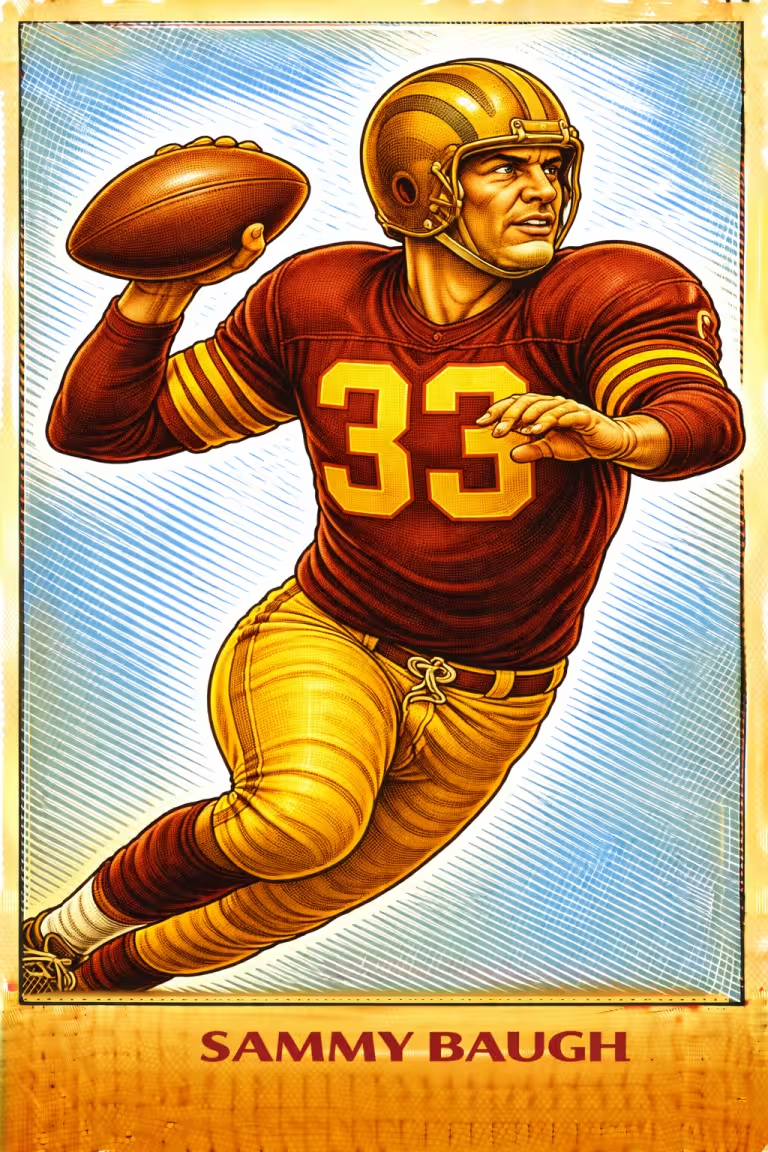
SAMMY BAUGH
1937–1952
Long before the modern “air raid” offense, one man proved that the pigskin belonged in the sky. Sammy Baugh didn’t just play quarterback; he revolutionized the geometry of the game. From a small farm in Temple, Texas, to becoming the most versatile weapon in football history, Baugh’s transition from a baseball hopeful to a three-way gridiron legend changed the sport forever. Whether he was throwing touchdown strikes, booming punts into the “coffin corner,” or snatching interceptions on defense, “Slingin’ Sammy” was the ultimate pioneer of the professional game.
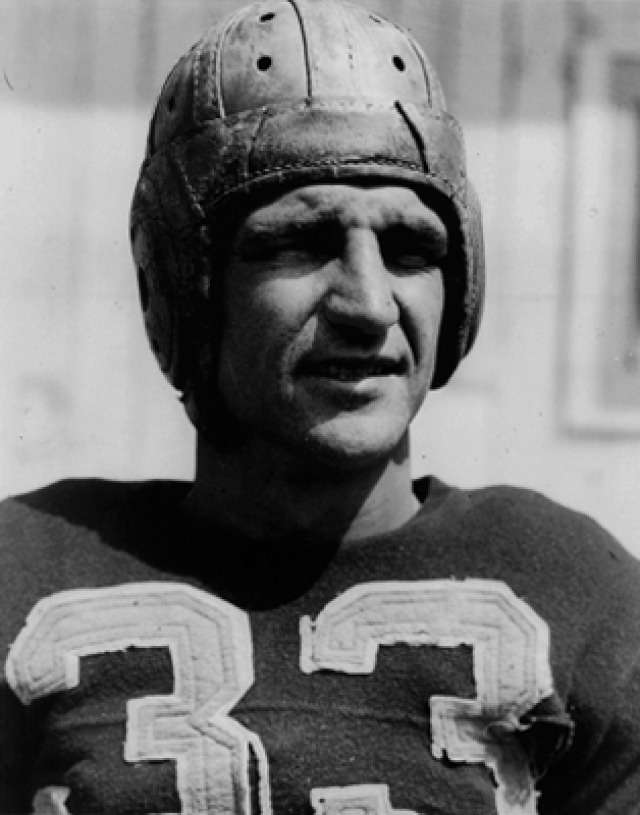
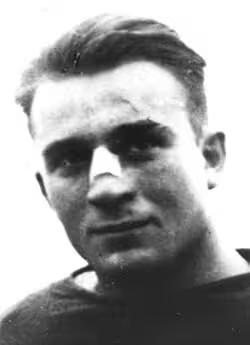
Tenschert Photo Co Washington, D C , via Wikimedia Commons.
Football Bio
Now, let me tell you a story of the gridiron that starts just before World War I, in a small town in the great state of Texas. A family of five lived on a small farm there, and the patriarch earned a living by working on the Santa Fe Railroad when not tending to the farm. When the children were not very old, their father left the homestead, leaving the mother to raise them and make ends meet with the farm’s resources.
The younger boy, Samuel, was a spirited youth who helped his mother along with his siblings. When Samuel was 16, the family moved to a larger town in Texas, and the boy became enamored of baseball. He found that throwing the football around, especially through a swinging tire, improved his baseball arm strength and accuracy. Samuel’s favorite thing to do with the pigskin was to punt it high and as far as he could. The local high school coach talked Samuel into playing quarterback on the team, and he also got to do his favorite football activity of punting when needed. Samuel blossomed as an athlete, and it looked like his baseball aspirations were going to come true. Washington State University was all set to give him a scholarship for baseball, but then tragedy struck about a month before he was ready to leave. In a local game in Texas, Samuel injured his leg while sliding into second base, and because of the injury, the dream scholarship offer fell through.
At his low point of despair, something promising occurred. Coach Dutch Meyer of Texas Christian University told the boy he could play three sports: basketball, football, and baseball. Another fortunate circumstance occurred right before Samuel’s first season at TCU: college football adopted a narrower gearth football, which they figured would fit the hand better for better throwing. This played perfectly to Samuel’s skill set and his training from a young age. Slingin’ Sammy Baugh threw 587 passes in his three seasons for 39 touchdowns and became the early face of the gridiron passing game. Remember, teams that threw the ball even 10 times in a game were considered odd in those days. We remember Sammy, born on March 17, 1914, in Temple, Texas. According to the NFF, Sammy Baugh was also an excellent punter who, as a professional, led the league four times. During a 3-2 TCU victory over LSU in the Sugar Bowl, Baugh punted 14 times for a 48-yard average, placing many kicks inside the Tigers’ five-yard line. Baugh gained All-America status in 1935 and repeated as a consensus All- America in his 1936 senior season.
The National Football Foundation saluted the great career of Sammy Baugh by placing his stats and story in the College Football Hall of Fame in 1951. When Baugh left TCU, he joined the Washington Redskins when they used the number one overall pick in the 1937 NFL Draft to select him. In 16 professional seasons, Sammy played on five division and two league championship teams. As a passer, Baugh led the league six times and still holds many NFL passing records, tossing an amazing 187 TDs at the time. In addition to being a great passer and punter, Baugh was also an extremely efficient defensive player, leading the NFL in interceptions in 1943 and finishing his NFL career with 31. The Pro Football Hall of Fame enshrined Sammy Baugh’s gridiron legacy in 1963.
Conclusion
Sammy Baugh was the rare athlete who wasn’t just the best at his position—he was the best at three of them. By leading the league in passing, punting, and interceptions in the same season, he achieved a feat of versatility that will likely never be repeated. His transition from the “dead ball” era to the modern aerial game provided the blueprint for the NFL’s explosive growth. As a charter member of both the College and Pro Football Halls of Fame, Baugh remains the foundational icon of the Texas Christian University legacy and the Washington Redskins’ history.
Accolades and Football Accomplishments
- Pro Football Hall of Fame: Charter member, inducted in 1963.
- College Football Hall of Fame: Inducted in 1951.
- NFL 100th Anniversary All-Time Team: Selected as one of the greatest players in history.
- Two-Time NFL Champion: 1937, 1942.
- The Triple Crown (1943): Led the NFL in passing, punting, and interceptions in a single season.
- 6× NFL Passing Yardage Leader: 1937, 1940, 1943, 1945, 1947, 1948.
- 4× NFL Punting Leader: 1940, 1941, 1942, 1943.
- Consensus All-American (TCU): 1936.
- Sugar Bowl MVP: 1936.
- NFL Record Holder: His 51.4 yards per punt average in 1940 remained a record for 70 years.
- 31 Career Interceptions: A massive total for a primary offensive player.