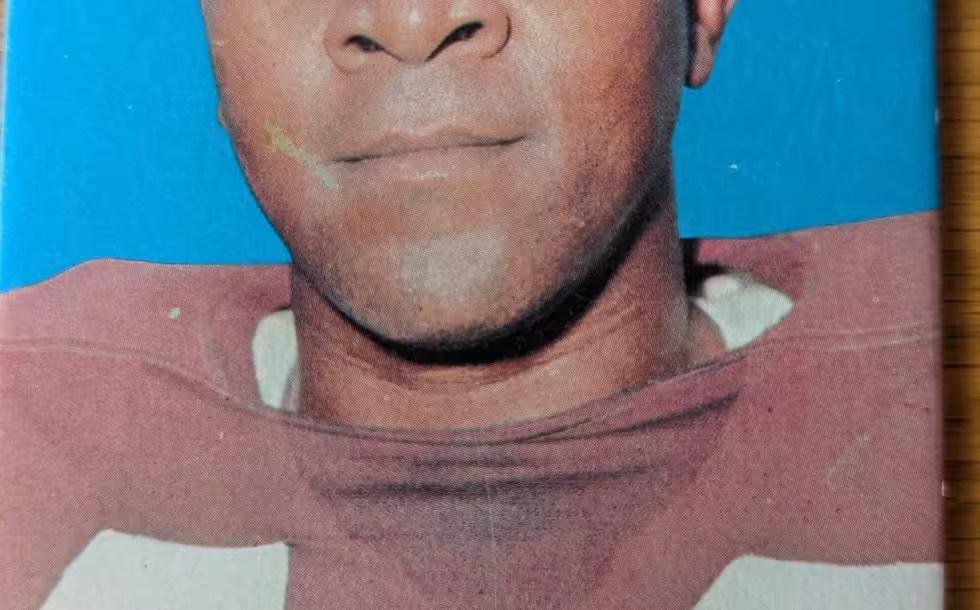
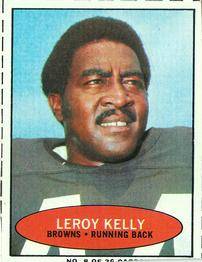
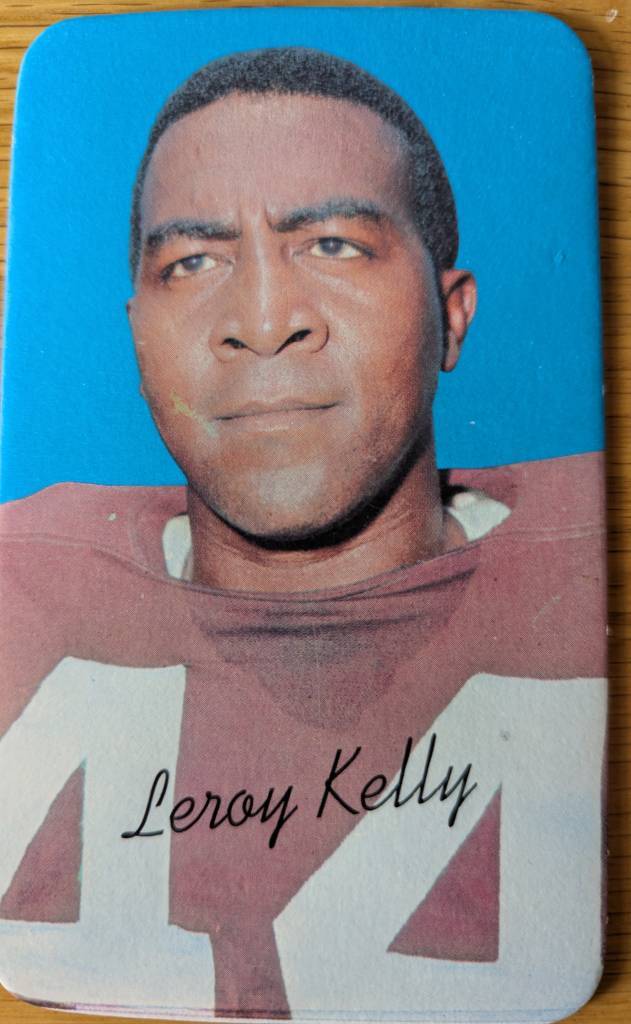
From an unknown eighth-round draft pick out of Morgan State to succeeding the legendary Jim Brown in Cleveland, Leroy Kelly forged his own Pro Football Hall of Fame legacy through punishing balance, special teams brilliance, and back-to-back NFL rushing titles.
College Career
Born on May 20, 1942, in Philadelphia, Pennsylvania, Leroy Kelly attended Simon Gratz High School before enrolling at Morgan State College (now Morgan State University) in Baltimore. Playing under Hall of Fame coach Earl Banks, Kelly established himself as a dynamic, multifaceted offensive threat for the Bears.
During his collegiate career from 1960 to 1963, Kelly set school benchmarks that highlighted his explosiveness, including three touchdowns in a single half against Delaware State in 1963, a 67-yard punt return score, and a 95-yard scoring play against Virginia State in 1962. His collegiate play caught the attention of NFL scout Buddy Young, leading the Cleveland Browns to select him in the eighth round (110th overall) of the famed 1964 NFL Draft.
Football Journey After College
Kelly began his pro career with the Cleveland Browns (1964–1973). For his first two seasons, he played primarily as an elite return specialist and backup behind Hall of Fame fullback Jim Brown and blocking halfback Ernie Green. Kelly proved instrumental in Cleveland’s 1964 NFL Championship run, averaging 24.3 yards per kickoff return, and led the NFL in punt return average (15.6 yards) in 1965.
When Jim Brown abruptly retired in 1966, Kelly stepped into the starting role. Rather than wilt under impossible expectations, he dominated the league, capturing back-to-back NFL rushing titles in 1967 and 1968. Cleveland reached the playoffs in seven of Kelly’s ten seasons. He concluded his playing career in 1974 with the Chicago Fire of the World Football League (WFL), rushing for 315 yards before retiring from professional football.
Football Legacy
Stepping into the shoes of arguably the greatest football player in history is one of sports’ most daunting tasks, yet Kelly established his own distinct Hall of Fame identity. Known for his exceptional balance, patient blocking reads, and sharp cutback ability, Kelly proved that small-college HBCU prospects could anchor perennial contenders at the highest level. He was enshrined in the Pro Football Hall of Fame in 1994, cementing his place among gridiron royalty.
Accolades, Awards, and Career Stats
- NFL Champion: 1964
- Pro Football Hall of Fame: Class of 1994
- All-Pro Selections: 5× (First-Team: 1966, 1967, 1968; Second-Team: 1969, 1971)
- Pro Bowl Appearances: 6 consecutive (1966–1971)
- Bert Bell Award (NFL Player of the Year): 1968
- NFL Rushing Yards Leader: 1967 (1,205 yds), 1968 (1,239 yds)
- NFL Rushing Touchdowns Leader: 1966 (15), 1967 (11), 1968 (16)
- NFL Scoring Leader: 1968 (120 points)
- NFL 1960s All-Decade Team
- Cleveland Browns Ring of Honor (2010) & Black College Football Hall of Fame (2013)
- NFL Career Statistics: 7,274 rushing yards (4.2 YPC), 74 rushing TDs; 190 receptions, 2,281 receiving yards, 13 receiving TDs; 2,774 return yards (3 punt return TDs); 12,330 all-purpose yards and 90 total touchdowns.
Here Are More Stories of NFL Jersey 44 Legends
- Triple-Threat Titan: The Unforgettable Career of Kyle Rote
- Dick LeBeau: Hall of Fame Cornerback & Zone Blitz Guru
- Jim Finks: Pro Football Hall of Fame Executive & Legend
- Beattie Feathers: The 1933 Retroactive Heisman Winner
- John Riggins: The Relentless “Diesel” of the NFL
- John David Crow: The Texas A&M Heisman Trophy Winner
- Floyd Little: Syracuse Legend & Pro Football Hall of Famer
- Rex Kern: The Bold General of Ohio State’s “Super Sophs”
- Donny Anderson: The Gridiron’s “Golden Palomino”
- Arnie Weinmeister: The “Speedy Giant” Who Dominated the Big Apple
- Paul Christman: The “Tall Blond Bomber” Who Defined Mizzou Football
- Bobby Dillon: The Green Bay Ball Hawk Who Defined the Secondary
- Dave Casper: “The Ghost” Who Haunted Defenses from South Bend to Oakland
- Bullet Bill Dudley: The Triple Crown Winner Who Defied the Critics
- Greatest Players Who Wore the NFL Jersey 44
- Floyd Little