From the grand opening of iconic multi-sport stadiums to the birth of some of the most dominant gridiron legends of all time, July 16 is a cornerstone date in sports history. Imagine the roar of the crowd at the debut of Pittsburgh’s Three Rivers Stadium in 1970, or a political convention nominating a former college lineman named Ronald Reagan. Whether you are looking back at the historic trade that sent defensive terror Doug Atkins to the bayou, or celebrating the birthdays of elite trailblazers like Jimmy Johnson and the legendary Barry Sanders, this mid-summer date has shaped the game in spectacular fashion.
July 16 American Football History Timeline
- July 16, 1967: The New Orleans Saints acquired defensive end Doug Atkins in a trade from the Chicago Bears. It was a massive roster milestone for the expansion franchise. Even at 37 years old, the towering, 6-foot-8 Atkins brought instant championship credibility and a terrifying pass-rushing presence to the upstart Saints, playing the final three seasons of his legendary 17-year career in the Big Easy.[New Orleans Saints.com]
- July 16, 1970: Three Rivers Stadium opens in Pittsburgh, Pennsylvania, establishing a dual-sport home for the Pirates and the Steelers until its closure in 2000.
- July 16, 1980: The Republican Party nominates former Eureka College lineman and Knute Rockne, All-American actor Ronald Reagan as its candidate for President of the United States.
- July 16, 1994: The Toronto Argonauts defeat the Shreveport Pirates 35-34, snapping Toronto’s 18-game road losing streak and marking the first home loss for the short-lived Shreveport franchise.
July 16 Football Hall of Fame Birthdays
Happy Birthday to these historic gridiron giants! As we look forward to July 16, we celebrate an absolutely loaded lineup of Hall of Famers—from the early powerhouse days of Harvard to the most elusive running back in football history and a legendary, championship-winning head coach.
Here is the list in order of birth:
- Percy Wendell [1889] A hard-nosed, explosive halfback for Harvard, “Bullitt” Wendell was a three-time All-American whose clutch performances—including a 103-yard rushing day to tie rival Yale in 1910—guided the Crimson through a golden era of dominance. His stellar collegiate achievements and fiery leadership earned him a posthumous induction into the College Football Hall of Fame in 1972.
- Jimmy Johnson [1943] After playing on Arkansas’ 1964 national championship squad, Johnson became one of the most brilliant program-builders in football history, leading the Miami Hurricanes to a national title in 1987. He seamlessly translated his elite talent-evaluation and “decals-off-the-helmets” swagger to the NFL, orchestrating a massive turnaround to win back-to-back Super Bowls with the Dallas Cowboys.
- Ron Yary [1946] An absolutely devastating blocker, Yary won the Outland Trophy and a national title at USC before being selected as the historic No. 1 overall pick in the 1968 NFL Draft by the Minnesota Vikings. The dual College (1981) and Pro Football (2001) Hall of Fame tackle anchored the legendary “Purple People Eaters” era, starting in four Super Bowls and earning six consecutive First-Team All-Pro selections.
RON YARY
- Jerry Sisemore [1951] A towering, highly decorated tackle for the Texas Longhorns, Sisemore was a two-time consensus All-American who paved the way for Darrell Royal’s powerhouse wishbone offenses, including a national championship run in 1970. Enshrined in the College Football Hall of Fame in 2002, he went on to enjoy a stellar, 12-year NFL career with the Philadelphia Eagles that included a trip to Super Bowl XV.
- Barry Sanders [1968] Widely regarded as the most elusive runner to ever lace up a pair of cleats, Sanders put together the greatest single season in college history at Oklahoma State to win the 1988 Heisman Trophy before dominating the NFL with the Detroit Lions. The legendary dual Hall of Famer captivated the sports world with his gravity-defying cuts, rushing for 15,269 professional yards and becoming one of the few players to eclipse the 2,000-yard mark in a single season (1997).
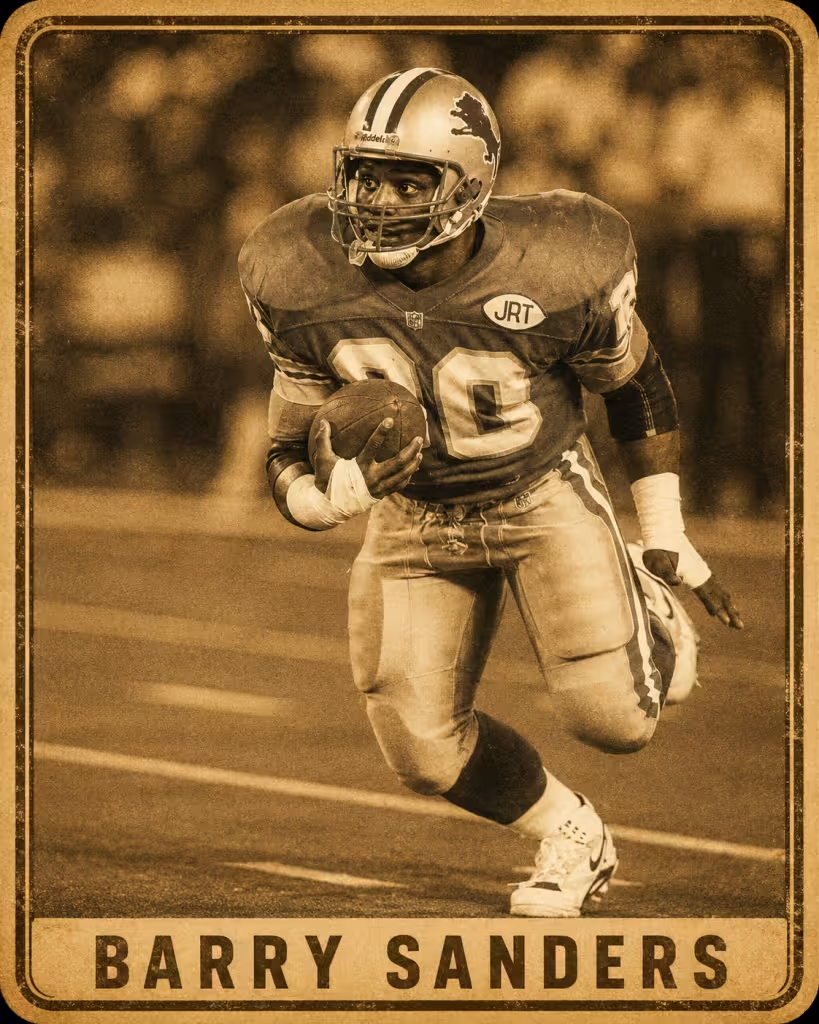
BARRY SANDERS
- Tommy Frazier [1974] The ultimate option quarterback, “Touchdown Tommy” was the fearless leader of Tom Osborne’s mid-1990s Nebraska dynasty, guiding the Cornhuskers to back-to-back national championships. Inducted into the College Football Hall of Fame in 2013, his legendary, tackle-busting 75-yard touchdown run against Florida in the 1996 Fiesta Bowl remains one of the most iconic plays in college football history.
Conclusion
The legacy of July 16 showcases a perfect blend of historic team milestones, stadium breakthroughs, and pure athletic greatness. From the early 20th-century dominance of Percy “Bullitt” Wendell to the physics-defying cuts of Barry Sanders and “Touchdown Tommy” Frazier’s tackle-busting dynasty runs, today’s anniversaries remind us of what makes football so deeply compelling. These enduring moments and iconic personalities have left an indelible mark, proving that even in the heat of July, the spirit of the gridiron never cools down.