
 By Darin
 Before the modern shotgun snap and complex defensive schemes, there was John “Cap” McEwan—a 6’4″ giant who fundamentally changed the center position at West Point. Hailed as the greatest center in Army history at the time of his graduation, McEwan was more than just a physical force; he was a gridiron pioneer. From introducing the spiral center-snap to playing a “rover-back” role on defense that baffled Eastern offenses, McEwan’s technical brilliance matched his heavyweight fighter build. Whether he was leading the 1916 Cadets as captain or returning years later to coach his alma mater to an 18-5-3 record, McEwan’s legacy is a story of a pioneer who helped shape the mechanics of the game we watch today.
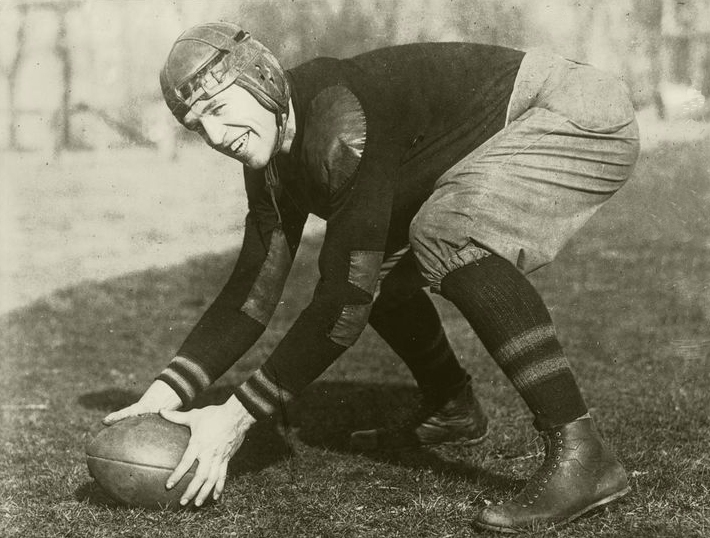
Football Bio
February 18, 1893 – Alexandria, Minnesota – The awesome Army Football Center John McEwan claimed his birth date. John McEwan was inducted into the College Football Hall of Fame in 1962 after the National Football Foundation tallied its votes.
Conclusion
John James “Cap” McEwan stands as one of the most versatile figures in football’s early golden era. His transition from a three-time All-American center to a successful head coach at West Point, Oregon, and Holy Cross—and eventually into the professional ranks with the Brooklyn Dodgers—demonstrates a football IQ that few could rival. Beyond the field, he served his country in both World Wars, reaching the rank of Lieutenant Colonel. When he was inducted into the College Football Hall of Fame in 1962, it was a fitting tribute to a man who didn’t just play the position of center; he mastered and modernized it.
Verified Accolades & Football Accomplishments
- College Football Hall of Fame: Inducted as a player in 1962.
- Consensus First-Team All-American: (1914) — Selected by Walter Camp.
- 3× All-American Selection: First-team (1914), Second-team (1915, 1916).
- Army Team Captain: Elected by his peers to lead the 1916 squad.
- Innovation: Pioneered the “spiral” center-snap and the defensive “rover-back” position.
- Head Coaching Success: Led Army West Point to an 18-5-3 record (1923–1925).
- Collegiate Coaching Career: Compiled a 59-23-6 overall record across Army, Oregon, and Holy Cross.
- NFL Head Coach: Led the Brooklyn Dodgers (1933–1934).
- Military Service: Veteran of World War I and World War II; achieved the rank of Lieutenant Colonel.
