
 By Darin
 Can a single athlete be the best football player on the field and the greatest all-around athlete in the world at the same time? For Jim Bausch, the answer was a resounding yes. Before he was standing on an Olympic podium in Los Angeles, Bausch was the most feared weapon in the Kansas Jayhawks’ backfield. A powerhouse halfback whose arrival in Lawrence sparked a cross-state scouting scandal, Bausch utilized his world-class speed and strength to deliver Kansas its first-ever Big Six title. From 95-yard kickoff returns to Olympic gold, this is the story of the “world’s greatest athlete” who first mastered the gridiron.
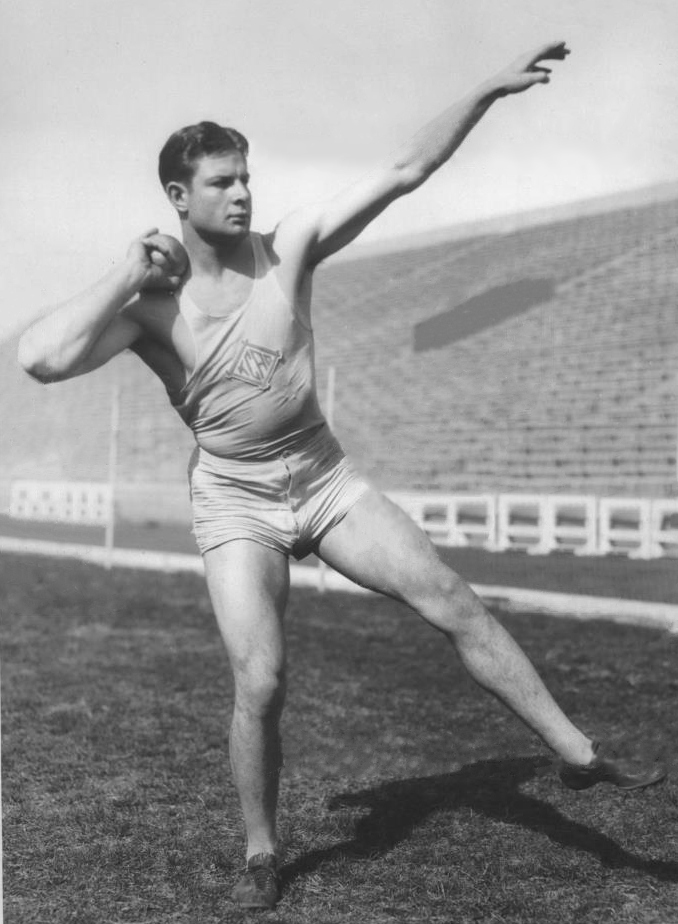
Football Bio
March 29, 1906 – Marion, South Dakota – University of Kansas, outstanding halfback of the late 1920’s, Jim Bausch was born. The Football Foundation’s website says Bausch was a world-class athlete who was the decathlon champion at the 1932 Los Angeles Olympic Games and the winner of that year’s Sullivan award.
Jim transferred from Wichita University to Kansas, angering Wheatshocker fans and officials, who accused the Jayhawks of tampering and stealing their star player. Bausch led Kansas to its first Big Six championship in 1930. He was a gamer too, as shown when, in 1930, against Kansas State, he returned the opening kickoff 95 yards for a touchdown and added a 60-yard scoring run in the fourth quarter in a 14-0 victory.
Conclusion
Jim Bausch’s athletic journey is one of the most unique in American history, bridging the gap between collegiate football dominance and international Olympic glory. His impact on the University of Kansas was immediate and transformative, proving that elite athleticism could overcome even the most heated conference rivalries. While his gold medal in the 1932 decathlon made him a global household name, it was his “gamer” mentality and explosive scoring ability on the football field that first established his legend. Bausch remains a rare example of the true “Ironman” athlete, a Hall of Famer who dominated every arena he entered.
Accolades and Football Accomplishments
- College Football Hall of Fame: Inducted in 1954.
- Olympic Gold Medalist: Decathlon Champion at the 1932 Los Angeles Games.
- James E. Sullivan Award Winner: Named the top amateur athlete in the U.S. (1932).
- Big Six Champion: Led the Kansas Jayhawks to their first-ever conference title in 1930.
- All-Big Six Selection: Recognized as a premier halfback in 1929 and 1930.
- Kansas Athletics Hall of Fame: Charter member.
- Versatility Milestone: Set a then-world record in the decathlon with 8,462 points.
- Two-Sport Collegiate Star: Also excelled in basketball for the Jayhawks under Phog Allen.
