
 By Darin
 Born on February 1, 1915, Gaynell “Gus” Tinsley wasn’t just another end on the roster; he was a trailblazer who redefined the passing game in the deep South. As LSU’s first-ever All-American, Tinsley’s speed and sure hands made him a nightmare for defenses from the SEC to the NFL. Discover the journey of the man who transitioned from a record-breaking player to a beloved coach in Baton Rouge, cementing a legacy that remains a cornerstone of Tigers history.
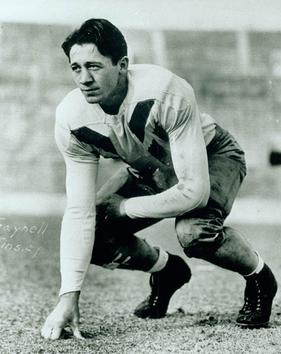
Source
Oral history circa 1936. This image is used under non-free fair use as it is of a deceased subject of historical significance.
Football Bio
February 1, 1915 – Ruple, Louisiana – Birth of LSU End Gaynell Tinsley, who entered the College Football Hall of Fame in 1956.
NFL Career
1. A Historic Rookie Season (1937)
Tinsley didn’t just play well as a rookie; he dominated the league. In 1937, he led the NFL in receiving yards with 675 yards on 36 receptions. To put that in perspective, in the late 1930s, the NFL was still heavily run-oriented. Setting a league record for receiving yards as a rookie made him an instant superstar.
2. The 97-Yard Record
One of the most famous plays in early NFL history occurred in 1937 when Tinsley caught a 97-yard touchdown pass from quarterback Phil Sarboe against the Chicago Bears. At the time, it was the longest pass completion in NFL history and remained a record for many years. It showcased the “speed and sure hands” mentioned in your Canvas profile.
3. All-Pro Dominance
Tinsley was a First-team All-Pro in each of his first two seasons (1937 and 1938). During this window, he was widely considered the only end in the league who could legitimately challenge the great Don Hutson for the title of the game’s best receiver. He was a vertical threat who could stretch the field in a way very few ends of that era could.
4. An Abrupt End
His NFL career was unfortunately short. After a dominant first two years, he returned to LSU as an assistant coach in 1939. He came back to the Cardinals in 1940, but a significant knee injury essentially ended his playing days. Despite only playing effectively for three seasons, his impact was so great that he was named to the NFL 1930s All-Decade Team.
In summary, Tinsley was a “big-play” receiver before the term existed. He helped transition the NFL into the modern passing era by proving that an end could be a primary offensive weapon rather than just an extra blocker. He returned to LSU and served as the program’s head coach from 1948-54, leading the Tigers to a 42-44-7 record during his tenure.
Conclusion
Gaynell Tinsley’s legacy is woven into the very fabric of Louisiana State University. From his historic seasons on the field to his leadership on the sidelines as a head coach, Tinsley set the standard for what it means to be a Tiger. His 1956 induction into the College Football Hall of Fame was a fitting tribute to a man who helped build the foundation of a national powerhouse and proved that a star from Ruple, Louisiana, could dominate at the highest levels of the game.
Verified Accolades and Football Accomplishments
- College Football Hall of Fame Inductee: Class of 1956.
- Two-Time First-Team All-American: Earned honors in 1935 and 1936.
- LSU Trailblazer: Recognized as the first player in LSU history to receive All-America honors.
- NFL Success: Played professionally for the Chicago Cardinals (1937–1938, 1940).
- NFL Record Breaker: Led the NFL in receiving yards (675) during his rookie season in 1937, setting a then-league record.
- Two-Time NFL All-Pro: Recognized as one of the league’s best ends in 1937 and 1938.
- Coaching Legacy: Served as the head coach for his alma mater, LSU, from 1948 to 1954.

