
 By Darin
 The Legacy of February 22 on theGridiron
On February 22, 1893, a small crowd of just 450 people gathered at Birmingham’s Lakeview Baseball Park, unaware they were witnessing the birth of college football’s most intense rivalry: The Iron Bowl. While Alabama and Auburn’s 32-22 inaugural showdown set the stage for decades of SEC dominance, this date holds even more significance in the gridiron archives. From the strategic 1967 redesign of NFL goalposts to the birth of multi-sport legend Mickey Kobrosky, February 22 is a cornerstone date in football’s evolution. Join us as we go back in time to explore the contract disputes that silenced the Iron Bowl for 40 years and the safety innovations that shaped the modern NFL field.
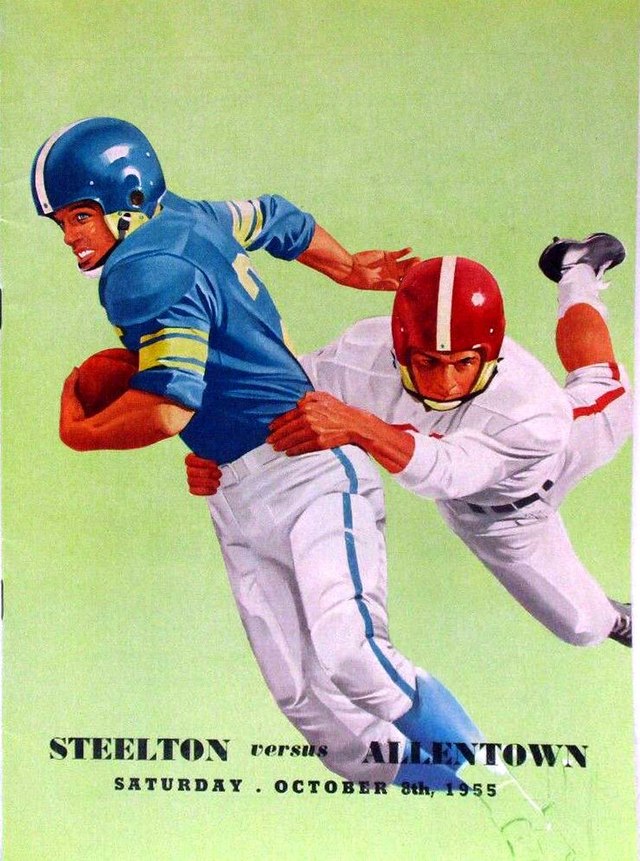
As always, let’s take in some noostallgic football art.
February 22 American Football Timeline
- February 22, 1893 – Alabama, Auburn played 1st Iron Bowl on Feb. 22, 1893
Only 450 people attended Birmingham’s Lakeview Baseball Park on Feb. 22, 1893, to witness an Auburn 32-22 victory, per an NCAA.com story. Little did the handful of football fans on that winter day realize what would develop from the first game of these two eventual SEC powerhouses. The Iron Bowl is one of the most anticipated matchups of the college football season for fans. We have covered many of the famous plays and players from the series in the Football History Headlines, like Bo Jackson, Kenny Stabler, Joe Namath, and more! The term Iron Bowl came from the venue the game had been played at for many years, Birmingham, Alabama’s Legion Field. The City of Birmingham is known for its historic role in the steel industry, and these two top-flight college programs from the state of Alabama treated the throngs at Legion Field to some great memories. The game was predominantly played there from the late 1940’s until 1989, with the tickets being split between the two schools. The series was interrupted for about 4 decades after the 1907 contest, but when it resumed, it became quite popular. The 1907 game featured allegedly questionable dirty plays and calmouring from both sides, prompting both teams to bring in outside officiating crews to promote a fair playing field, per an article on AngelFire.com. The article points to contract disputes as the main reason the series was suspended. “ During the 1907 game, the hotel allowance for 17 men from each team was $2 per man, per day, including lodging and meals. On Jan. 23, 1908, Alabama coach J.W. Pollard received a proposed contract from Auburn football manager Thomas Bragg asking for $3.50 per day for 22 men from each team for two nights for a game to be played at Birmingham’s Fair Grounds. Alabama offered $3 per day for 20 men for two nights. Even then, Auburn and Alabama fans had trouble agreeing on anything, and apparently, a discrepancy of $34 could not be resolved until 41 years later. “Tigers and the Crimson Tide are so intertwined into the fabric of the citizens of Alabama that the victors gain the bragging rights in the state, and there have even been some business dealings reported that were dependent on the game’s outcome! - February 22, 1967, The NFL goal post changes shape & 6′ wide border around the field becomes standardized in the NFL. It seems odd for us to watch vintage footage of NFL games before 1974 and see the goal posts on the goal line rather than on the end lines where they stand today. A 1974 rule revision pushed each post back 10 yards, mainly for player safety. We are not going to focus on that rule change in this edition, though, but rather on the one that occurred 7 seasons earlier, when the “H”- style posts were retired from NFL fields, and the more modern “Y” or “sling-shot” goal post became standard equipment. This elimination of one obstacle on each goal line at a time afforded the players and officials fewer chances to collide with those posts, but it also opened up the running and passing lanes just a tad, too. An article on the SI.com website states that in the first dozen years of the NFL’s existence, the League played by the very popular College rules. In 1927, the NCAA took the posts and set them safely on the endline. In 1933, the NFL finally wrote its own rulebook. And in an effort to increase field goal attempts because the general feeling was that there were too many ties, the NFL moved the uprights back to the goal line. That is where they stayed for some 4 decades. The other rule revision on February 22, 1967, was the addition of a 6-foot boundary around the entire field. The American Football Fandom page describes the purpose quite well. “Its outer edge designates the closest that non-players can be to the field, and thus enables the game officials to have a running lane to work in.” As a former high school football official, I can attest that those clear zones around the playing field are vitally important for the safety of the participants, sideline personnel, and game officials. (inspired source for story)
February 22 Football Hall of Fame Birthday
- Mickey Kobrosky
Conclusion
Whether it’s the high-stakes bragging rights of the Yellowhammer State or the literal boundaries that keep officials safe on the sidelines, the history of football is built on these pivotal February moments. The journey from $2-a-day hotel allowances in 1907 to the “slingshot” goal posts of the late 60s proves that the game is constantly evolving. As we celebrate the legends like Mickey Kobrosky and the historic clashes between the Crimson Tide and the Tigers, we are reminded that every rule change and every kickoff contributes to the “fabric” of the sport we love today.
