
 By Darin
 Most football players are remembered for their stats, but how many are remembered for thwarting an assassination attempt? Known on the field as a powerhouse for Princeton and off the field as a literal lifesaver, Bill Edwards lived a life that reads more like a Hollywood script than a sports biography. From the hallowed turf of the Ivy League to the front lines of New York City politics, discover the story of the man who used his Hall of Fame skills to change history.
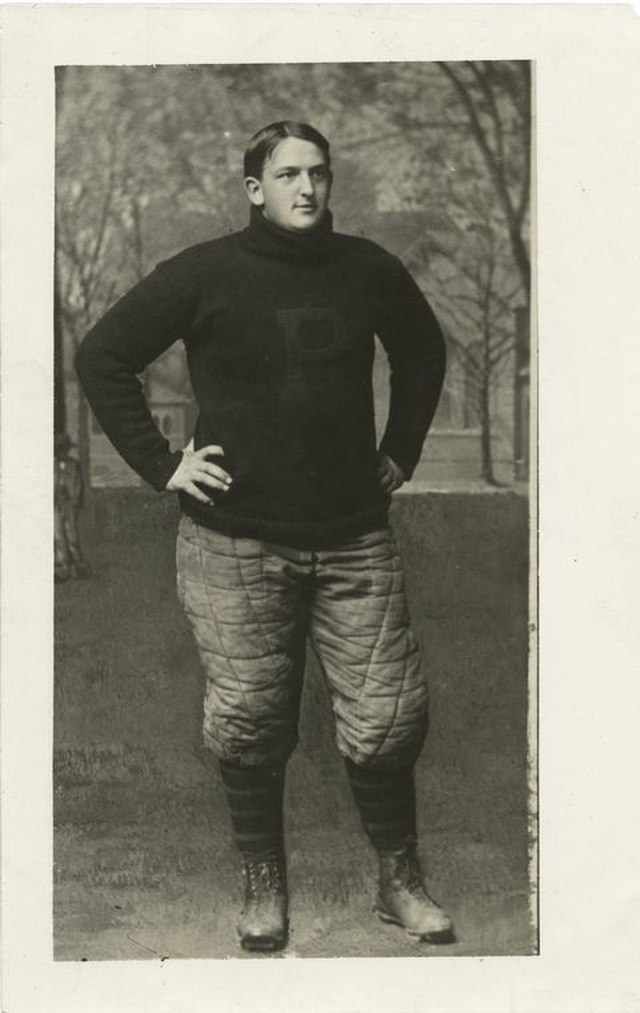
Football Bio
February 23, 1877 – Lisle, New York – The incredible guard of Princeton University, Bill Edwards, was welcomed into the world. The NFF has a special story for this player. The bio on their site for Bill tells of how he used his rather large frame of 220 pounds to make the most important tackle of his life off the gridiron fields! Edwards saved the Mayor of New York City when he took down a would-be assassin of the City leader after the assailant shot Mayor William Gaynor in 1910. Gaynor survived the serious wound, and Edwards himself suffered a flesh wound on his arm during the attack. The National Football Foundation voters placed the gridiron history of Bill Edwards safely into the College Football Hall of Fame in 1971. Bill went into officiating the game later on and even wrote a book on football titled “Football Days.”
Conclusion
Bill Edwards was the embodiment of the “scholar-athlete” ideal of the early 20th century—tough, disciplined, and selfless. While his 220-pound frame made him a formidable opponent on the line of scrimmage, it was his courage under fire that solidified his legacy as a true American hero. Whether he was protecting his quarterback or the Mayor of New York, Edwards proved that the lessons learned on the football field have a profound impact far beyond the final whistle.
Accolades and Accomplishments
- College Football Hall of Fame: Inducted in 1971.
- Three-Time All-American: Recognized as one of the best guards in the country during his tenure at Princeton (1896–1899).
- Team Captain: Led the 1899 Princeton Tigers to a dominant season.
- National Champion: Member of the undefeated 1896 and 1898 Princeton teams.
- Author: Wrote the influential book Football Days (1916), detailing the early history of the sport.
- Distinguished Career: Served as a prominent football official and later as the New York City Street Cleaning Commissioner.
