
 By Darin
 What does it take to lead one of the most dominant dynasties in college football history? For Arnold Galiffa, it meant stepping onto the field at West Point and orchestrating a four-year run where losing was almost non-existent. Born in the legendary sports cradle of Donora, Pennsylvania, Galiffa became the heartbeat of the Army Cadets, cementing a legacy that eventually marched him straight into the Hall of Fame.
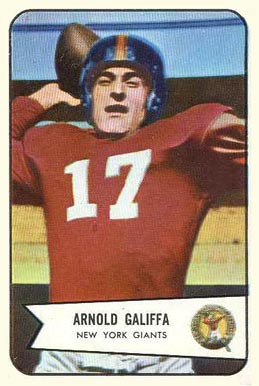
Football Bio
January 29, 1927 – Donora, Pennsylvania – Arnold Galiffa, the one-time quarterback of the Army team, celebrated his birth. Arnold was the Army QB from 1946 through 1949, and during that time, the Cadets suffered only two losses. The National Football Foundation selected Arnold Galiffa and all of his college Gridiron accolades for entry into the College Football Hall of Fame in 1983. After his service, Arnold played pro football with the New York Giants and the San Francisco 49ers, according to the NFF.
Conclusion
Arnold Galiffa remains a symbol of the disciplined, winning tradition of West Point football. His transition from a small-town Pennsylvania athlete to a national collegiate star—and eventually a professional player for storied franchises like the Giants and 49ers—showcases a rare level of versatility and leadership. In an era defined by grit and strategic precision, Galiffa was the ultimate field general, ensuring his place among the legends of the gridiron forever.
Accolades and Accomplishments
- College Football Hall of Fame: Inducted in 1983.
- Unprecedented Record: Led Army to a 28–2–4 record during his tenure (1946–1949).
- All-American Honors: Named a First-Team All-American in 1949.
- Multi-Sport Star: Earned 11 varsity letters at West Point (Football, Basketball, and Baseball), a rare feat of athleticism.
- 1949 Heisman Finalist: Finished 4th in the Heisman Trophy voting.
- Professional Career: Played for the New York Giants (1954) and the San Francisco 49ers (1956) following his military service in the Korean War.
