The University of Wisconsin-Madison has had a proud tradition of playing college football as the Wisconsin Badgers. The program has produced many legendary players over time, and the people and events connected to Badger football are tremendous. But where did this program come from, and who ignited it?
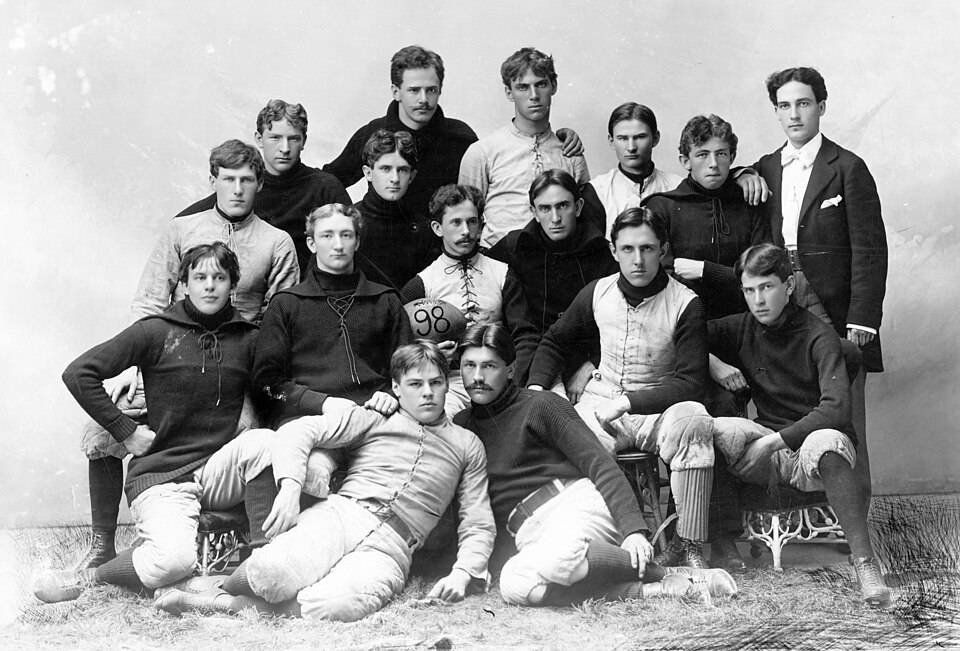
The story of the Wisconsin gridiron starts, like many, in the late 1880s. The excitement of American football swept across college campuses as people witnessed the growing phenomenon in the East, where the game was incubated.
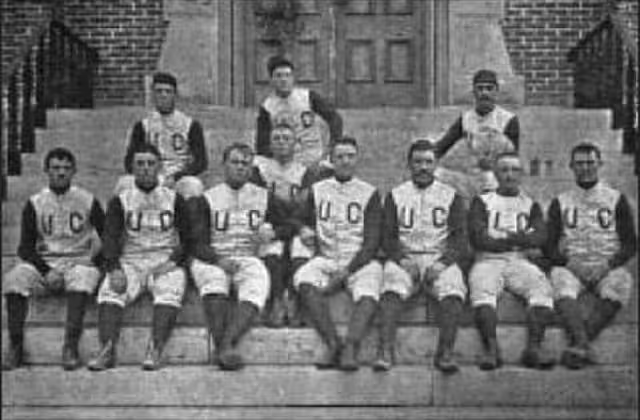
The University of Wisconsin football program began in 1889 under head coach Alvin Kletsch and team captain Charles Mayer. That inaugural season was brief and scoreless: Wisconsin played just two games, losing 27–0 to Milwaukee’s Calumet Club (November 13) in its debut before falling 4–0 to Beloit College on December 14.
The team’s identity as the Badgers was adopted directly from the state’s nickname during that inaugural 1889 campaign. Rather than honoring the local mammal, the moniker originated with lead miners in southwestern Wisconsin during the 1820s and 1830s. Lacking time to build cabins before winter, prospectors burrowed shelters directly into hillsides, leading locals to say they “lived like badgers”. While the university experimented briefly with live badgers and even a raccoon named “Regdab” (“badger” spelled backward), the nickname endured, later cemented by the 1940 creation of the strutting mascot logo and his 1949 naming as Buckingham U. “Bucky” Badger.
Under second-year coach Ted Mestre in 1890, Wisconsin experienced dramatic swings in its first two outings. On November 1, 1890, the Badgers earned the program’s first-ever victory by routing Whitewater Normal School (now the University of Wisconsin–Whitewater) 106–0—a margin that remains the most lopsided win in school history. Two weeks later, on November 15, Wisconsin traveled to Minneapolis and suffered its worst defeat ever, a 63–0 shutout by the University of Minnesota. That contest launched what is now the most-played rivalry in the Football Bowl Subdivision; through the 2025 season, the Badgers and Golden Gophers have met 135 times.
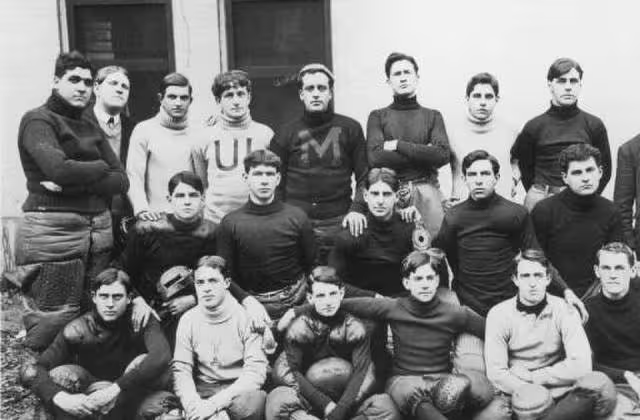
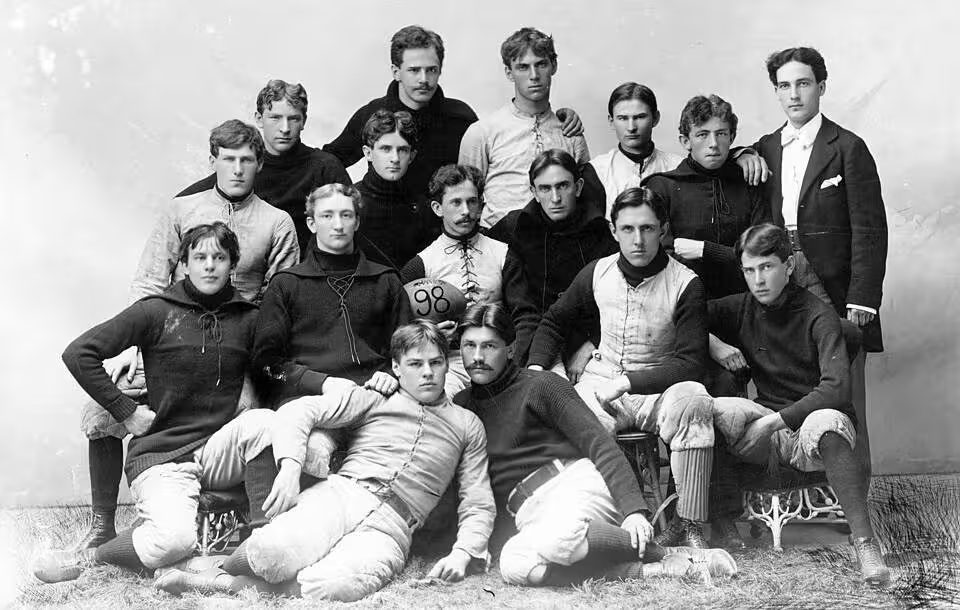
Wisconsin quickly evolved from an underdog into a Midwestern powerhouse after hiring former Princeton All-American Philip King as head coach in 1896. That autumn, as a charter member of the newly formed Big Ten Conference (then the Western Conference), King’s squad went 7–1–1 overall and 2–0–1 in league play to claim the conference’s very first championship.
King’s squads featured one of college football’s earliest national icons: Australian-born fullback Pat O’Dea, known as the “Kangaroo Kicker”. Arriving in Madison in 1896 with a background in Australian rules football, O’Dea revolutionized American kicking. In 1898, he drop-kicked a 62-yard field goal against Northwestern during a blizzard and booted a 116-yard punt (assisted by rolls and wind), earning 1899 All-America honors and inspiring campus fight songs.
With O’Dea starring and King at the helm, Wisconsin captured another Big Ten title in 1897 and posted its first undefeated season in 1901, finishing 9–0–0 to win a third conference crown. King departed with an 85.3% winning percentage (66–11–1 across two stints). Under subsequent coaches Charles P. Hutchins and William Juneau, Wisconsin added Big Ten championships in 1906 and 1912—the latter marking the program’s second undefeated campaign and solidifying the Badgers as a foundational force in college football.
Here Are More Stories on Wisconsin Football Legends
- Pat Richter: Wisconsin Badgers Legend & Hall of Famer
- Elroy Crazylegs Hirsch: Football’s Great Deep Threat
- Tim Krumrie: Relentless Engine of the Wisconsin ‘D’
- Pat Harder: The “Hammer” of the Wisconsin Backfield
- Bob “Butts” Butler: The Anchor of the 1912 Undefeated Badgers
- Dave Schreiner: The Perfectionist of Camp Randall
- Joe Thomas: The Wisconsin Titan and Browns Legend