A major meeting took place on February 19, 1897, featuring representatives from Walter Camp, Cornell, Harvard, Penn, Navy, and Princeton. The big news was that the scoring values were altered following Walter Camp’s suggestion. A touchdown would be increased to five points from the previous four-point value, and a field goal would also score five points if successful. This would be the first time in history that a touchdown would be at least as valuable as a goal kicked from the field; this, in itself, was a major turning point in the game’s strategy. A safety was given the credit of two points for the opponents of the team that tackled in their own goal, while the points after a touchdown were reduced from two points to one.
Official Given More Timing Authority.
The rules committee also addressed the growing issue of games not being completed due to darkness. There were many controversies in close games that ended prematurely due to a lack of daylight. Games could only be played during daylight, as field lights were a long way off. This posed a problem in many games, as darkness ended the game long before the prescribed 70 minutes had expired. The rules committee empowered the Referee to shorten halves as he saw fit in the case of impending darkness or other natural causes.
Football has overcome adversity in recent years. The game and its people were now enjoying the lack of turmoil. They could allocate their resources to improving and tweaking the rules. Look back soon as we watch football finish out the 1890s and enter the new Century, right here on PigskinDispatch.com—your place for the good news about football.
A Deep Dive into 1897 Football History and Highlights
- February 19, 1897 – The football rules committee changed scoring values as a touchdown’s worth changed from four points to five points.
- November 13, 1897 – Clarence Herschberger, a University of Chicago star player for Amos Alonzo Stagg, could not play in the game against Wisconsin after suffering gastritis. Apparently, Clarence challenged Chicago’s quarterback, Walter S. Kennedy, to an egg-eating contest before the game, which left him with an upset tummy. The Maroons lost the game to the Badgers 8-23, leading Coach Stagg to say: “We weren’t beaten by 11 Badgers. We were beaten by 13 eggs.”
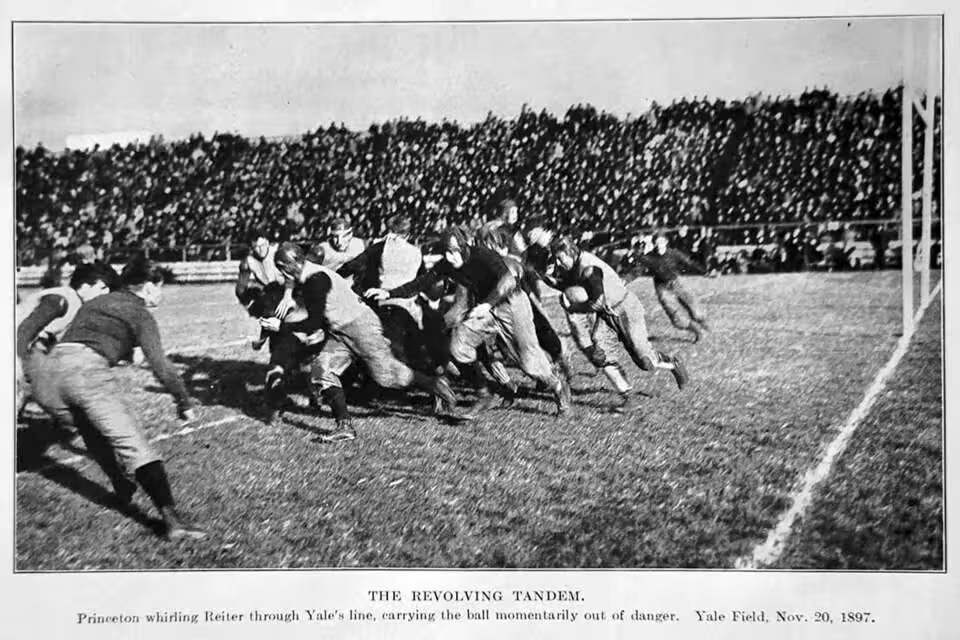
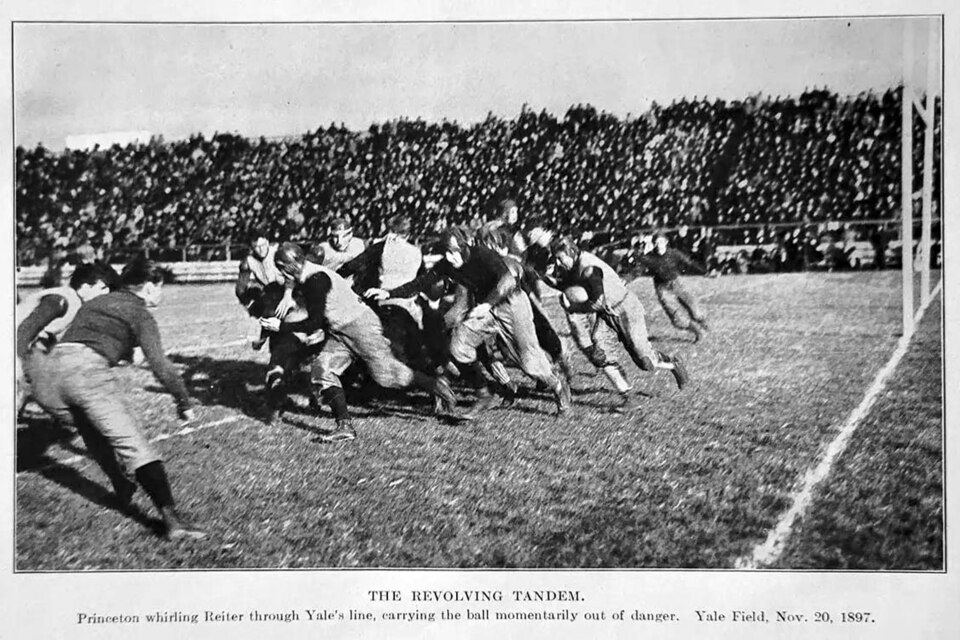
- November 20, 1897 – The battle of undefeated teams met at Yale Field as Yale entertained rival Princeton. The Bulldogs defeated the Tigers 6-0 in front of 18,000 spectators.
We are able to provide this in-depth look into history from so long ago through careful research. Using someone who was contemporary to the period is the best source. So, a very special shout-out to our main source of reference for this article: Parke H. Davis, in his 1911 book, Football-The American Intercollegiate Game.