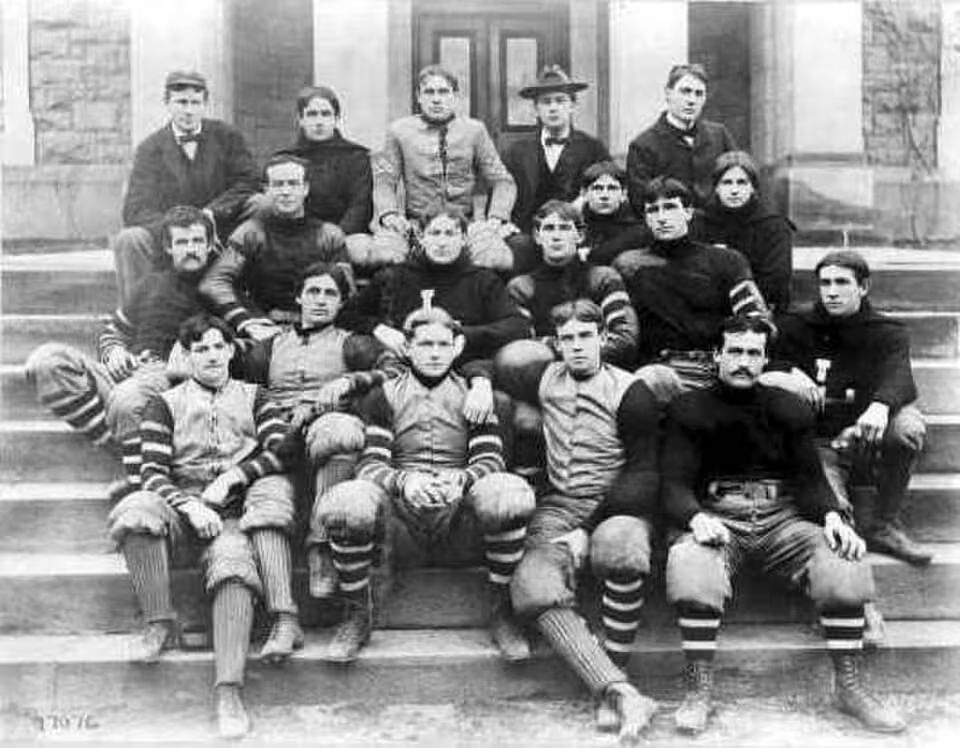
History is often written by the victors, but in the world of college football, it is sometimes written by the underdog. On October 24, 1896, the sporting world was rocked by a result so improbable that it remains a cornerstone of Ivy League and Patriot League lore. The mighty University of Pennsylvania Quakers, owners of a legendary 34-game winning streak, were toppled by Lafayette College in a 6-4 defensive slugfest.
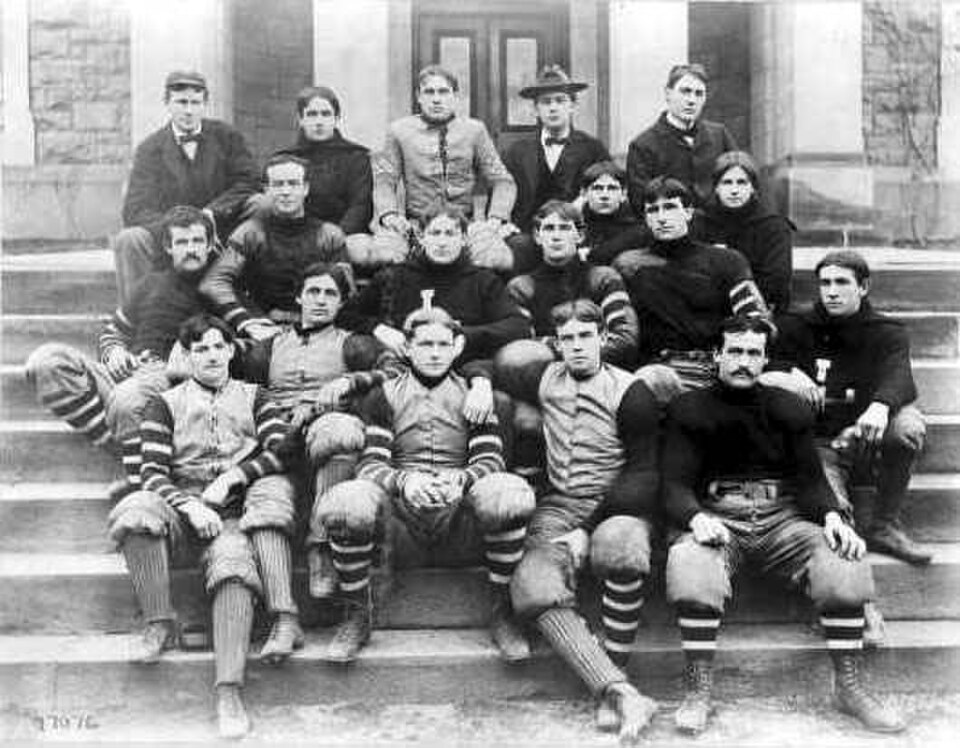
A David vs. Goliath Matchup
To understand the magnitude of this upset, one must look at the status of Penn in the mid-1890s. Under the guidance of the legendary George Woodruff, Penn was the undisputed titan of the gridiron. They weren’t just winning; they were dominating, utilizing innovative formations like the “guards back” play to steamroll opponents. Entering the game against Lafayette, the Quakers hadn’t tasted defeat in years and were widely considered the best team in the nation.
Lafayette, hailing from Easton, Pennsylvania, was a respected program but was viewed as a mere stepping stone for Penn on their way to another undefeated season. However, Lafayette had a secret weapon: Fielding Yost, who mysteriously transferred from West Virginia for just this one game to play for the Leopards and Coach Parke H. Davis, a brilliant tactician who later became the game’s first historian.
The Grudge Match in Philadelphia
The game took place at Franklin Field in Philadelphia before a stunned crowd. The conditions were gritty, and the play was even grittier. In an era where touchdowns were worth only four points and field goals were five, every inch of dirt was fought for with a ferocity rarely seen today.
Penn struck first with a touchdown, but the conversion failed, leaving the score at 4-0. The Quakers’ defense, usually a brick wall, found itself frustrated by Lafayette’s resilience. The turning point came when Lafayette’s George “Rose” Barclay—the man credited with inventing the football helmet—and powerhouse fullback Charles “Bray” Rinehart began to chip away at the Penn line.
Lafayette managed to cross the goal line for a four-point touchdown of their own. Unlike Penn, they successfully executed the kick after the touchdown, which was worth two points.
The Scoreboard:
- Lafayette: 6 (TD + Kick)
- Penn: 4 (TD)
The Aftermath of an Epoch-Ending Loss
When the final whistle blew, the 6-4 scoreline signaled more than just a win; it signaled the end of an era. Penn’s 34-game unbeaten streak was dead. The “Easton Boys” had done the impossible.
The victory was so significant that it is often cited as the moment Lafayette truly arrived on the national stage, eventually leading them to share the 1896 National Championship title with Princeton—the first time a “non-Big Four” (Harvard, Yale, Princeton, Penn) school had ever claimed such a distinction.
For Penn, the loss was a humbling reminder that on any given Saturday, discipline and strategy can overcome raw power. For Lafayette, October 24 remains a date of holy significance—a day when a small-town college proved that even giants have a breaking point.