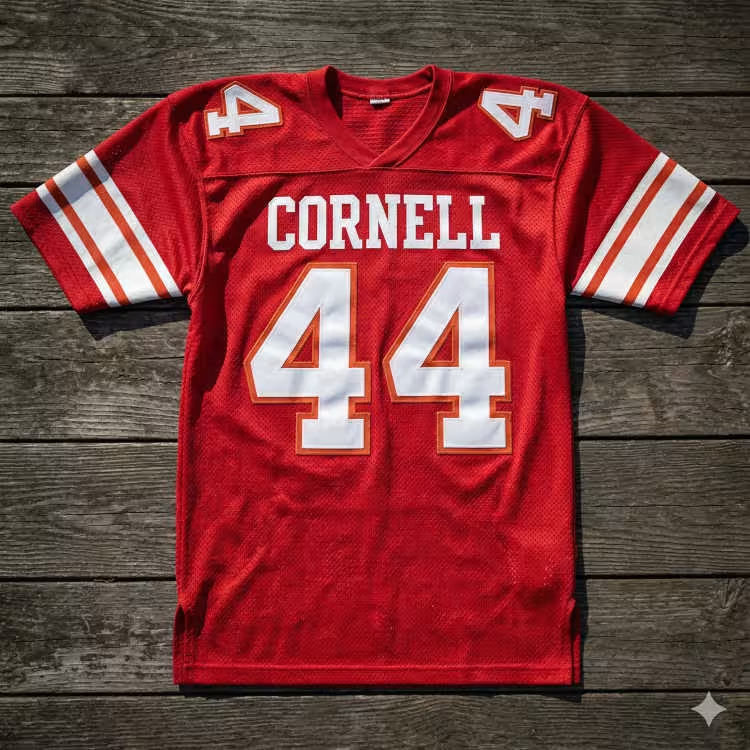
How does a kid from New York City end up with a higher collegiate rushing average than legends like Herschel Walker and Tony Dorsett? Long before he was a star on the silver screen, Ed Marinaro was the most feared man on the gridiron. Dominating the Ivy League with a physical style that rewrote the NCAA record books, Marinaro turned Cornell into a national powerhouse in the early 1970s. From his 209-yard-per-game average to his Maxwell Trophy win, this is the story of the “Big Red” engine that ran all the way to the College Football Hall of Fame.
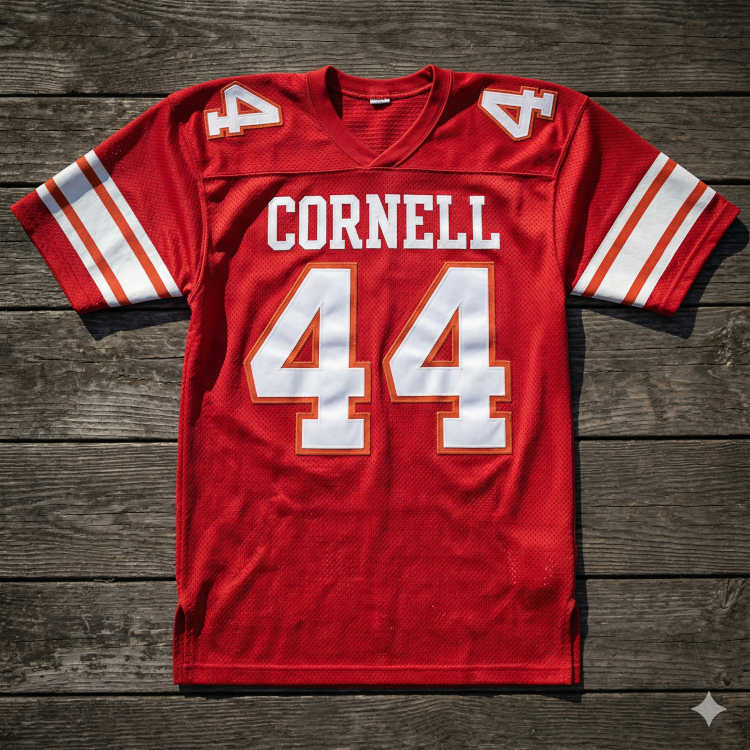
Football Bio
March 31, 1950 – New York City, New York – The top Cornell running back from 1969 to 1971, Ed Marinaro, celebrated his date of birth. Marinaro, according to his bio on the FootballFoundation.org, had a higher rushing yards per game than collegiate greats and Tony Dorsett, O.J. Simpson, and even Hershel Walker! Ed’s 174.6 yards per game on the ground in 27 games is truly a remarkable feat!
Marinaro had 10 games in which he exceeded 200 yards, including 245 against Rutgers and 281 against Harvard in 1969; 260 against Lehigh in 1970; and 272 against Columbia and 260 against Colgate in 1971. Ed’s average yards per game on the ground in 1971 was an astounding 209, an NCAA record that lasted 10 years before being broken. Marinaro was an All-America selection twice and, in 1971, won the Maxwell Trophy and was named Player of the Year by the Columbus, Cleveland, and Washington Touchdown Clubs. He was named to the Ivy League Silver Anniversary Team.
The College Football Hall of Fame celebrated the induction of Ed Marinaro’s collegiate gridiron accomplishments into its Hall of Legends in 1991. After college, he enjoyed a six-year pro career with the Minnesota Vikings, Seattle Seahawks, and the New York Jets. He then budded into a television acting star, having been on hit shows Laverne and Shirley and Hill Street Blues.
Conclusion
Ed Marinaro’s career remains a masterclass in workhorse efficiency. While many remember him today for his success in Hollywood, his impact on college football was transformative, proving that elite, record-shattering talent could thrive in the Ivy League. By averaging over 174 yards per game across his entire career, he set a standard of consistency that few in the history of the sport have ever approached. His 1991 induction into the College Football Hall of Fame serves as a permanent reminder that before he was an actor, he was one of the most prolific runners to ever lace up a pair of cleats.
Accolades and Football Accomplishments
- College Football Hall of Fame: Inducted in 1991.
- Maxwell Award Winner: 1971.
- Heisman Trophy Runner-Up: 1971 (The highest finish for an Ivy League player in the modern era).
- NCAA Rushing Leader: 1,881 yards (1971).
- NCAA Career Record: 174.6 rushing yards per game (at the time of graduation).
- NCAA Single-Season Record: 209.0 rushing yards per game in 1971 (stood for 10 years).
- 2× Consensus First-Team All-American: 1970, 1971.
- 3× First-Team All-Ivy League: 1969, 1970, 1971.
- Ivy League Silver Anniversary Team: Named one of the greatest in conference history.
- NFL Draft: 2nd round pick (50th overall) by the Minnesota Vikings in 1972.
- Super Bowl Appearances: Played in Super Bowl VIII and Super Bowl IX with the Vikings.