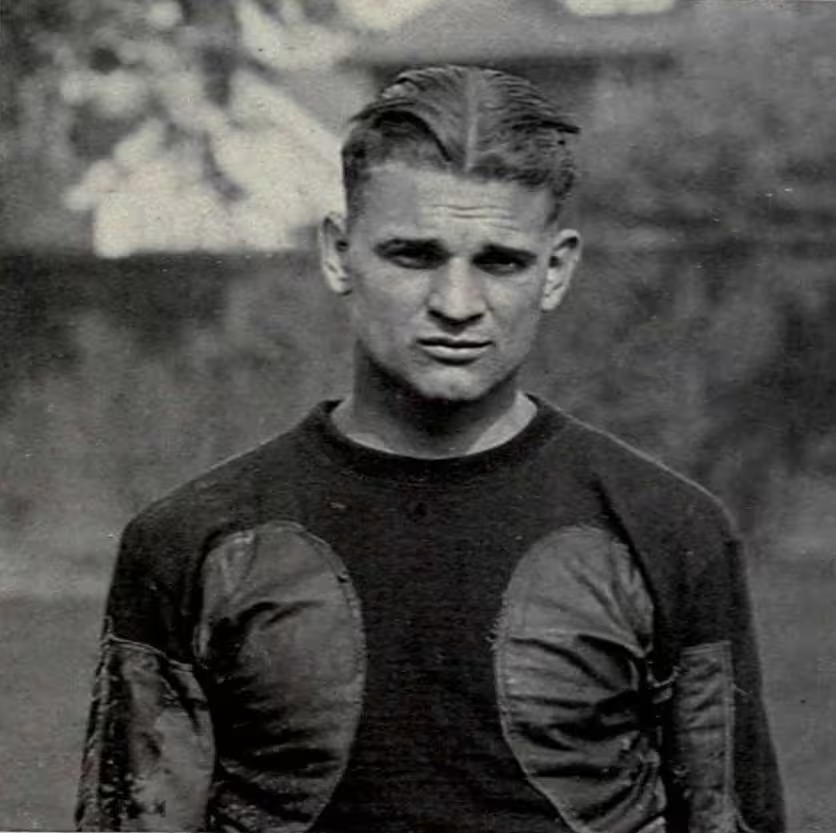
Can a single player truly control the geography of a football field? In the early 1920s, Harry Kipke turned punting into a lethal offensive weapon for the University of Michigan. While the German immigrant’s son from Lansing was a triple-threat star as a runner, passer, and blocker, it was his “sideline” punts that left Big Ten opponents trapped and helpless. From captaining the Wolverines to a near-perfect three-year record to returning as the architect of a coaching dynasty, Kipke’s journey from a motor assembler’s home to the College Football Hall of Fame is the stuff of Ann Arbor legend.
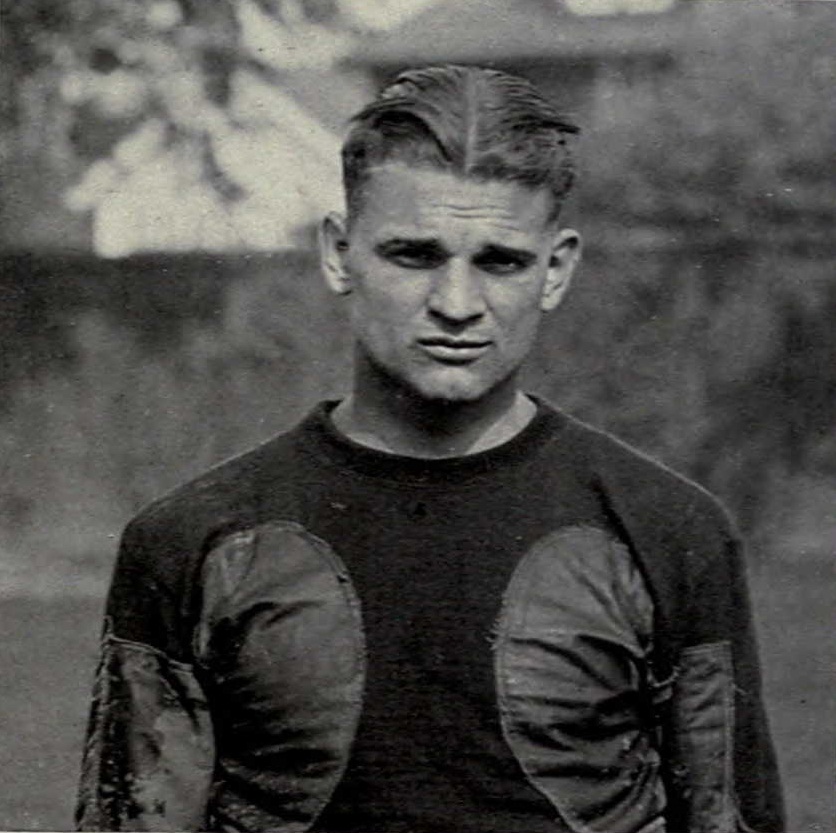
Unknown author – 1923 Michiganensian, p. 213, courtesy Wikimedia Commons.
Football Bio
On March 26, 1899, in Lansing, Michigan, a baby boy was born to two German immigrants, Charles and Minnie Kipke. Charles emigrated to the US in 1872, and Minnie in 1888. They named the child Harry, and he ended up being the middle of 7 children.
Charles worked as a motor assembler in Lansing to support the group, but in 1920, he passed away, leaving Harry and his three younger siblings to live with their widowed mother. Harry had the opportunity to attend the University of Michigan, and Harry Kipke punted and played halfback for the Wolverines from 1921 through 1923.
The NFF says that Kipke was considered the finest punter in the nation as a junior All-American in 1922, but was even more respected by opposing Big Ten coaches for his excellence as a ball carrier, passer, and blocker. Harry was a star player for the Wolverines and even became the team captain in his senior year. During Kipke’s presence on the squad, Michigan tallied a three-year mark of 19-1-2. The Doors of the College Football Hall of Fame swung open wide to accept Harry Kipke in 1958.
Harry went into coaching at rival Michigan State in 1928 after serving as an Assistant Coach at the University of Missouri for four seasons. Then, in 1929, he returned to head up the program at his alma mater and served as Michigan’s head coach for 9 seasons, compiling a total coaching record of 49-30-5.
Conclusion
Harry Kipke stands as one of the most versatile figures in the history of the Big Ten. His playing career was defined by a staggering 19-1-2 record, a testament to his ability to influence every phase of the game. However, his legacy didn’t end on the field; as a head coach, he led Michigan to four consecutive conference titles and two national championships, proving his strategic mind was as sharp as his kicking leg. Whether punting out of bounds inside the five-yard line or patrolling the sidelines as a mentor, Kipke remained a pillar of the “Victors” for over two decades.
Accolades and Football Accomplishments
- College Football Hall of Fame: Inducted in 1958.
- Consensus All-American: 1922.
- National Champion (Player): 1923 (Michigan Wolverines).
- National Champion (Coach): 1932, 1933.
- 4× Big Ten Champion Coach: 1930, 1931, 1932, 1933.
- Michigan Team Captain: 1923.
- Walter Camp All-American: Named to the first team in 1922.
- Nine-Letter Man: Earned varsity letters in football, basketball, and baseball at Michigan.
- Punting Pioneer: Renowned for the “Kipke Punting Method,” focusing on directional kicking to pin opponents deep.
- Michigan Sports Hall of Fame: Inducted in 1968.