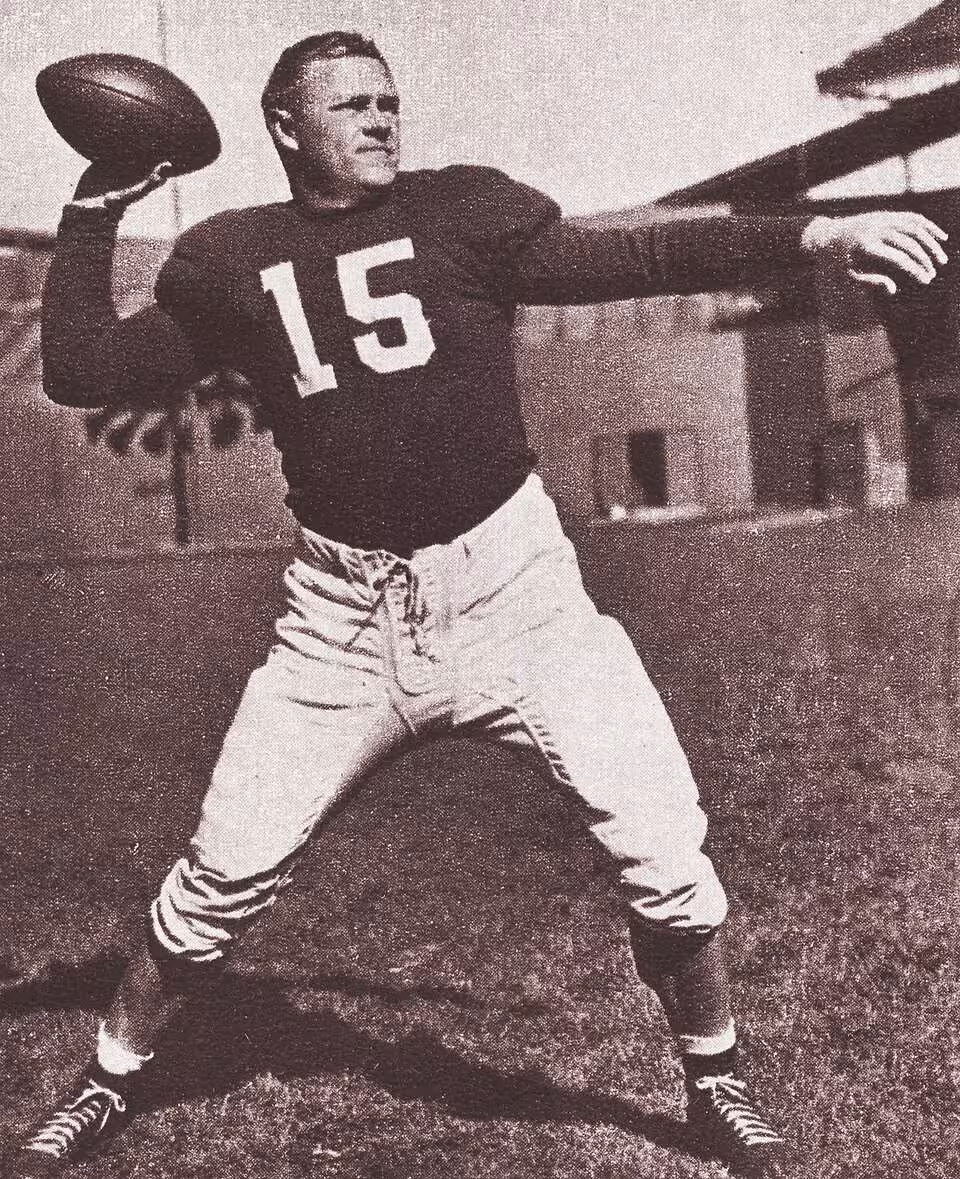
They called him “Pitchin’ Paul,” and for good reason: he could throw a football into a pickle barrel from 70 yards away. Before he became a household name as one of the first true stars of sports broadcasting, Paul Christman was a revolution at the University of Missouri. At a time when quarterbacks were expected to be fleet-footed runners, Christman proved that a pure passer could dominate the gridiron. From leading the Tigers to their first major bowl game to piloting the Chicago Cardinals to an NFL Championship, discover the story of the man who traded his cleats for a microphone but never lost his golden arm.
Football Bio
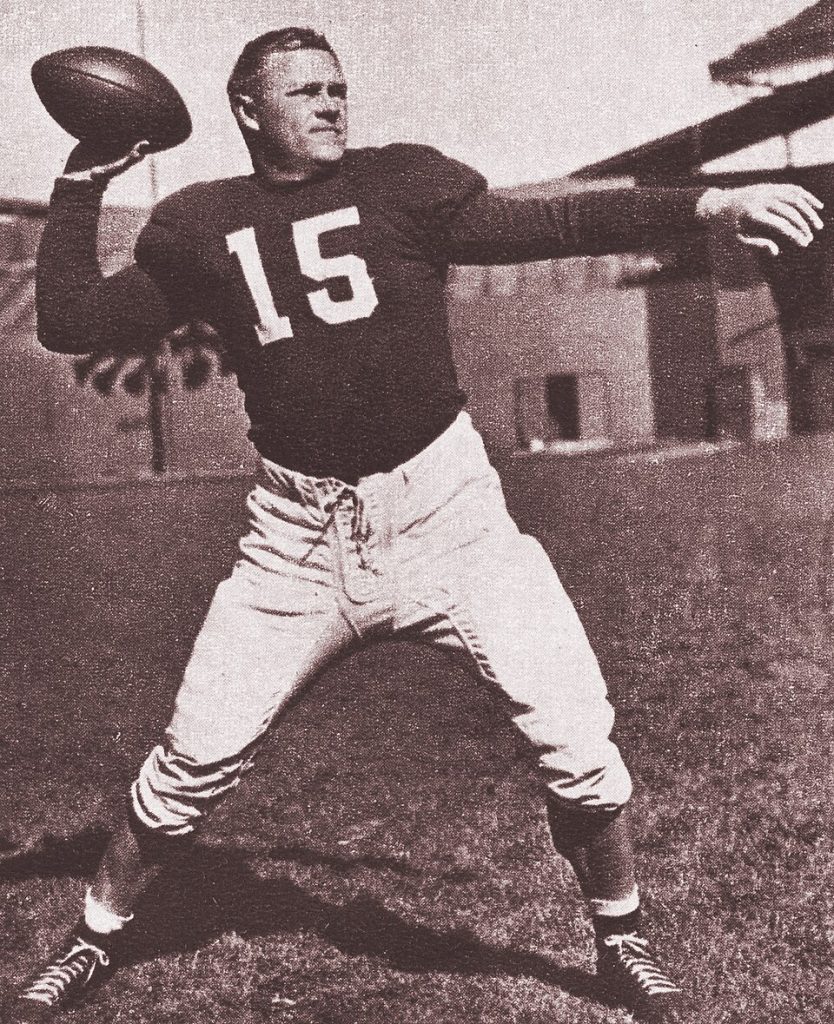
March 5, 1918 – St Louis, Missouri – The legendary Mizzou Halfback of the Year, Paul Christman, celebrated his day of birth. The NFF described Paul as not the fastest player and as having pretty much the opposite of the qualities one would expect from a successful collegiate QB, but man oh man, could he spin the ball.
Missouri’s head coach, Don Faurot, recognized Christman’s talent and watched the young man shine on game days. Paul and his teammates enjoyed 20 wins in the 28 starts he played under center. Coach also had some education and drills to teach his QB prodigy. Christman confessed later.
“Coach Faurot knew I had to be able to run to make my passing effective, so he spent hours in the off- season, working with me on quick starts and short sprints. I actually improved my speed.”
Christman ran the ball an average of 10 times a game and passed it 16 times. He made four All-America teams in 1939 and led the nation in touchdown passes. 13 The National Football Foundation selected Paul Christman for induction into the College Football Hall of Fame in 1956. He made it to the pros too, as he played for the Chicago Cardinals from 1945-49 and with Green Bay in 1950, earning the nickname: “Pitchin’ Paul.” Christman then became a star football broadcaster on national television.
Conclusion
Paul Christman’s legacy extends far beyond the yardage markers of the Big Six Conference. He was a pioneer in two worlds: first as the prototype for the modern passing quarterback and later as the definitive voice of the game during the early years of televised football. His ability to overcome his self-described “awkwardness” through relentless off-season training showed the heart of a champion. Whether he was firing touchdowns for the Cardinals’ “Dream Backfield” or calling the first Super Bowl for NBC, “Pitchin’ Paul” remained a class act and a foundational figure in American football history.
Accolades and Football Accomplishments
- College Football Hall of Fame: Inducted in 1956.
- NFL Champion: 1947 (Chicago Cardinals).
- Consensus First-Team All-American: 1939.
- Heisman Trophy Finalist: Finished 3rd in 1939 and 5th in 1940.
- National Passing Leader: Led the NCAA in passing yards (1,131) and TD passes (13) in 1940.
- 3× First-Team All-Big Six: (1938, 1939, 1940).
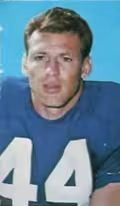
- Retired Jersey: His No. 44 is retired by the University of Missouri.
- NFL All-Pro: 1946 and 1947.
- Missouri Sports Hall of Fame: Inducted in 1960.
- Broadcasting Pioneer: Lead color commentator for ABC, NBC, and CBS; called Super Bowl I.