They say you can’t coach size, but Boston College legend George Kerr proved you can certainly fake it—at least long enough to show the world the size of your heart. From a “sixth-stringer” wearing layers of sweaters to look heavier, to a first-ballot Hall of Famer who dominated the Sugar Bowl, Kerr’s journey is the ultimate underdog story of the Golden Era. Step back in time to discover how the “Righteous Reject” became the backbone of the Eagles’ greatest teams.
Football Bio
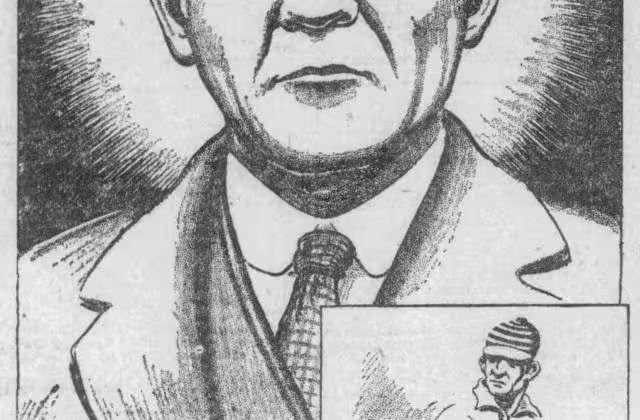
February 14, 1919 – Brookline, Massachusetts – Boston College’s legendary Guard, George Kerr, was born. Kerr played on the Eagles gridiron from 1938 through the 1940 season, per the National Football Foundation’s online bio. The “Righteous Reject,” as he was called at Boston College, reported to his coach that he had first worn multiple layers of sweaters and jackets to boost his weight, making him appear 25 pounds heavier than he actually was. What the coach saw, though, was his big heart and desire to succeed at football. Through his hard work and dedication, Kerr went from the sixth team to receiving All-American mention. Kerr helped post a 26-3-2 record in three seasons, and his outstanding Sugar Bowl performance against Tennessee earned him a place on the All-Time Sugar Bowl team. George Kerr received the great honor of being selected for inclusion into the College Football Hall of Fame in 1984.
Conclusion
George Kerr’s legacy at Boston College is a testament to the grit and determination that defined pre-war American football. His clever ruse to make the team may be a humorous footnote, but his performance on the field was anything but a joke. By leading the Eagles to a nearly spotless three-year record and a historic Sugar Bowl victory, Kerr cemented his place as one of the finest guards to ever pull for a lead block. He remains a shining example that while scouts measure height and weight, greatness is measured by what happens between the whistles.
Verified Accolades & Accomplishments
- College Football Hall of Fame: Inducted in 1984.
- 1941 Sugar Bowl Champion: Key member of the undefeated 1940 Boston College team that beat Tennessee.
- All-Time Sugar Bowl Team: Selected for his dominant performance in the 1941 classic.
- All-American Mention: Earned national recognition during his senior season (1940).
- Team Record: Helped lead the Eagles to a combined 26–3–2 record over three seasons.
- Boston College Varsity Club Hall of Fame: Inducted for his contributions to Eagles athletics.
- Iron Man Guard: Known for his durability and high football IQ during the “two-way” era of the game.