On February 6, 1886, a true titan of the early gridiron was born. Long before specialized rosters and high-tech pads, Jack Hubbard defined what it meant to be a complete athlete. Known affectionately as the “Ironman” of Amherst College, Hubbard didn’t just play the game; he controlled every facet of it.
A Force on Both Sides of the Ball
February 6, 1886 – Birth of Jack Hubbard, the Amherst College “Ironman.” A dominant halfback and kicker, Hubbard was inducted into the College Football Hall of Fame in 1966.
Hubbard’s tenure at Amherst (1903–1906) remains one of the most storied chapters in New England sports history. As a halfback, he was a scoring machine, but his “Ironman” moniker came from his relentless stamina and versatility. He wasn’t merely a ball carrier; Hubbard was a master of the kicking game during an era when field goals and punts were strategic linchpins.
His most legendary performance came in 1906 against Dartmouth. In a display of pure grit, Hubbard accounted for every single point in Amherst’s 12-0 victory. This wasn’t just a fluke—it was the standard for a man who rarely left the field and never backed down from a hit.
From the Field to the Hall of Fame
Hubbard’s impact on the sport extended far beyond his graduation. His contributions to the “golden age” of college football were so significant that he was inducted into the College Football Hall of Fame in 1966.
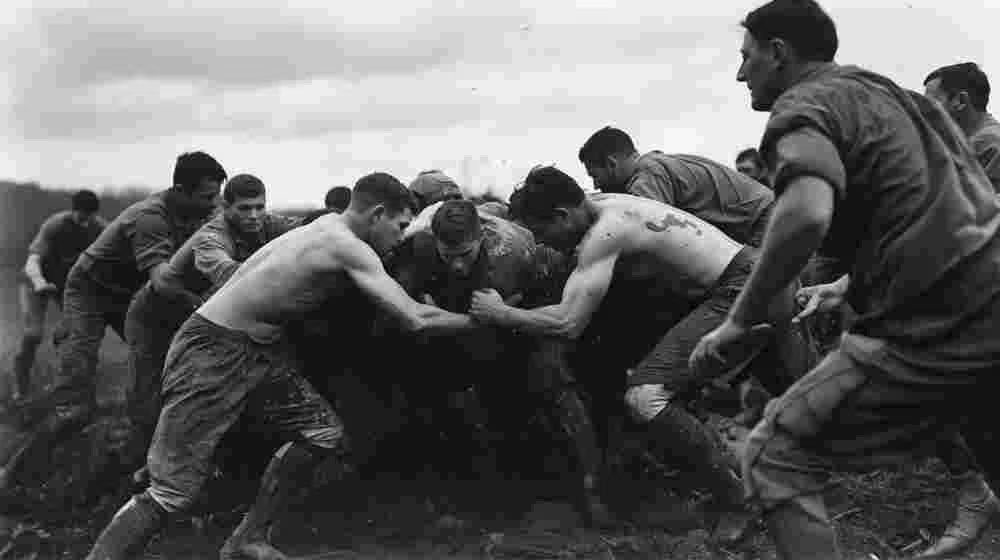
Today, Hubbard serves as a reminder of a tougher era of football. He represented the transition of the sport from a chaotic scrum to a game of tactical skill and individual brilliance. For Amherst alumni and college football historians alike, Hubbard isn’t just a name in a record book—he is the gold standard for the “all-around” player.
Conclusion
Jack Hubbard’s birth in 1886 marked the beginning of a legacy that still resonates in the halls of Amherst College. As we celebrate the “Ironman,” we honor the spirit of versatility and endurance that defines the very best of American sports history.