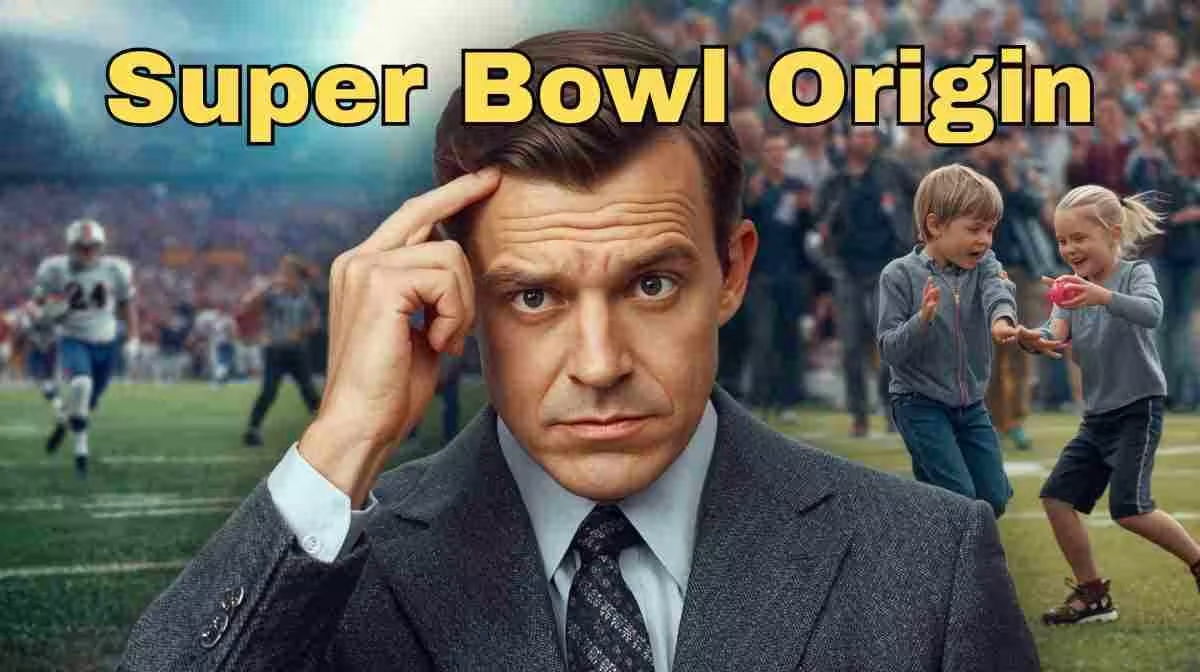
How a Bouncy Toy Created the "Super Bowl"
At the end of every NFL season, the world stops for a spectacle known as the Super Bowl. It’s a name so ingrained in our culture that it feels like it has existed forever. But in 1966, the term "Super Bowl" wasn't just unofficial—it was actually hated by the NFL Commissioner.
A Collision of Two Leagues
In the late 1950s and early 1960s, the NFL had a problem. A new rival, the American Football League (AFL), had emerged. Founded by Lamar Hunt, the AFL was comprised of wealthy enthusiasts who were tired of being denied NFL franchises.
By 1966, after a decade of bidding wars and a newfound influx of television revenue, the two leagues finally agreed to a merger. Part of that agreement included a "World Championship Game" between the top team of each league. The only problem? No one knew what to call it.
"The Big One" and Other Failures
In July 1966, six months before the first championship was played, NFL Commissioner Pete Rozelle held meetings to brainstorm a title. Rozelle’s suggestions were, to put it mildly, lackluster. He proposed "The Big One" and even "The World Series of Football" (the latter of which was technically a recycled name from a 1902 tournament).
The owners weren't impressed. They eventually settled on the clunky, formal title: The AFL-NFL World Championship Game. It was a mouthful that lacked any marketing "bounce."
The Wham-O Connection
The solution didn't come from a boardroom—it came from a living room. Lamar Hunt noticed his children, including Lamar Hunt Jr., playing with a new toy from the Wham-O company. It was a high-bouncing pink ball made of Zectron, famously known as the Super Ball.
As Hunt watched the ball fly higher than his kids could throw it, the name stuck in his head. He thought of the famous college "Bowls"—the Rose Bowl, the Sugar Bowl—and combined the concepts. He brought the name "Super Bowl" to the July meetings.
Rozelle initially shot it down, thinking it lacked dignity. However, the media caught wind of the name. Even though the official tickets for that first game on January 15, 1967, between the Green Bay Packers and Kansas City Chiefs didn't use the term, newspapers were already calling it the "Super Bowl" the day before the kickoff.
From Toy to National Holiday
The name proved too catchy to ignore. By Super Bowl III—the legendary game where Joe Namath and the Jets proved the AFL could actually win—the name was officially adopted.
Today, sixty years later, we no longer think of a small pink toy when we hear the name. We think of legends, dynasties, and a game that has become an unofficial national holiday. All thanks to a little bit of "bounce" and a father watching his kids play.
For more deep dives into the legends and lore of the gridiron, visit us at PigskinDispatch.com—your portal to positive football history.
Join us at the Pigskin Dispatch website to see even more Positive football news!
Don't forget to check out and subscribe to the Pigskin Dispatch YouTube channel for additional content and the regular Football History Minute Shorts.
Miss our football by the day of the year podcasts, well don't, because they can still be found at the Pigskin Dispatch website.
Transcript
At the end of every NFL season for the last 60 some years or so, we have a big game called the Super Bowl. But how did this game get its name? And why is it called Super Bowl?
We have these questions and more answered and a little bit of history of football coming up with this special edition. Hello, my football friends.
This is Darin Hayes of pigskindispatch.com welcome once again to the Pig Pen, your portal to positive football history and the Super Bowl. You know, it sort of fits in and has that sort of ring. It comes right off our tongue.
,:A contest of two rival leagues that were just finally starting to agree on something. They agreed on playing a championship game of their two champions for a world championship.
Roselle took over in the late:And Lamar Hunt, who is the founder of the Kansas City Chiefs, then the Dallas Texans of the afl, sort of put that together, and they were on this road of collision for better part of a decade between these two leagues.
And Roselle was on one side, Lamar Hunt, and, you know, the, the great former owner of the, the Oakland Raiders were battling this thing out constantly.
e to an agreement in the late:One of the things that was going on with this competition of a rival league, as opposed to the three earlier versions of the American Football League.
an Football Conference in the:The AFL sort of jumped on the bandwagon hard and was making some, some good money. NFL was getting their money, too. But, you know, it's a money league. That's what it's a business. And that's what they're there for.
But eventually it came down to this agreement to play this championship game of the AFL's best team and the NFL's best team to see who would be the world champion. But it wasn't called the super bowl at first.
They had a meeting in July:That's sort of simple and everything, but not really something that people really wanted, had an appetite for. The other owners sort of scoffed as that's not a really good name. He. He came up with another one.
How about the World Series of Football, sort of copying off of Major League Baseball? Well, that didn't sit too well with people either, because there was. Had been a World Series of football.
in:So they eventually, they called this the AFL NFL World Championship Game is basically how that that name came up. So they wanted to, you know, have this name, be something that people would be catchy and would go on for years and years.
But Lamar hunt left that:For somebody to remember AFL NFL Championship Game or whatever it was, and, you know, just. Just never rolled off the tongue. I said, this can't be catchy like, you know, the World Series, you know that. You know what that is.
So they eventually he wanted something simple like the Rose bowl or something.
But back in:And this thing was, you know, it's gone by the name of Super Pinky Super Ball. And kids loved it. I had one when I was a kid. It was fantastic. You could sit there and bounce it on the. Even the grass.
And this Thing would fly up in the air higher than you could. You could throw it sometimes. It's really a lot of fun because it really had a lot of bounce to it. Well, the name had a lot of bounce to it, too.
And Lamar Hunt, after watching his children play with it, including Lamar Hunt Jr. In his daughter, they were playing with the ball and just had blast with it and loved the name and the bouncing bounciness of it.
He said, man, Super Ball. How about Super Bowl? You have the Rose bowl, you have the Orange bowl, you have a Sugar Bowl. Super Bowl.
That's what we need for the National Football League to. As a.
You know, because remember, college football was still almost on a parallel with the National Football League, maybe even the National Football League was still a little bit behind them. They're starting to gain some traction, but they needed to get this name to be right. And that just rolled off the lips.
And he presented that at these July meetings, and Roselle sort of shot it down. And nobody really bought into it except the media. Now, we've heard stories before that the super bowl came after Super Bowl 1.
,:They called it the day of the game, Super Bowl. The day after the game, Super Bowl. Super bowl had been around before the first event had even been played for Super Bowl 1.
And it caught on with the media and eventually the other owners, and eventually Roselle caved in and said, okay, let's call it Super Bowl. And that's how the name stuck all these years.
Some 60 some years later, we still have this game that we revere and almost a national holiday on Super Bowl Sunday. And it still rings off the lips very easily and very recognizable. People know what you're talking about when you say Super Bowl. There's no.
No another. Except the annual event that happens every late January, early February, you know, now the Super Bowl. So that's how it got its name.
That's how it's, you know, become such a mainstream thing in American culture. We had some excellent games. You know, Super Bowl 1 and 2 were okay. Green Bay won both of those.
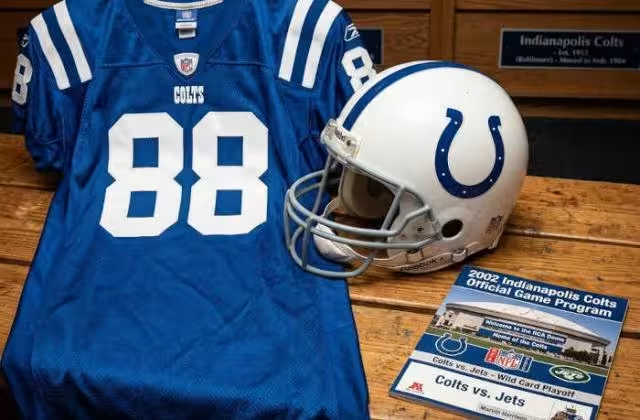
But Super Bowl 3 with the promise and the AFL's New York jets defeating the Baltimore Colts, who were the high power team at the time, that was something. And that really put the AFL on a track to be more competitive and really help that merger solidify.
And you know, then when you had the teams of the Cleveland Browns, Pittsburgh Steelers and the old Baltimore Colts joining the AFC teams just to balance out the power, you know, really made a nice league and had some very competitive games over the years and we talk a lot about them on pigskindispatch.com we have every super bowl we're covering on the anniversary of the date, as well as every NFL draft and the greatest NFL games and the greatest college football games on the dates that you want. Or you can go in the search window of pixieandispatch.com and pull up any of those as well.
As well as all of the hall of Famers of the College Football hall of Fame and a Pro Football hall of Fame, we're bringing those up on their birth date to for people to read up about and preserve that football history. And just like we do this podcast and this YouTube channel. So till next time, everybody have a great gridiron day.
That's all the football history we have today, folks. Join us back tomorrow for more of your football history.
We invite you to check out our website, pigskindispatch.com not only to see the daily football history, but to experience positive football with our many articles on the good people of the game as well as our own football comic strip, cleet marks comics.
Pigskindispatch.com is also on social media outlets, Facebook, Twitter, Instagram, and don't forget the Big Skin Dispatch YouTube channel to get all of your positive football news and history. Special thanks to the talents of Mike and Gene Monroe, as well as Jason Neff for letting us use their music during our podcast.
This podcast is part of the Sports History Network, your headquarters for the yesteryear of your favorite sport. You can learn more@sportshistorynetwork.com.