🏈 The Bicentennial Brawl for Glory
On January 18, 1976, as America celebrated its Bicentennial year, the NFL delivered a championship for the ages. Under the warm Miami sun at the Orange Bowl, two of the league’s most iconic franchises—the Pittsburgh Steelers and the Dallas Cowboys—met for the first time on the game’s grandest stage. It was a clash of cultures: the “glamour” of Dallas’s sophisticated Flex defense against the “blue-collar” grit of Pittsburgh’s Steel Curtain. What followed was a 21–17 thriller that many still consider the most exciting Super Bowl of the league’s first decade.
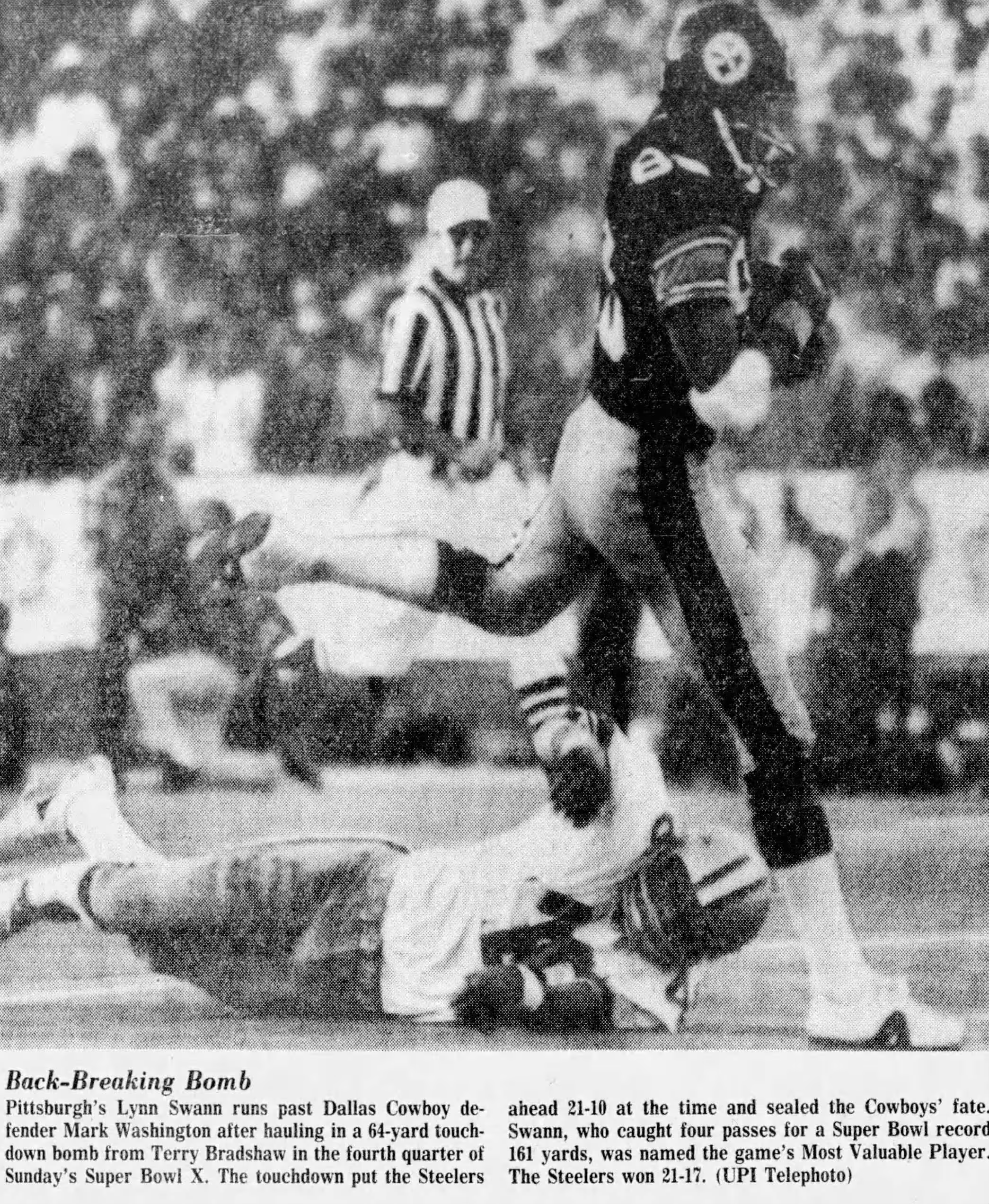
Article from Jan 19, 1976 The Post-Standard (Syracuse, New York)
The Turning Point: A Spark from the Defense
The Cowboys, appearing as the first-ever Wild Card team to reach the Super Bowl, took an early 10–7 lead into the locker room at halftime. For a while, it looked like Roger “Captain Comeback” Staubach might dismantle the defending champions. However, the momentum shifted not with a play, but with a moment of legendary Steelers’ intensity. After Cowboys safety Cliff Harris mockingly patted Steelers kicker Roy Gerela on the helmet following a missed field goal, linebacker Jack Lambert famously threw Harris to the ground. That act of defiance ignited the Steelers.
In the fourth quarter, the Steelers’ pressure became overwhelming. Reggie Harrison blocked a Dallas punt that rolled through the end zone for a safety, cutting the lead to 10–9. Two Gerela field goals later, the Steelers had clawed their way to a 15–10 lead, setting the stage for a historic finish.
Bradshaw to Swann: The Knockout Blow
The defining moment of the game came late in the fourth quarter. Facing a fierce blitz, Steelers quarterback Terry Bradshaw launched a desperate deep ball just as he was leveled by a Cowboys defender, leaving him concussed on the turf. He never saw the result: Lynn Swann hauling in a 64-yard touchdown catch that sent the Pittsburgh faithful into a frenzy. Swann finished the day with four catches for 161 yards—a record at the time—earning him the MVP honors.
Though Dallas scored late to pull within four, Pittsburgh’s safety Glen Edwards ended the threat with an end-zone interception as time expired, sealing the 21–17 victory.
Conclusion: A Dynasty Defended
Super Bowl X was more than just a win; it was the official arrival of the Steelers’ 1970s dynasty. By becoming just the third team to win back-to-back championships, Pittsburgh proved their “Steel Curtain” was the gold standard of the era. For the Cowboys, it was a heartbreaking “almost,” but for football fans, it was the birth of a rivalry that would define NFL excellence for years to come.