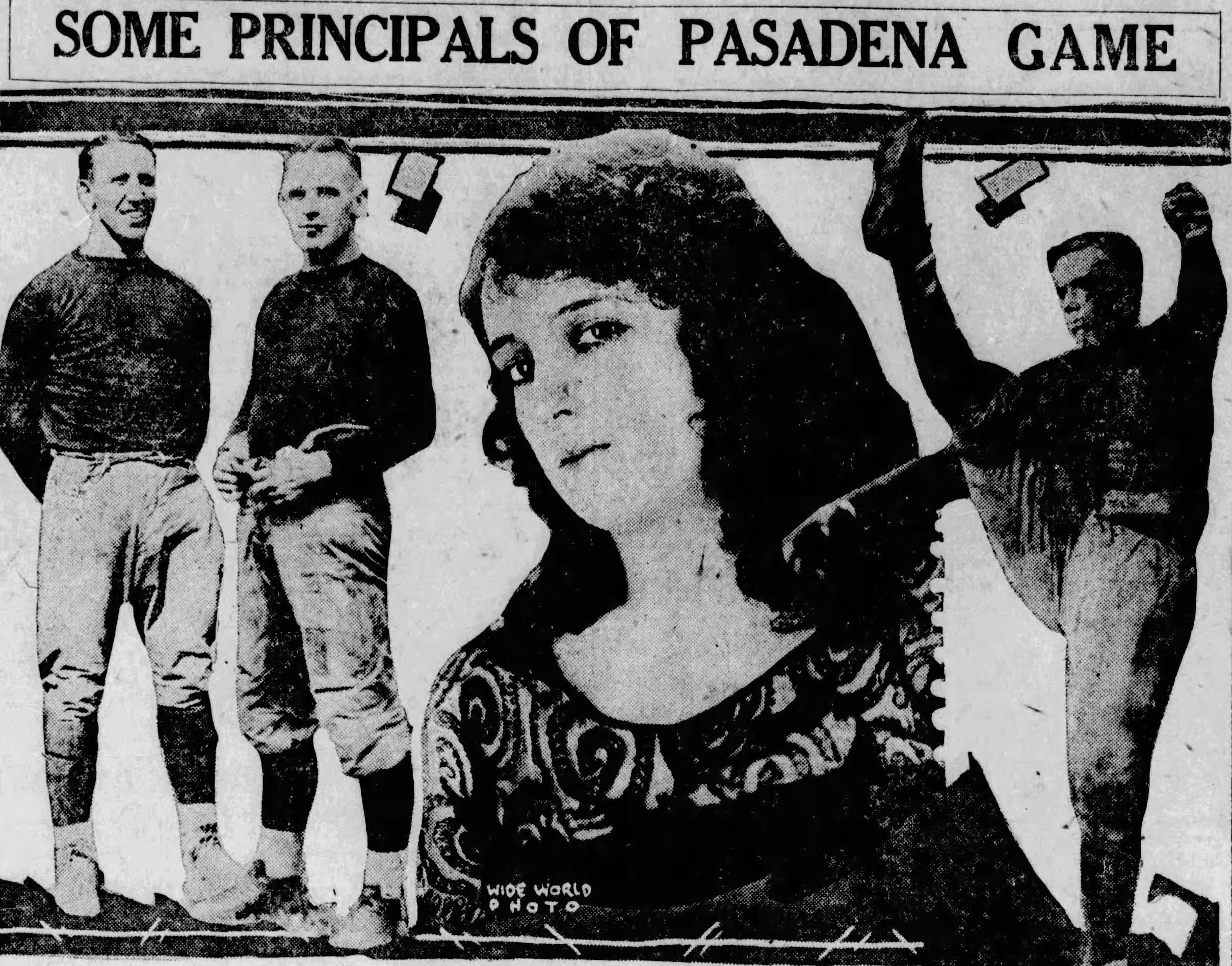
The Rose Bowl is legendary for its grand stage, but no game captures the spirit of the underdog quite like the 8th annual matchup on January 2, 1922. This game pitted the mighty University of California Golden Bears, the undisputed kings of the West Coast, against the Washington & Jefferson (W&J) Presidents, an undefeated small college from Pennsylvania with only 450 students—the smallest school ever to play in the Rose Bowl.

14 points favored the Golden Bears, but the W&J Presidents were ready to challenge the status quo. Coached by the legendary Greasy Neale (who later coached the Philadelphia Eagles), the Presidents had an exceptionally tight budget. Their journey west became the stuff of legend. With only enough funds to send 11 players, the team faced disaster when starting back C.L. Spillers contracted pneumonia during the cross-country train ride and had to be left behind in Kansas City.
The story goes that a reserve, Bucky Buchanan, who had allegedly stowed away, was given Spillers’ ticket to field a full squad. Despite the challenges—and the fact that only 11 players carried the entire team during their undefeated 1921 season, never leaving the field—W&J arrived at Tournament Park. The game also featured a significant milestone: W&J quarterback Charles West became the first African-American signal-caller to play in the Rose Bowl.
The game itself was a defensive masterpiece, resulting in the only scoreless Rose Bowl in history, a 0-0 tie. W&J’s defense completely stifled Cal, holding them to just 49 rushing yards and zero completions. W&J’s captain, Russ Stein, was named Most Outstanding Player.
This game, rooted in determination and a dramatic cross-country trek, is a timeless story of what small-college grit can achieve on the biggest stage.